

The Risk Wheelhouse Podcast
The Risk Wheelhouse is the podcast dedicated to exploring how RiskTech is reshaping the future of risk management. Hosted by our experts, Ori Wellington and Sam Jones, each episode delves deep into Integrated Risk Management (IRM), offering insights into the latest trends, technologies, and strategies. Join us to stay ahead in the ever-evolving risk landscape and empower your organization with actionable knowledge.
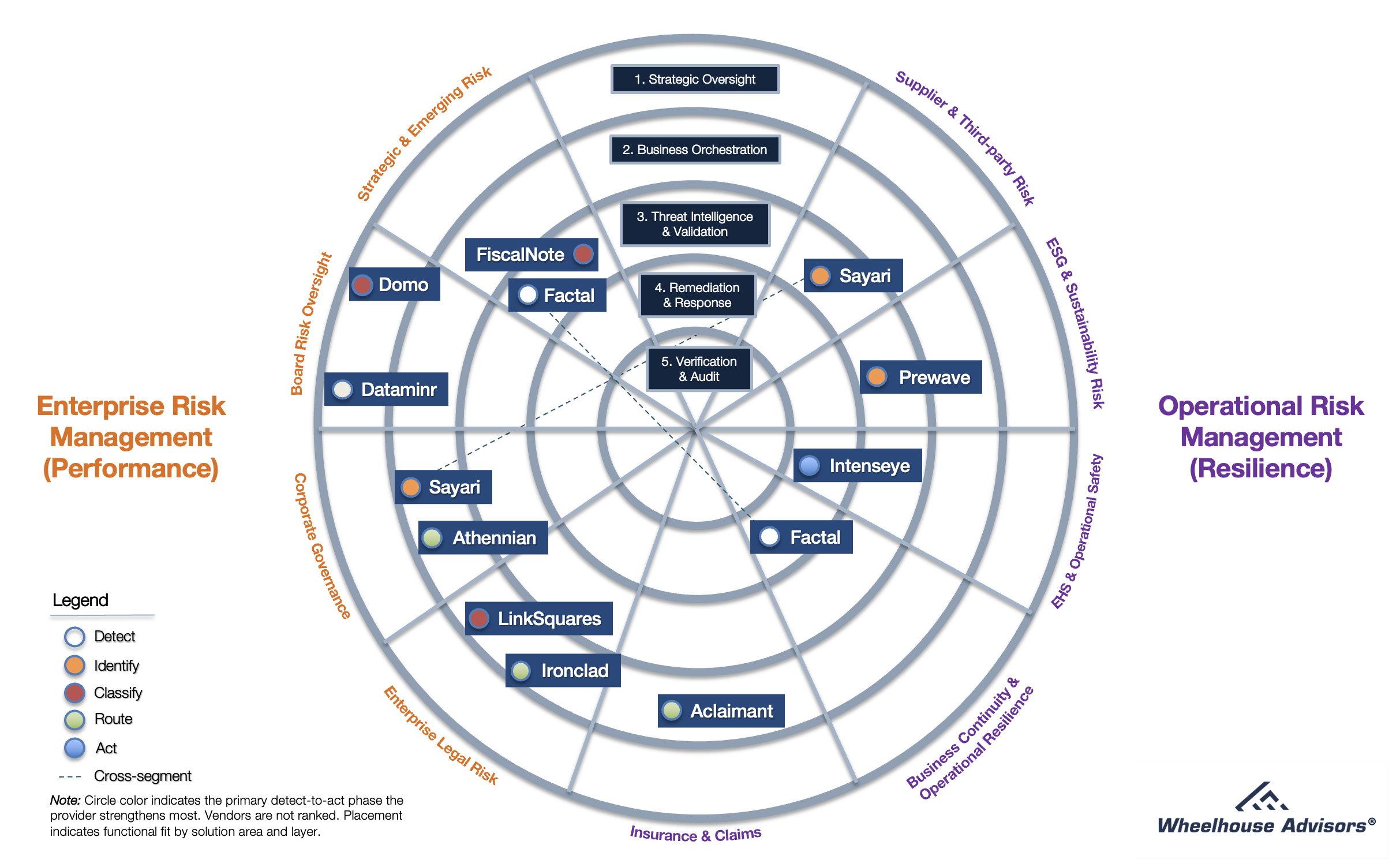
S6E8: 2026 VC Sonar™ for Performance and Resilience
The second wave of IRM investment has arrived — and it's not about better dashboards. It's about eliminating the lag between detecting a risk signal and acting on it. In 2026 IRM Navigator™ VC Sonar for Performance and Resilience, Wheelhouse Advisors founder and CEO John A. Wheeler maps the emerging vendor layer purpose-built for this shift: augmentation tools that sit atop existing platforms like ServiceNow and Archer to deliver real-time threat intelligence, automated remediation workflows, and — critically — immutable evidence of every action taken. From Dataminr's real-time event detection to Sayari's deep supply chain graph intelligence, the report profiles ten emerging vendors across five functional layers of what Wheeler calls Autonomous IRM. But the report's most consequential argument isn't about the tools — it's about sequencing, accountability, and a concept called evidence closure that separates organizations that can defend their AI-driven decisions from those that simply can't. Access the full report →

S5E6: Build An Emerging Risk Reflex Before The Next Shock Hits
The conversation centers on a stubborn truth: most boards are well briefed on emerging risks, yet few translate insight into movement. The research shows 76 percent receive comprehensive risk reports, 42 percent engage meaningfully, and just 22 percent act. That collapse at the decision point is the “funnel of inaction.” The hosts argue that leaders chase the wrong fix by investing in problem precision using hyper-detailed probabilities and impact ranges. This approach only provides a marginal, statistically insignificant uplift in action. Precision invites skepticism, shifts attention to model assumptions, and implies costly, multi-year programs that boards rationally defer. The better path is to reframe conversations around solution options that emphasize low regret actions, the cost of delay, adjustments to existing programs, and clear pacing across quarters.