S6E8: 2026 VC Sonar™ for Performance and Resilience
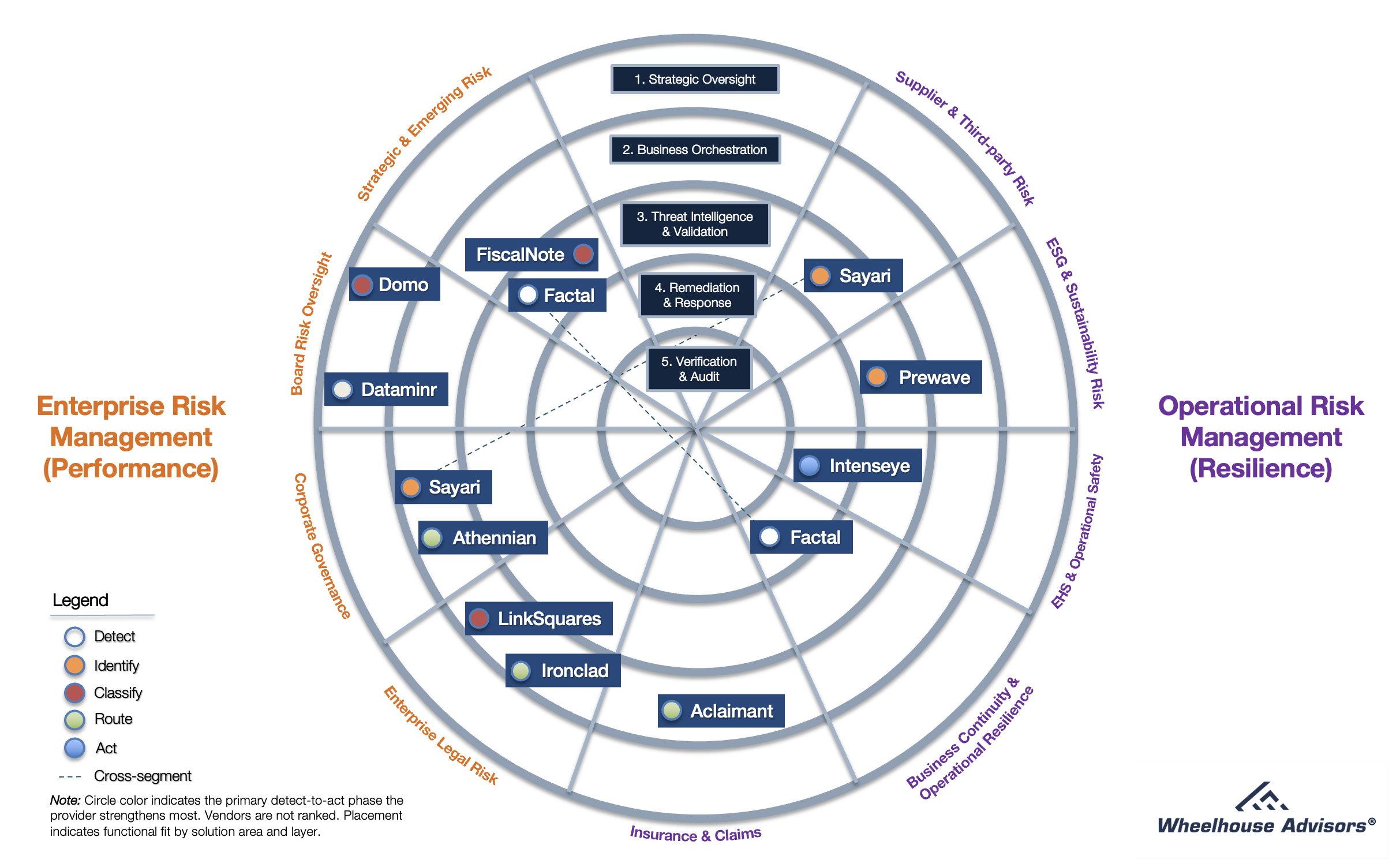
Risk visibility used to be the finish line. Build the register, populate the heat map, present the quarterly deck — done. In 2026, that's not a program. It's a liability. The second wave of IRM investment is underway, and it's organized around a single, unforgiving imperative: eliminating the lag between signal detection and action. In this episode, Ori Wellington and Sam Jones conduct a deep dive into Wheelhouse Advisors' 2026 IRM Navigator™ VC Sonar for Performance and Resilience report, authored by John A. Wheeler, and the findings reframe what it means to be a risk-ready organization.
The report identifies three structural forces driving this shift. First, performance and resilience have become operate-through requirements — not program goals. Regulators from DORA in Europe to the SEC's cybersecurity rules don't evaluate your business continuity binder; they evaluate whether your customers could still transact during the disruption. Second, third-party dependency has become a structural amplifier of risk: the concentration of global operations on a handful of cloud providers and SaaS platforms means upstream failures propagate instantly, and legacy questionnaire-based TPRM tools are simply too slow. Third, agentic AI — systems that don't just generate content but execute workflows, route tasks, and act within prescribed boundaries — has raised the board's expectations for time to action. If the technology exists to respond in seconds, waiting for a monthly committee meeting is no longer defensible.
Wellington and Jones work through the report's five-layer Autonomous IRM architecture — from strategic oversight (where risk appetite is codified as executable policy) through business orchestration, threat intelligence, remediation, and finally verification and audit. The critical insight is that autonomy is earned, not installed. It requires each layer to be operational before the next is activated, and it mandates that evidence be created as work is executed — not reconstructed after the fact. The report's VC Sonar™ map then profiles the emerging vendor layer that makes this possible: augmentation tools such as Dataminr, Prewave, Fiscal Note, Ironclad, LinkSquares, Athenian, Intenseye, Claimant, Factal, and Sayari — capabilities designed to sit atop existing platforms like ServiceNow or Archer and give them real-time, autonomous capability without replacement.
The episode's sharpest argument is reserved for the buyer guidance section. The hosts press hard on the concept of IRM Dividends — efficiency, loss mitigation, and trust — and explain why trust functions as the gating dividend. Speed without evidence isn't resilience; it's exposure. The report's concept of evidence closure — immutable, timestamped audit logs generated as a byproduct of execution, not reconstructed afterward — is positioned as the non-negotiable foundation for any autonomous IRM program. As the hosts put it: automate only what you can execute, and execute only what you can evidence.
Risk leaders listening to this episode should leave with a clear sequencing mandate: stabilize your decision cadence in ERM, unify your taxonomies across ERM and ORM, and build evidence infrastructure before you build automation. The organizations that master this sequence will compete on decision velocity. Those that skip it will find that their AI investments have simply automated their audit exposure. The full 2026 IRM Navigator™ VC Sonar for Performance and Resilience report is available at wheelhouseadvisors.com.
Visit www.therisktechjournal.com and www.rtj-bridge.com to learn more about the topics discussed in today's episode.
Subscribe at Apple Podcasts, Spotify, or Amazon Music. Contact us directly at info@wheelhouseadvisors.com or visit us at LinkedIn or X.com.
Our YouTube channel also delivers fast, executive-ready insights on Integrated Risk Management. Explore short explainers, IRM Navigator research highlights, RiskTech Journal analysis, and conversations from The Risk Wheelhouse Podcast. We cover the issues that matter most to modern risk leaders. Every video is designed to sharpen decision making and strengthen resilience in a digital-first world. Subscribe at youtube.com/@WheelhouseAdv.