

The Risk Wheelhouse Podcast
The Risk Wheelhouse is the podcast dedicated to exploring how RiskTech is reshaping the future of risk management. Hosted by our experts, Ori Wellington and Sam Jones, each episode delves deep into Integrated Risk Management (IRM), offering insights into the latest trends, technologies, and strategies. Join us to stay ahead in the ever-evolving risk landscape and empower your organization with actionable knowledge.
S8E2: How To Spot Real Autonomous AI In GRC Buying
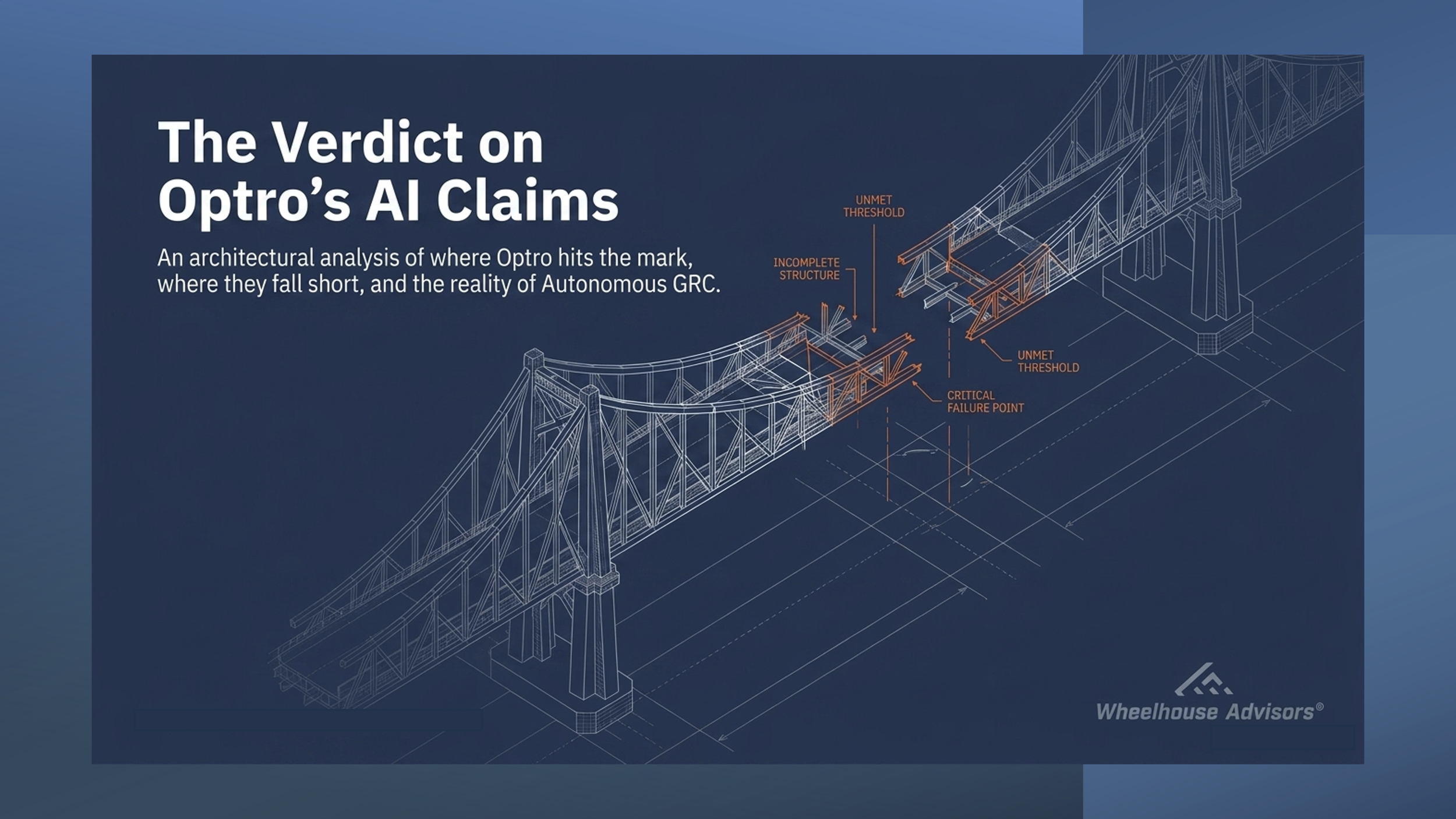
“Autonomous AI” is not a vibe, it’s an architectural promise. When a vendor tells you their GRC platform can run compliance, risk, and controls without humans, they’re claiming a system of action: detect, decide, act, and verify in a closed loop. We dig into a sharp Wheelhouse Advisors report on Optro’s acquisition of Midship to separate what’s real from what’s merely well-written.
S7E1: The Delve Collapse And The New Rules Of Enterprise Trust
A $300 million compliance darling collapsed not because regulators caught it, but because an anonymous Substack writer found a publicly accessible Google spreadsheet. Delve promised SOC 2 in days instead of months, raised a $32 million Series A from Insight Partners, and signed more than 1,000 enterprise clients across 50 countries. Then the whistleblowers alleged the product fundamentally didn't work as described — that Delve's agents were generating auditor conclusions before client data was even reviewed, and routing the output through offshore mills to rubber-stamp the results.
In the Season 7 premiere, Ori Wellington and Sam Jones dissect the anatomy of the failure and argue it is not an isolated fraud story. It is the predictable outcome of a market that rewards the announcement of agentic GRC capabilities while ignoring the program maturity that makes those capabilities trustworthy.
S6E8: 2026 VC Sonar™ for Performance and Resilience
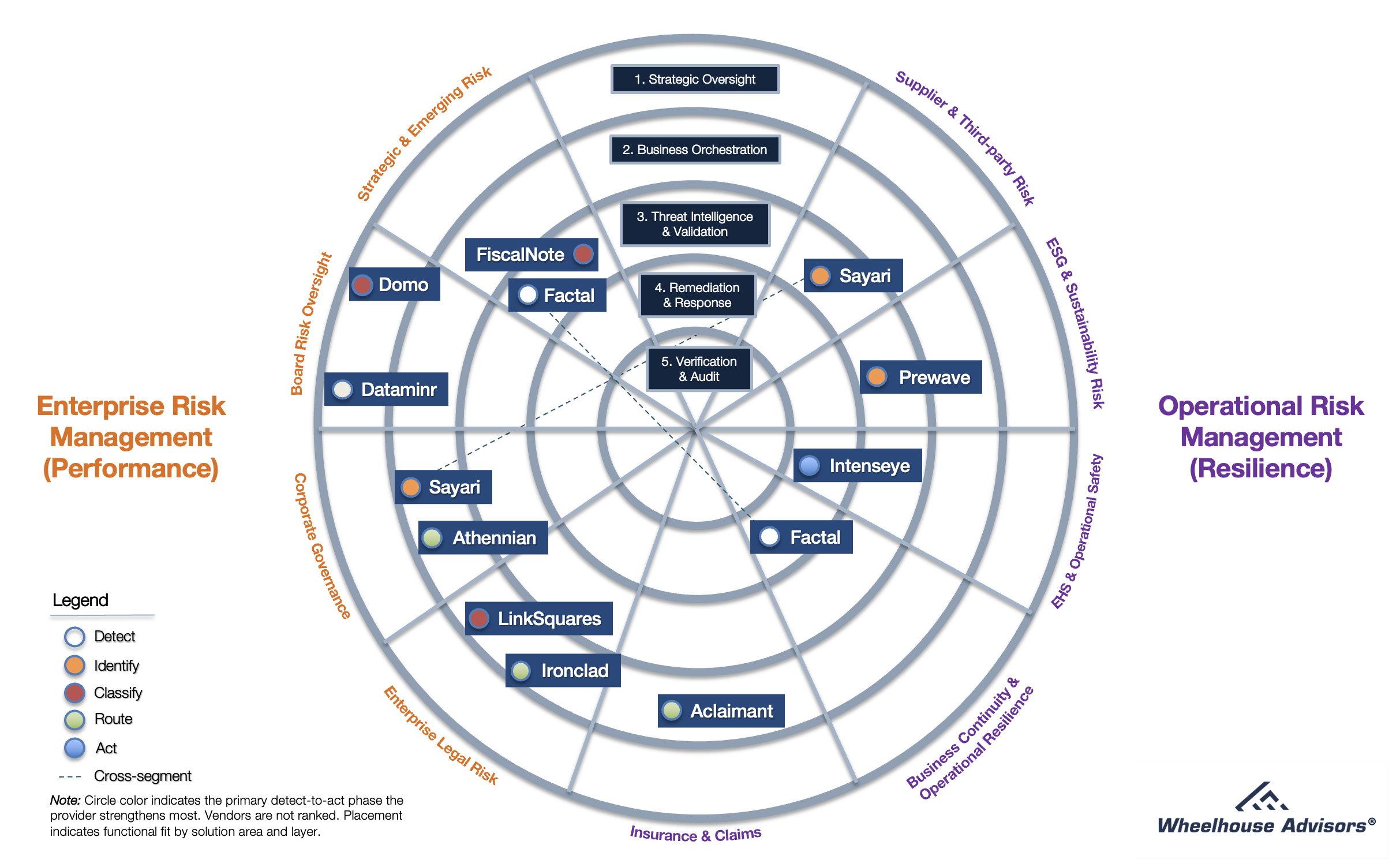
The second wave of IRM investment has arrived — and it's not about better dashboards. It's about eliminating the lag between detecting a risk signal and acting on it. In 2026 IRM Navigator™ VC Sonar for Performance and Resilience, Wheelhouse Advisors founder and CEO John A. Wheeler maps the emerging vendor layer purpose-built for this shift: augmentation tools that sit atop existing platforms like ServiceNow and Archer to deliver real-time threat intelligence, automated remediation workflows, and — critically — immutable evidence of every action taken. From Dataminr's real-time event detection to Sayari's deep supply chain graph intelligence, the report profiles ten emerging vendors across five functional layers of what Wheeler calls Autonomous IRM. But the report's most consequential argument isn't about the tools — it's about sequencing, accountability, and a concept called evidence closure that separates organizations that can defend their AI-driven decisions from those that simply can't. Access the full report →
S6E3: The IRM Navigator™ - Turning Risk Into A Strategic Operating Model
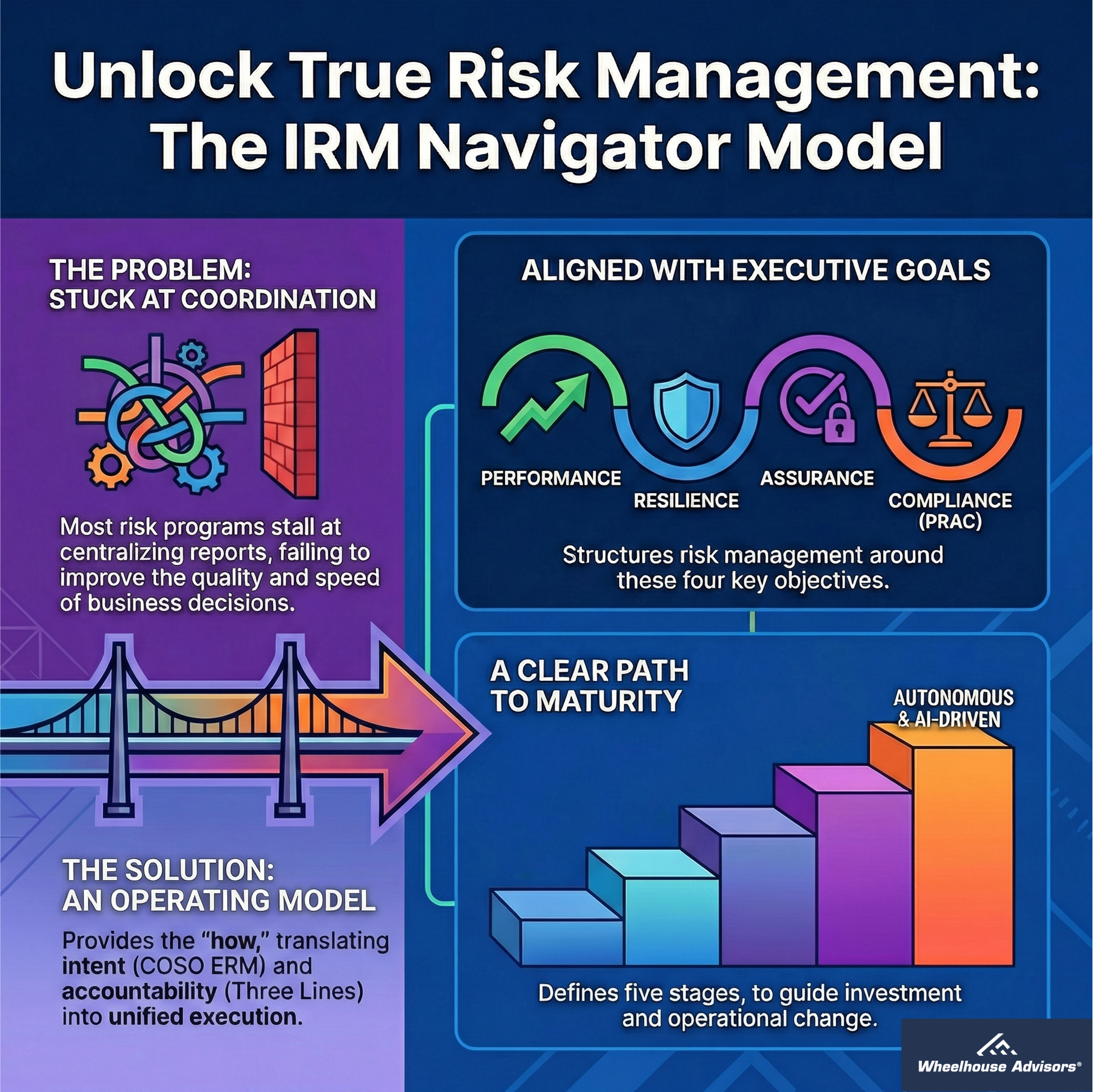
Risk work that lives in reports but not in decisions is a hidden tax on performance. We tackle that problem head-on by unpacking the IRM Navigator™, an operating model that connects standards and roles to the real systems and moments where choices are made. Instead of treating risk as a sidecar, we show how to embed it into approvals, planning, and daily operations so decision velocity and decision quality rise together.
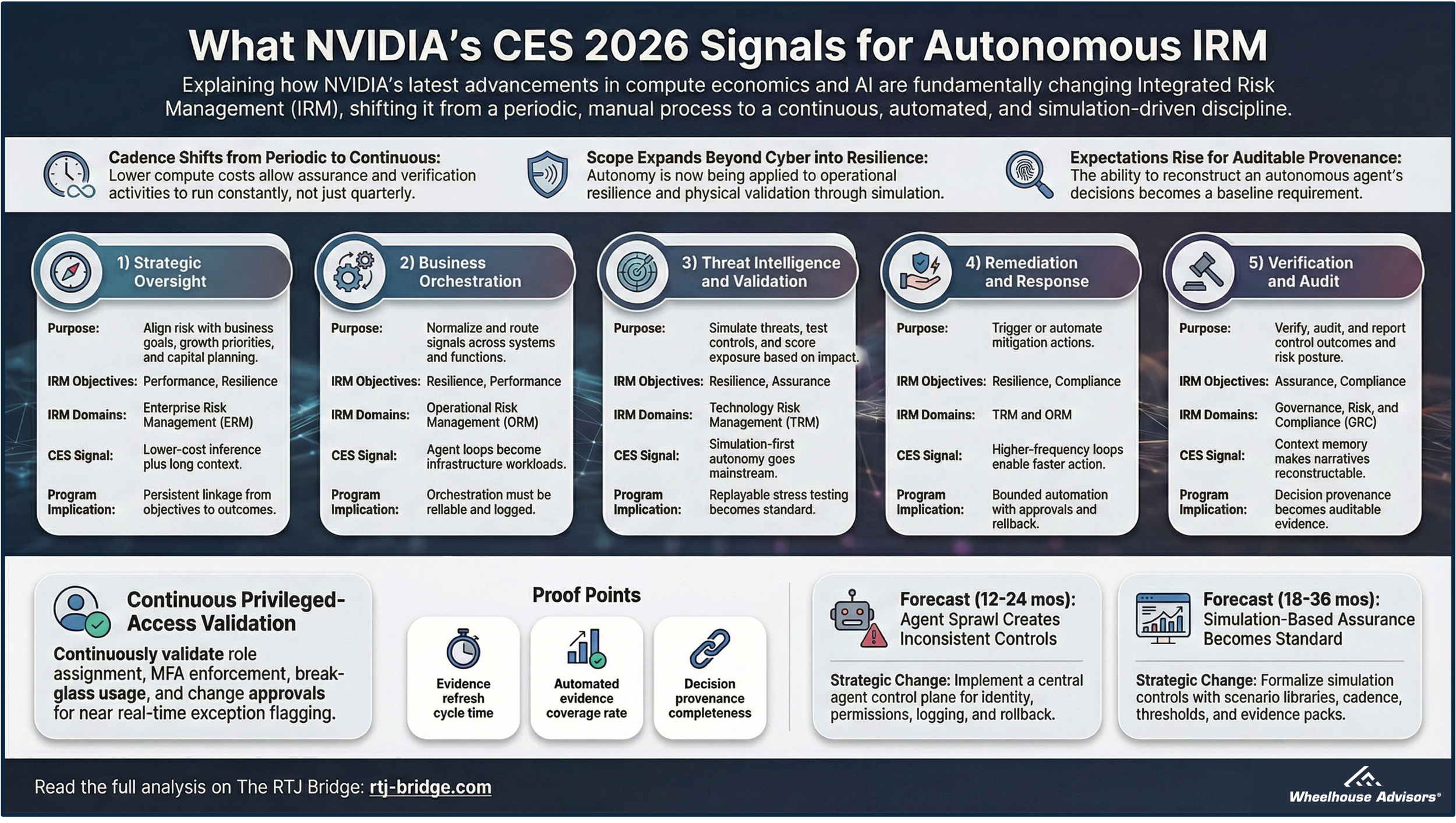
S6E1: NVIDIA CES 2026 - The Blueprint for Autonomous IRM
Season 6 opens with a clear message for Technology Risk Management leaders: autonomy is no longer constrained by model capability, it is constrained by infrastructure discipline and auditable management controls.
In S6E1, Ori Wellington and Sam Jones translate NVIDIA’s CES 2026 signals into a practical blueprint for Autonomous IRM, defined as continuous, AI-enabled verification and response loops that operate within explicit policy boundaries and generate audit-grade evidence by design. As inference costs fall, “always-on” control validation becomes economically viable at enterprise scale. That shift forces a new operating model: humans stop chasing evidence and start adjudicating pre-enriched exceptions with decision provenance, context, and rollback paths already assembled.

S3E10: Concentration Breeds Collapse - What the UNFI Outage Taught Us About Hidden Risk and How IRM Fixes It
In Episode 10 of Season 3 of The Risk Wheelhouse, hosts Ori Wellington and Sam Jones go deep into a case that should make every executive sit up straight: the June 2025 cyberattack on United Natural Foods Inc. (UNFI). As the primary distributor for Whole Foods, UNFI represents a critical node in the North American food supply chain—and when that node collapsed, the results were immediate and jarring: empty shelves, viral photos, panicked customers, and a $300 million hit to UNFI’s market value.
But this episode isn’t just about groceries. It’s a cautionary tale for every industry.

S3E9: Starved from the Edges – Why Connected Intelligence Matters in Autonomous IRM
When Automation Moves Fast—and Misses the Point
In this episode of The Risk Wheelhouse, Ori Wellington and Sam Jones expose the blind spot threatening today’s most advanced risk tech: isolation.
Autonomous IRM is no longer theory. AI platforms like Tuskira are already simulating threats and triggering real-time responses. But as this episode reveals, most operate in a vacuum—starved of strategic input from the top and assurance feedback from the bottom.
The result? High-speed automation chasing low-value noise.

S3E7: Integrated Risk Thinking and the IRM Navigator™ Model
Why Integrated Risk Thinking (IRT) is the Strategic Superpower Your Business Has Been Missing
For organizations in today’s digital era, the biggest risk might not be what’s coming—but how you’re thinking.
Traditional risk management has always been reactive. It slices risk into categories—financial, operational, cybersecurity—and manages them in isolation. The result? Fragmented insights, missed signals, and a business strategy vulnerable to blind spots. Even Governance, Risk, and Compliance (GRC) platforms, once hailed as the future, have largely become digital filing cabinets—useful, but far from transformative.
That’s where Integrated Risk Thinking (IRT) changes the game.