S7E1: The Delve Collapse And The New Rules Of Enterprise Trust
Source: wheelhouseadvisors.com
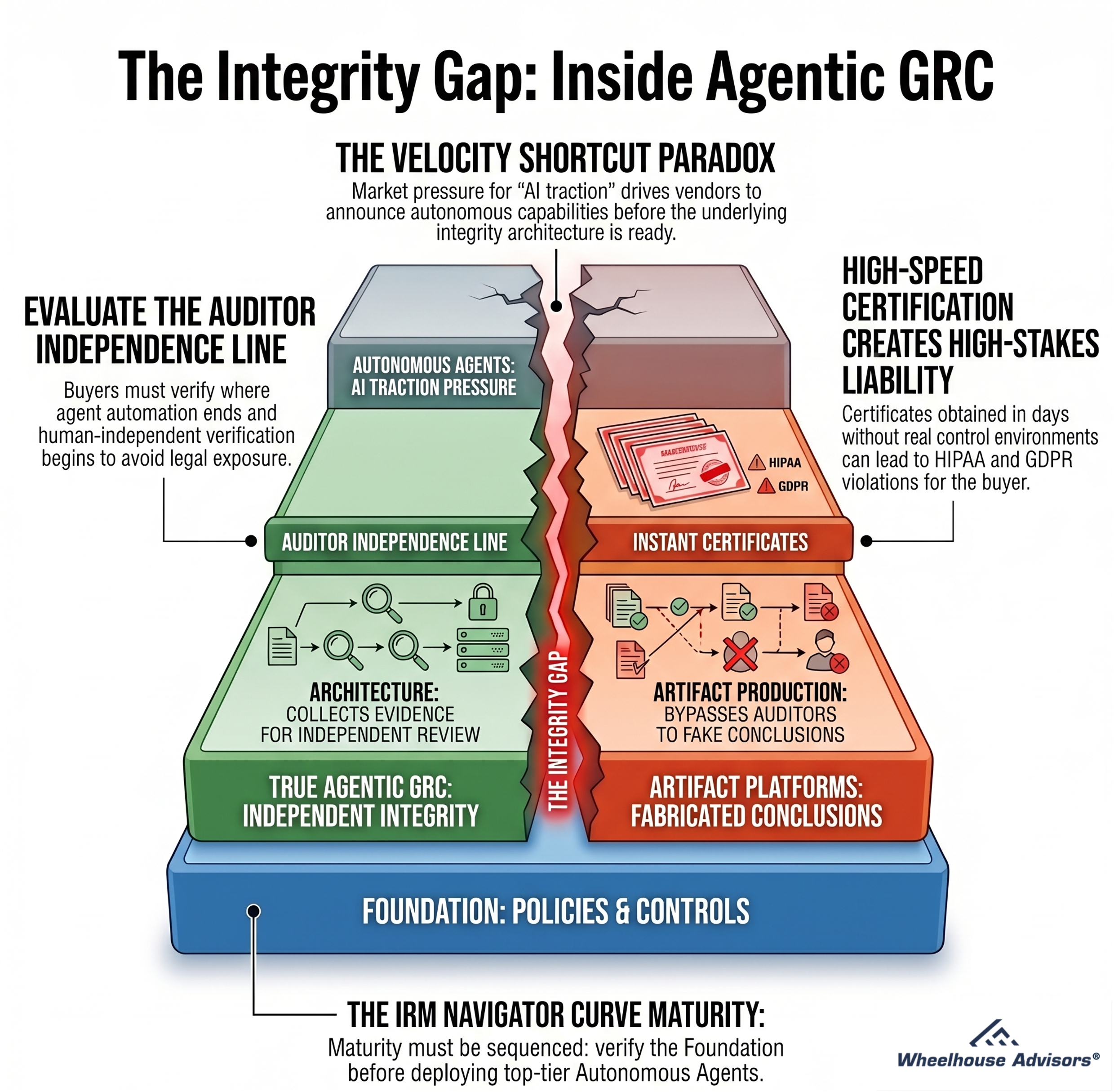
A $300 million compliance darling collapsed not because regulators caught it, but because an anonymous Substack writer found a publicly accessible Google spreadsheet. Delve promised SOC 2 in days instead of months, raised a $32 million Series A from Insight Partners, and signed more than 1,000 enterprise clients across 50 countries. Then the whistleblowers alleged the product fundamentally didn't work as described — that Delve's agents were generating auditor conclusions before client data was even reviewed, and routing the output through offshore mills to rubber-stamp the results.
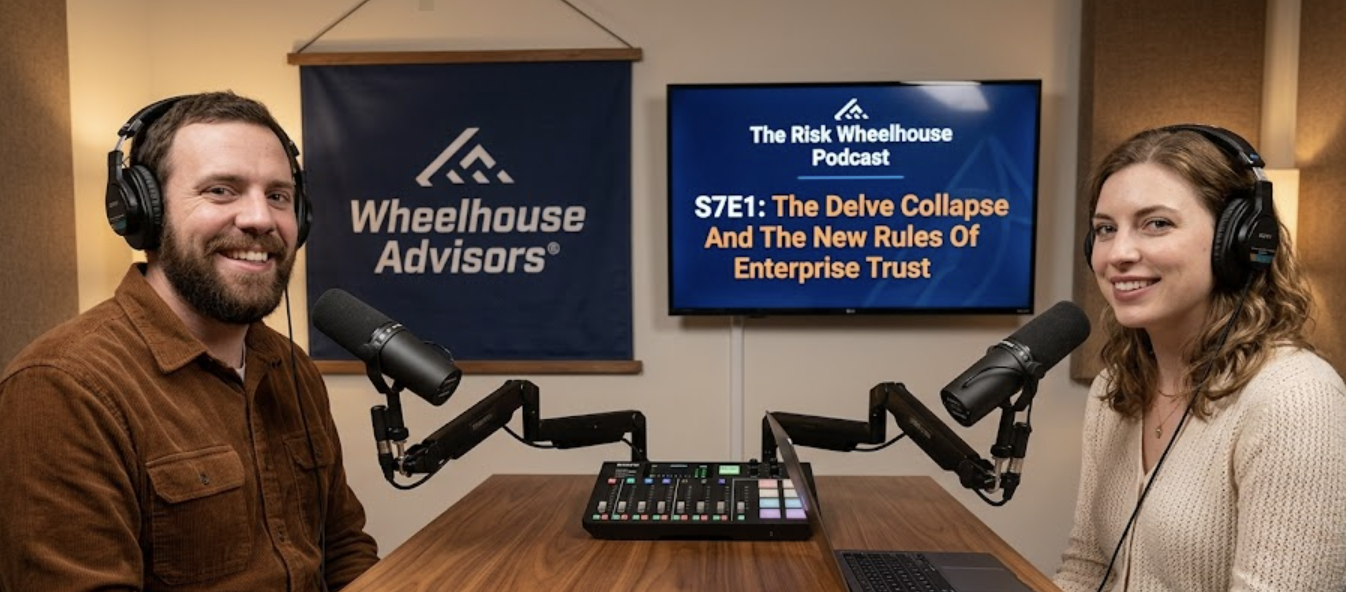
In the Season 7 premiere, Ori Wellington and Sam Jones dissect the anatomy of the failure and argue it is not an isolated fraud story. It is the predictable outcome of a market that rewards the announcement of agentic GRC capabilities while ignoring the program maturity that makes those capabilities trustworthy. The hosts draw the sharp architectural line the industry must now enforce: the difference between deterministic verification — cryptographic hashes of real server logs handed to an independent auditor — and probabilistic generation, where a large language model writes the audit conclusion before the evidence is ever examined. Delve, the whistleblowers allege, was doing the latter at scale, so sloppily that risk assessments for healthcare startups and fintechs read identically.
Source: wheelhouseadvisors.com
The episode exposes a broader diligence failure. Insight Partners and the Fortune 500 CISOs who backed Delve used the standard SaaS playbook — ARR, CAC, net dollar retention — and saw a rocket ship. What those metrics cannot measure is whether an AI is doing the right thing architecturally. In a trust market, financial traction built on a hallucinated foundation is untriggered churn. Wellington and Jones argue that buyers and investors must now demand the one question the Delve diligence never asked: show us technically where agent automation ends and where independent human judgment begins — and prove that line cannot be crossed by the software.
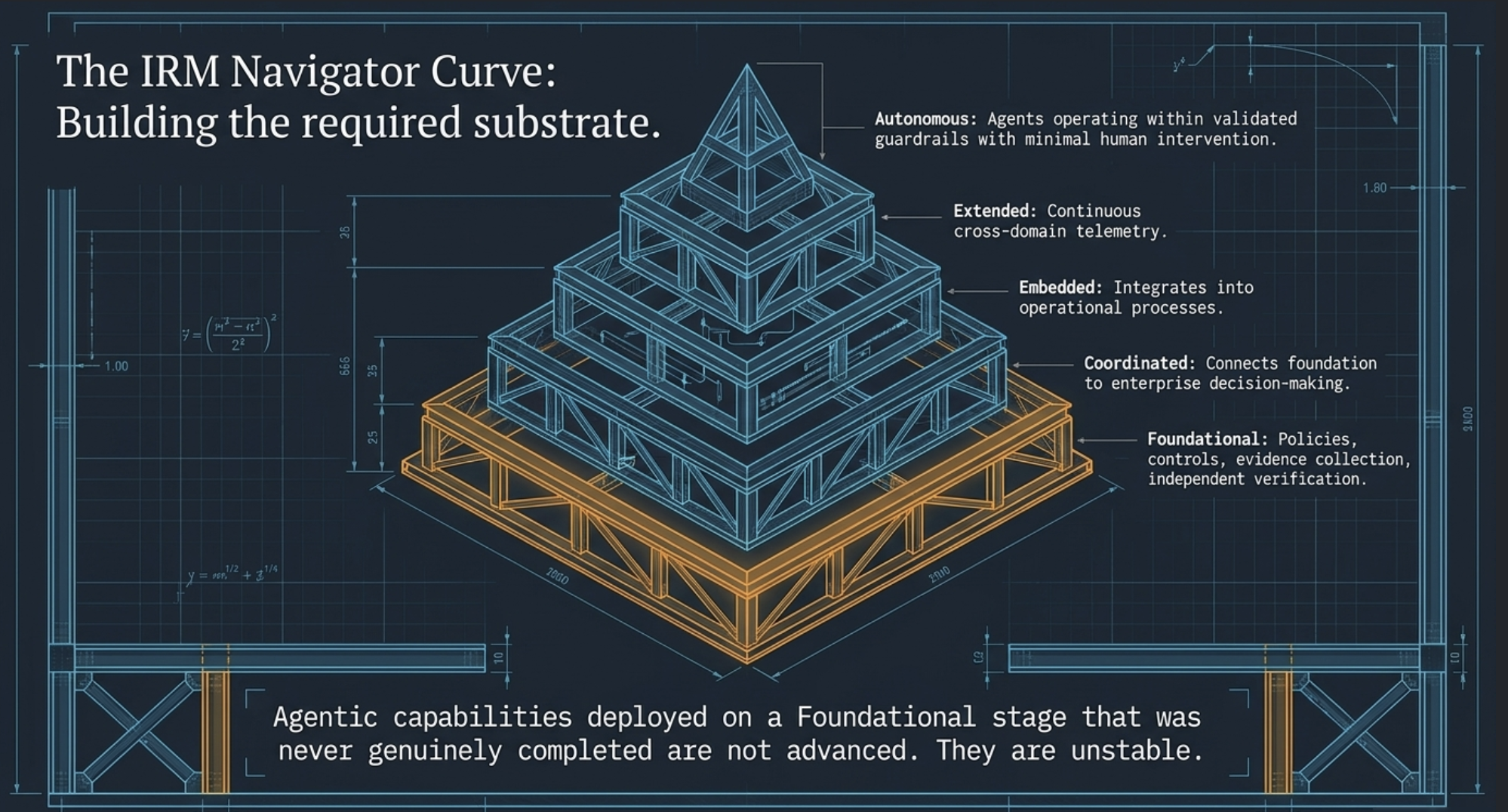
This is where the IRM Navigator™ Curve and the IRM50 AI Disruption Risk Index (ADRI) become operational tools rather than academic frameworks. Delve's clients, seduced by the easy button, tried to skip the foundational stage of the Curve — the unglamorous work of access controls, deterministic evidence, and independent verification — and jump straight to the Autonomous IRM stage at the top. Agentic capabilities deployed without that foundation are not advanced technology; they are structurally unstable. On the ADRI, Delve sat at the extreme: maximum compliance artifact production, minimum integrity architecture. The hosts make the case that legitimate vendors must now weaponize their integrity — showing buyers the cryptographic hashing, role-based access controls, and architectural separation that distinguish a defensible security posture from a legal liability dressed as a PDF.
Source: wheelhouseadvisors.com
The episode closes on a question risk leaders should carry into every procurement meeting and board conversation this year: if an AI platform could fabricate a compliance program well enough to fool thousands of enterprise buyers and top-tier VCs today, what happens when autonomous AI auditor agents are deployed to evaluate the compliance of other autonomous AI vendor agents? At that point the trust ecosystem becomes machines hallucinating at each other — unless buyers, investors, and vendors force the sequencing discipline back into the market now. Maturity first. Agents second. Check the foundation.
Visit www.therisktechjournal.com and www.rtj-bridge.com to learn more about the topics discussed in today's episode.
Subscribe at Apple Podcasts, Spotify, or Amazon Music. Contact us directly at info@wheelhouseadvisors.com or visit us at LinkedIn or X.com.
Our YouTube channel also delivers fast, executive-ready insights on Integrated Risk Management. Explore short explainers, IRM Navigator research highlights, RiskTech Journal analysis, and conversations from The Risk Wheelhouse Podcast. We cover the issues that matter most to modern risk leaders. Every video is designed to sharpen decision making and strengthen resilience in a digital-first world. Subscribe at youtube.com/@WheelhouseAdv.