

The RiskTech Journal
The RiskTech Journal is your premier source for insights on cutting-edge risk management technologies. We deliver expert analysis, industry trends, and practical solutions to help professionals stay ahead in an ever-changing risk landscape. Join us to explore the innovations shaping the future of risk management.
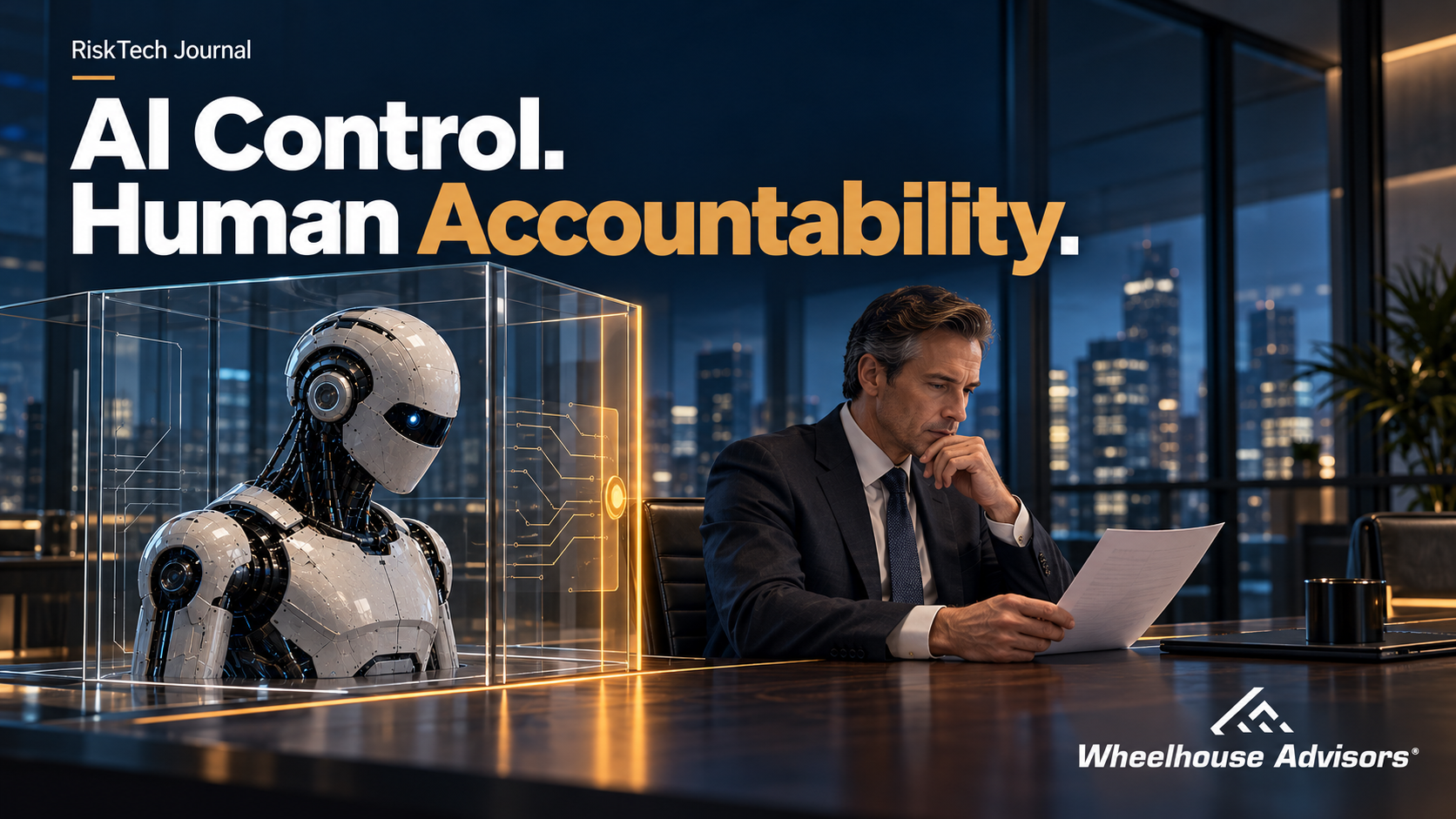
Regulators Have Drawn the Line Between Controlling an AI Agent and Being Accountable for One
The Financial Stability Board spent four months deciding that AI agents are not employees. Its June consultation on responsible AI adoption had leaned on the familiar machinery of people management: three lines of defense, role definitions, agent certification with a permitted scope on file. The final report, published October 15, keeps that machinery but drops the premise. Financial institutions are now told to recognize that AI agents do not reason like humans and may interpret pre-defined goals in unexpected ways. The phrase "synthetic employee" is gone.
That is the quiet change. The loud one is where the FSB puts the boundary of technical control. For the first time, an international standard setter has named the control plane, defined it, and then stated that it does not settle the question that matters most to a board.

The Case Against Taking a Supplier's Recovery Time on Faith
SIFMA and Protiviti reissued their paper on third-party resilience on October 6, eighteen months after the original. The standards for rebuilding systems, protecting backups, and testing recovery are largely the same. What changed is the clock. The update states that frontier AI models have materially changed the cyber threat environment and are compressing the time a firm has to identify, contain, and recover from a disruptive event.
That matters because of what the paper admits about the starting point. Critical suppliers have historically been reluctant to share details of their recovery capabilities, and when they do share, it is often clear they have not invested enough. Suppliers say they test recovery regularly without stating how often or showing results. They say they can recover within the client's targets without stating their own recovery time. Many of these suppliers serve most of the large financial institutions at once, so one supplier's unproven claim becomes an exposure for the whole sector.

Why CISOs Are Struggling—And How Integrated Risk Management (IRM) Is the Answer
The financial services industry is grappling with an escalating crisis: cybersecurity leaders are overburdened, under-supported, and increasingly at risk—both professionally and personally. The rollout of the European Digital Operational Resilience Act (DORA) and similar regulations has not only forced firms to overhaul their IT supply chains but has also driven nearly 80% of Chief Information Security Officers (CISOs) to report mental health impacts.