

The RiskTech Journal
The RiskTech Journal is your premier source for insights on cutting-edge risk management technologies. We deliver expert analysis, industry trends, and practical solutions to help professionals stay ahead in an ever-changing risk landscape. Join us to explore the innovations shaping the future of risk management.
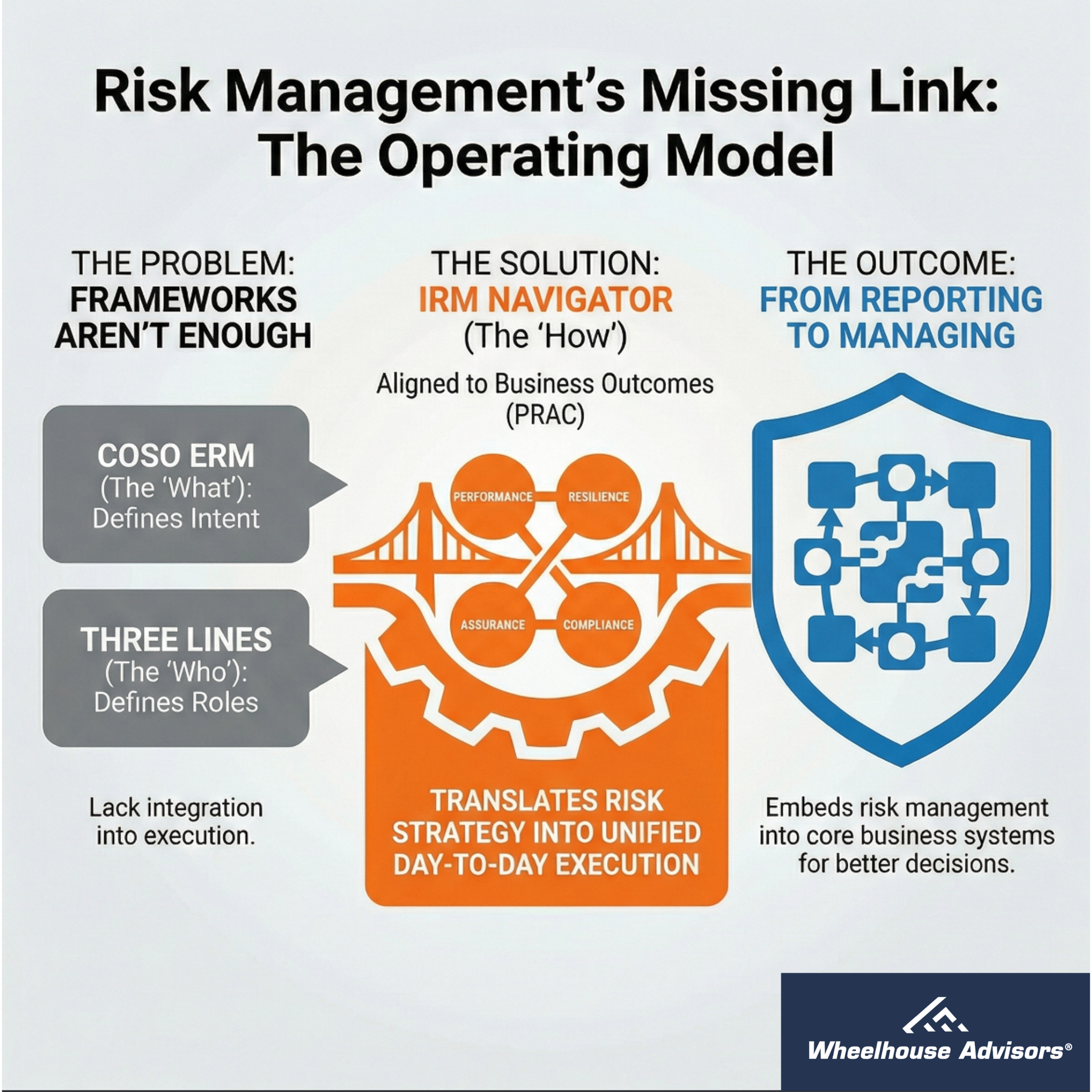
IRM Navigator: The Operating Model for Integrated Risk Management
Many organizations have adopted ERM standards and clarified accountability, yet risk still fails to shape planning, capital allocation, and operational decisions. The gap is not conceptual. It is operational. Most programs have guidance on what effective risk management should achieve and who should perform key activities, but they lack an operating model that specifies how risk work is unified across domains and instrumented through business processes and technology.
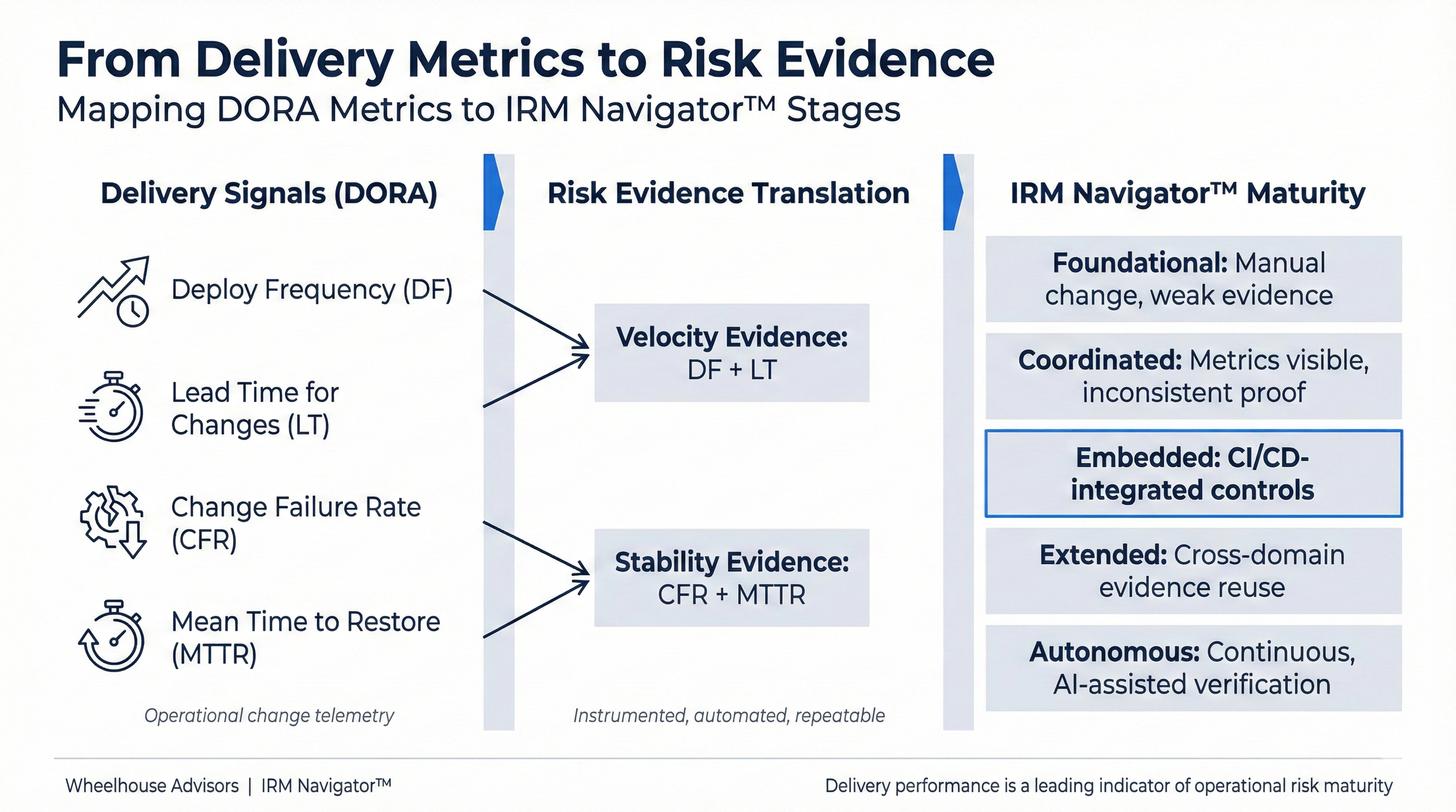
Why DORA Metrics Belong in the Risk Committee Packet
Boards increasingly receive dashboards showing deployment speed, incident counts, and technology uptime. What is often missing is the recognition that software delivery performance is now a primary driver of enterprise risk. Every material change to products, services, data flows, and controls is executed through software delivery pipelines.
DORA metrics were created to measure delivery performance, but when viewed through an integrated risk lens, they function as early-warning indicators of change risk, operational resilience, and assurance quality. Boards that treat these metrics as engineering detail miss one of the clearest signals of whether risk controls are embedded or cosmetic.

Integrated Risk Thinking: The Mindset That Unlocks the Power of the IRM Navigator™ Model
Today’s businesses face unprecedented complexity. Rapid technological advances, evolving regulatory environments, escalating cyber threats, and global operational challenges have rendered traditional risk management approaches obsolete. Siloed processes, reactive responses, and fragmented risk oversight are no longer enough to safeguard modern organizations.
Wheelhouse Advisors has identified that effective risk management in today’s landscape requires not only powerful tools and methods but, more importantly, a fundamentally new way of thinking. This strategic shift is what we call Integrated Risk Thinking (IRT)—the essential mindset that allows organizations to leverage risk as an integral part of strategy, decision-making, and competitive advantage.

The AI Wild West is Over — Why IRM Must Now Govern the Frontier
When John A. Wheeler and Avivah Litan collaborated as colleagues at Gartner, they shared a simple but powerful conviction: technology without governance invites risk, and risk without context invites disaster. That belief feels more urgent than ever in the age of generative AI.
This month, Avivah returned to the spotlight with a compelling Gartner webinar titled “A Partner Framework to Manage AI Governance, Trust, Risk and Security.” It laid out a comprehensive vision for AI Trust, Risk, and Security Management (AI TRiSM), exposing the vulnerabilities of current AI adoption strategies and presenting a future where organizations no longer treat AI oversight as optional.
But here’s the problem: most companies are still stuck in a fractured model of Governance, Risk, and Compliance (GRC). And the rise of autonomous, agentic AI systems is about to make that dysfunction terminal.