

The RiskTech Journal
The RiskTech Journal is your premier source for insights on cutting-edge risk management technologies. We deliver expert analysis, industry trends, and practical solutions to help professionals stay ahead in an ever-changing risk landscape. Join us to explore the innovations shaping the future of risk management.

20 AI Use Cases for Integrated Risk Management in 2024 and Beyond
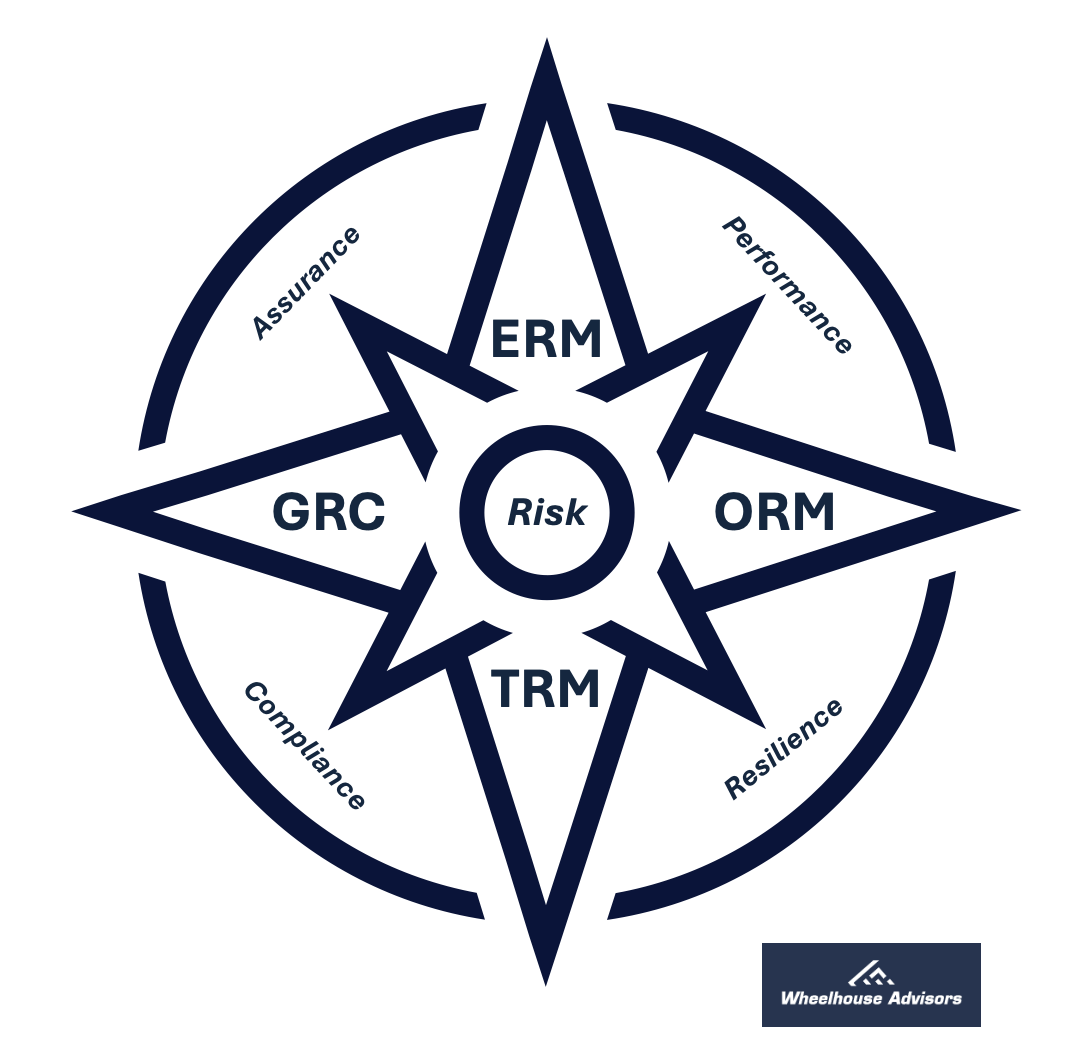
This article explores the transformative role of Artificial Intelligence (AI) in Integrated Risk Management (IRM), emphasizing how AI enhances risk visibility and mitigation across Enterprise Risk Management (ERM), Operational Risk Management (ORM), Technology Risk Management (TRM), and Governance, Risk, and Compliance (GRC). By linking strategic goals, business processes, technology assets, and compliance frameworks, AI-driven IRM provides a comprehensive approach to navigating today's complex risk landscape.

Unveiling the Mysteries of the IRM40: 10 Insights from Wheelhouse Advisors' 2024 IRM Navigator™ Annual Viewpoint Report
As we step into the future of integrated risk management, the 2024 IRM Navigator™ Annual Viewpoint Report by Wheelhouse Advisors stands as a beacon for enterprises navigating the complex waters of RiskTech. This year's report pinpoints leading vendors and encapsulates emerging trends and strategic insights that shape the industry's backbone. Without giving away the specifics of our IRM40 list, here are ten intriguing tidbits about this year's selections that will pique your interest and underscore the value of accessing the full report.

Announcing the IRM Navigator™ Annual Viewpoint Report and the IRM40
The IRM40 showcases a diverse range of vendors excelling across four critical IRM market segments: Governance, Risk, and Compliance (GRC), Enterprise Risk Management (ERM), Technology Risk Management (TRM), and Operational Risk Management (ORM). These vendors were selected from an extensive analysis of 220 candidates for their significant strengths and innovative approaches.

Elevating Fairness in Compliance: A Strategic Imperative for Integrated Risk Management
IRM transcends traditional risk management by incorporating GRC into the domains of ERM, ORM, and TRM, ensuring that governance and compliance are not isolated but integrated with all risk management activities. This comprehensive approach is crucial in an era where banking innovations such as digital platforms, and products like Buy Now Pay Later (BNPL) and Earned Wage Access (EWA), are rapidly evolving. These innovations, while beneficial, introduce complex compliance and operational risks that require an integrated approach to manage effectively.
Harnessing Integrated Risk Management to Navigate the Evolving Data Governance Landscape
Data is increasingly becoming a cornerstone asset for organizations, but with its rising value comes a proportional increase in regulatory scrutiny and potential threats. From the SEC's detailed rules on cybersecurity disclosures to comprehensive AI regulations looming in the EU, companies are navigating a labyrinth of obligations that span multiple jurisdictions and sectors. In this complex environment, boards must maintain vigilant oversight over the organization's data strategies and implementation.

Transforming Governance, Risk, and Compliance: The Role of Large Language Models in an Integrated Risk Framework
In the realm of Governance, Risk, and Compliance (GRC), organizations have traditionally grappled with cumbersome, manual processes that are not only time-consuming but also prone to errors and delays. The integration of Large Language Models (LLMs) into GRC is poised to revolutionize these areas by providing more streamlined, efficient, and accurate management practices. Here's how LLMs are transforming GRC into a unified Integrated Risk Management (IRM) framework, addressing existing limitations and setting the stage for a more comprehensive approach.

Understanding the New SEC Cybersecurity Incident Disclosure Rule: Trends and Implications
In the wake of increasing cybersecurity threats, the Securities and Exchange Commission (SEC) has implemented the Cybersecurity Incident Disclosure Rule, which took effect on December 18, 2023. This rule mandates publicly traded companies to disclose material cybersecurity incidents within four business days of recognizing their materiality. Here, we dissect the early trends observed since the rule's implementation and the broader implications for corporate disclosure practices.

The Maestro of IRM: Conducting the Masterpiece of Modern Risk Management
In the intricate world of risk management, where every decision plays a crucial part in the overall performance of a business, envisioning the integrated approach of governance, risk, and compliance (GRC) alongside Technology Risk Management (TRM), Operational Risk Management (ORM), and Enterprise Risk Management (ERM) as a symphony orchestra offers a compelling narrative.
CIRCIA’s New Rules on Critical Infrastructure: Incorporating IRM to Manage a $2.6 Billion Economic Impact
As the Cybersecurity and Infrastructure Security Agency (CISA) ushers in the Cyber Incident Reporting for Critical Infrastructure Act of 2022 (CIRCIA), an estimated 316,244 organizations within vital sectors stand at the cusp of significant regulatory shifts. Amidst this landscape, the strategic incorporation of Integrated Risk Management (IRM) becomes crucial not just for compliance but for bolstering cyber defenses in the face of a projected $2.6 billion economic impact over the next decade.

Elevating Cyber Risk Management: The Imperative Role of IRM Post-UnitedHealth Hack
My analysis of the cyber insurance market, an endeavor that involved scrutinizing thousands of policies during my tenure at Gartner, revealed a consistent pattern: widespread exclusions and often inadequate coverage. The fallout from the UnitedHealth incident magnifies these issues, demonstrating the peril of relying solely on cyber insurance as a safeguard against the multifaceted nature of cyber threats, especially those that affect third-party vendors.

Integrated Risk Management: The Keystone in Safeguarding Generative AI Against Data Poisoning
As organizations increasingly integrate AI into their operations, the role of IRM in ensuring these technologies are leveraged safely and responsibly cannot be overstated. It is through comprehensive risk management strategies that the full potential of generative AI can be realized, driving innovation while protecting against the vulnerabilities inherent in this powerful technology.

The Looming Shadow of the EU Cyber Resilience Act: How Integrated Risk Management Can Be Your Shield
The European Union's Cyber Resilience Act (CRA) looms large on the horizon, casting a shadow of both challenge and opportunity for companies selling software and connected devices in the EU. While the act's enforcement date is still months away, its comprehensive cybersecurity regulations demand proactive preparation from manufacturers, importers, and distributors alike.

Climate Disclosure Unveiled: Optimizing Risk Management in Response to SEC's Final Rules
The U.S. Securities and Exchange Commission (SEC) has enacted groundbreaking rules requiring companies to disclose their climate-related risks, marking a significant milestone in our collective journey towards sustainability and transparency in the financial world. Among these rules, the stipulation for registrants to disclose their processes for identifying, assessing, and managing material climate-related risks, and the integration of these processes into their overall risk management systems, stands out as a clarion call for a more sophisticated, integrated approach to risk management.

IRM at the Crossroads of Digital and Sustainability Risks
Risk management is undergoing a significant transformation in the rapidly evolving world of business. Integrated Risk Management (IRM) is at the forefront of this change, offering a strategic framework that navigates through both traditional and emerging risks. The "15 Trends Reshaping Business Risk Management Strategies," highlighted by The Newsweek Expert Forum, underscores the critical role of IRM in addressing a wide array of challenges, including the increasingly pivotal areas of digital and sustainability risks.

NIST CSF 2.0: Charting Your Course with IRM Technology and IRM Navigator™
This week’s release of the National Institute of Standards and Technology (NIST) Cybersecurity Framework (CSF) 2.0 presents a significant opportunity for organizations to strengthen their cybersecurity posture. This updated framework underscores the critical role of risk management in building cyber resilience, offering valuable guidance in a rapidly evolving threat landscape. However, navigating the implementation of NIST CSF 2.0 can be challenging, often hampered by siloed data, fragmented processes, and limited visibility into overall risk exposure.

Shifting Gears: Palo Alto Networks and the Future of Cybersecurity
Palo Alto Networks is taking deliberate steps to align more closely with the burgeoning Integrated Risk Management (IRM) market in a move that signals a profound shift within the cybersecurity industry. While placing Palo Alto outside of the direct IRM market play, this strategy is symbolic of a broader industry evolution. It underscores a critical pivot towards integrating cybersecurity data feeds with IRM solutions to provide a comprehensive, business-focused risk analysis.

DORA's Wide Net: More Than Just Cybersecurity for Financial Services
The recent release of draft technical standards for the European Union’s Digital Operational Resilience Act (DORA) paints a clearer picture of its sweeping reach. While many associate DORA with cybersecurity for financial institutions, it casts a wider net, encompassing third-party providers and demanding a stronger integrated risk management approach. Let's unpack the key takeaways for businesses navigating this evolving landscape, incorporating insights from various sources.

The SEC Eyes Digital and Sustainability Risks: How Can IRM Help?
Gary Gensler, Chair of the Securities and Exchange Commission (SEC), yesterday delivered a thought-provoking speech at Yale Law School, addressing the opportunities and challenges presented by digital risks (encompassing Artificial Intelligence) and sustainability risks (including climate change). While acknowledging the potential benefits of AI, he emphasized the need for robust risk management frameworks to address issues like explainability, bias, and systemic risk. This raises the crucial question: how can Integrated Risk Management (IRM) help companies navigate this evolving landscape?
Latest SEC Reports Reveal Devastating Digital Risks
In an era of unpredictability and the intertwining of global digital risks, the recent cyberattacks on Clorox and Johnson Controls serve as a stark wake-up call for businesses worldwide. Currently estimated at a combined cost of $76 million, these incidents underscore the critical need for a more sophisticated, proactive approach to risk management. The just published Accenture Risk Study: 2024 Edition echoes this sentiment, revealing a concerning trend: 72% of businesses admit their risk management capabilities are lagging behind the evolving nature of threats, particularly in cybercrime.

Exploring Integrated Risk Management Solutions with the IRM Navigator™ Reports
Understanding the landscape of Integrated Risk Management (IRM) software solutions is crucial for organizations seeking to navigate the complexities of modern risk management. Recognizing this need, Wheelhouse Advisors has developed a comprehensive suite of resources known as the IRM Navigator™ Reports. These reports are designed to provide in-depth analysis and insights into IRM software solutions across various segments and capabilities, offering a roadmap for organizations looking to elevate their risk management strategies.