

The Risk Wheelhouse Podcast
The Risk Wheelhouse is the podcast dedicated to exploring how RiskTech is reshaping the future of risk management. Hosted by our experts, Ori Wellington and Sam Jones, each episode delves deep into Integrated Risk Management (IRM), offering insights into the latest trends, technologies, and strategies. Join us to stay ahead in the ever-evolving risk landscape and empower your organization with actionable knowledge.
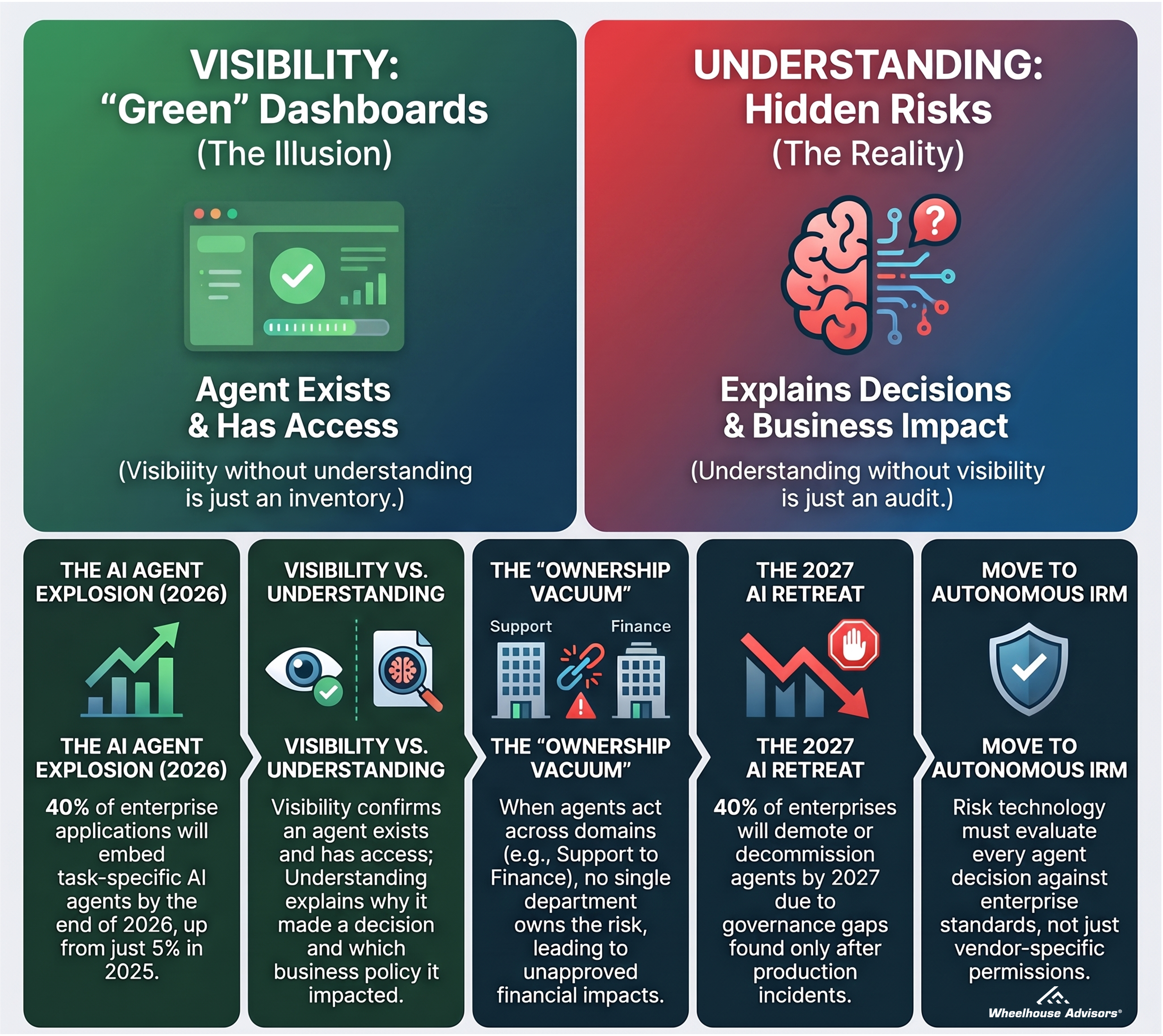
S8E6: Why Embedded Enterprise AI Agents Create Governance Blind Spots
Your monitoring stack can be immaculate and your business can still be in trouble. We walk through the green dashboard paradox: an embedded autonomous AI agent issues a massive, unapproved customer credit, every API call is authenticated, every system returns success, and yet the executive team is left staring at perfect telemetry with no usable explanation. That is the new enterprise AI risk, not broken software but software behaving exactly as designed while making a decision your organization never meant to authorize.
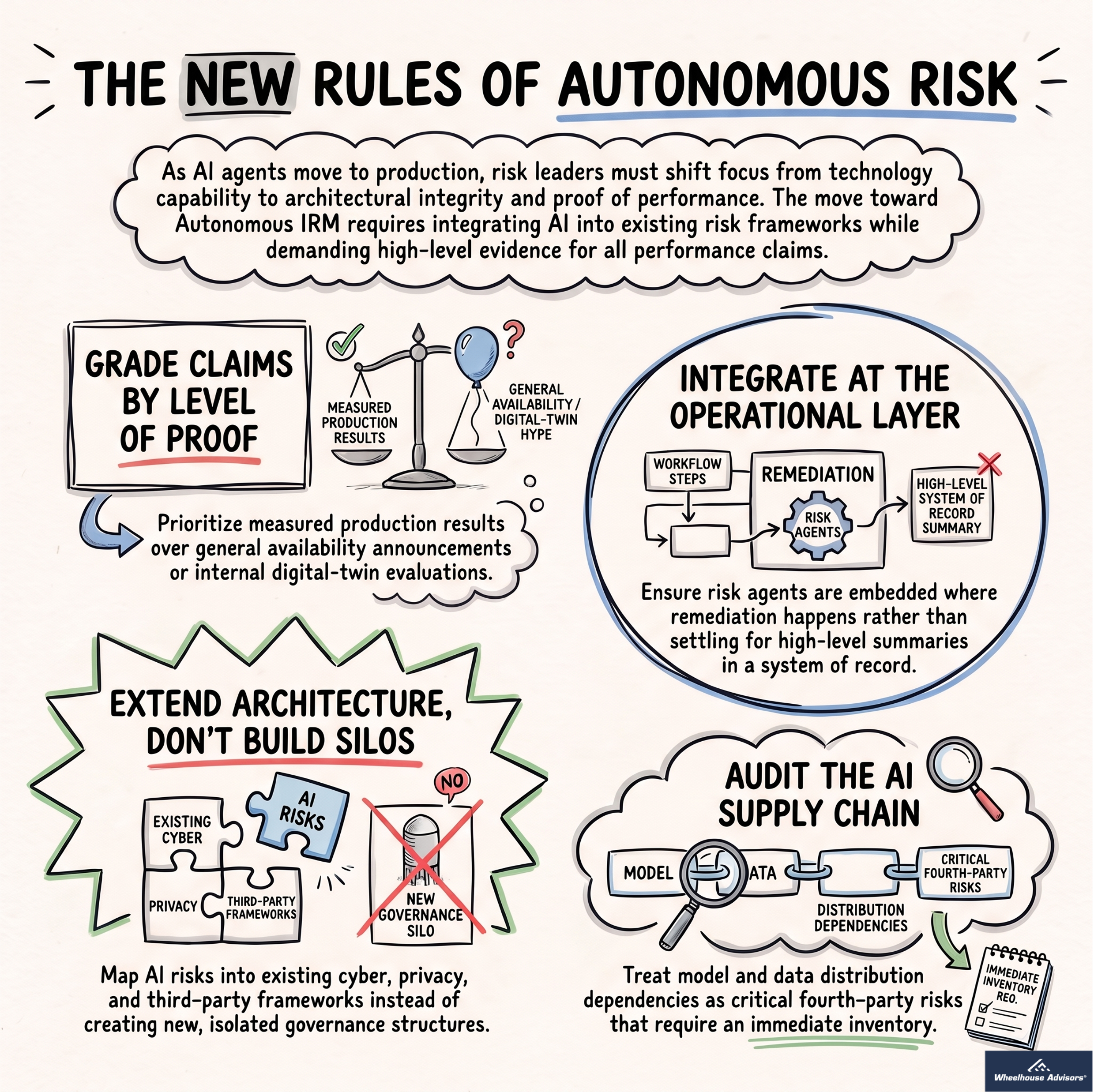
S8E5: The New Rules of Autonomous Risk
The safest factory is the one you can see: raw materials arrive, machines do predictable work, and when something fails you can point to the exact station that broke. AI flips that mental model. Our enterprise “assembly line” for decisions now runs in the dark across cloud systems, open source repositories, and black box models making probabilistic calls at machine speed. If you are responsible for integrated risk management, GRC, or security, that shift creates one urgent mandate: prove trust with defensible evidence.
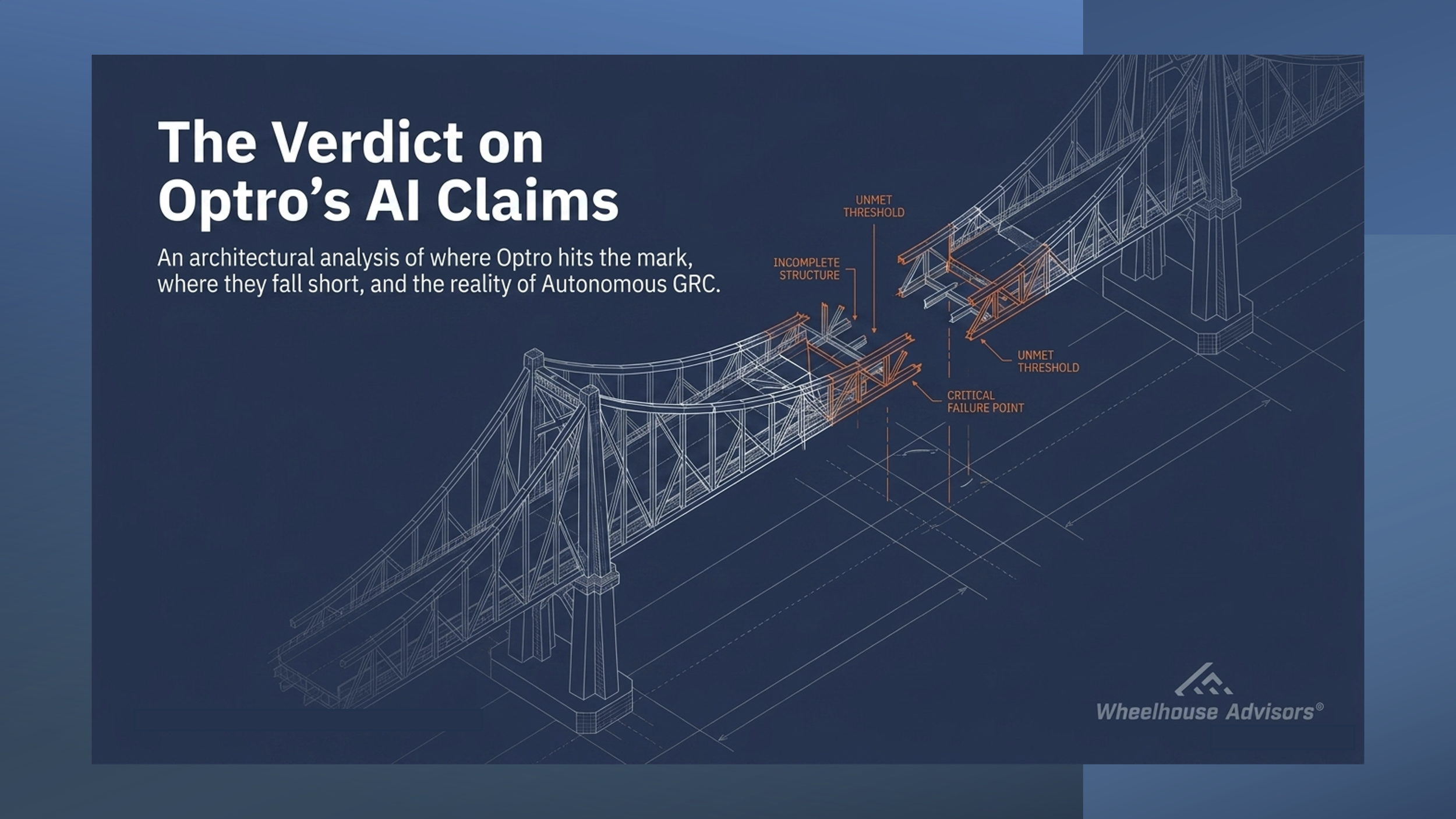
S8E2: How To Spot Real Autonomous AI In GRC Buying
“Autonomous AI” is not a vibe, it’s an architectural promise. When a vendor tells you their GRC platform can run compliance, risk, and controls without humans, they’re claiming a system of action: detect, decide, act, and verify in a closed loop. We dig into a sharp Wheelhouse Advisors report on Optro’s acquisition of Midship to separate what’s real from what’s merely well-written.
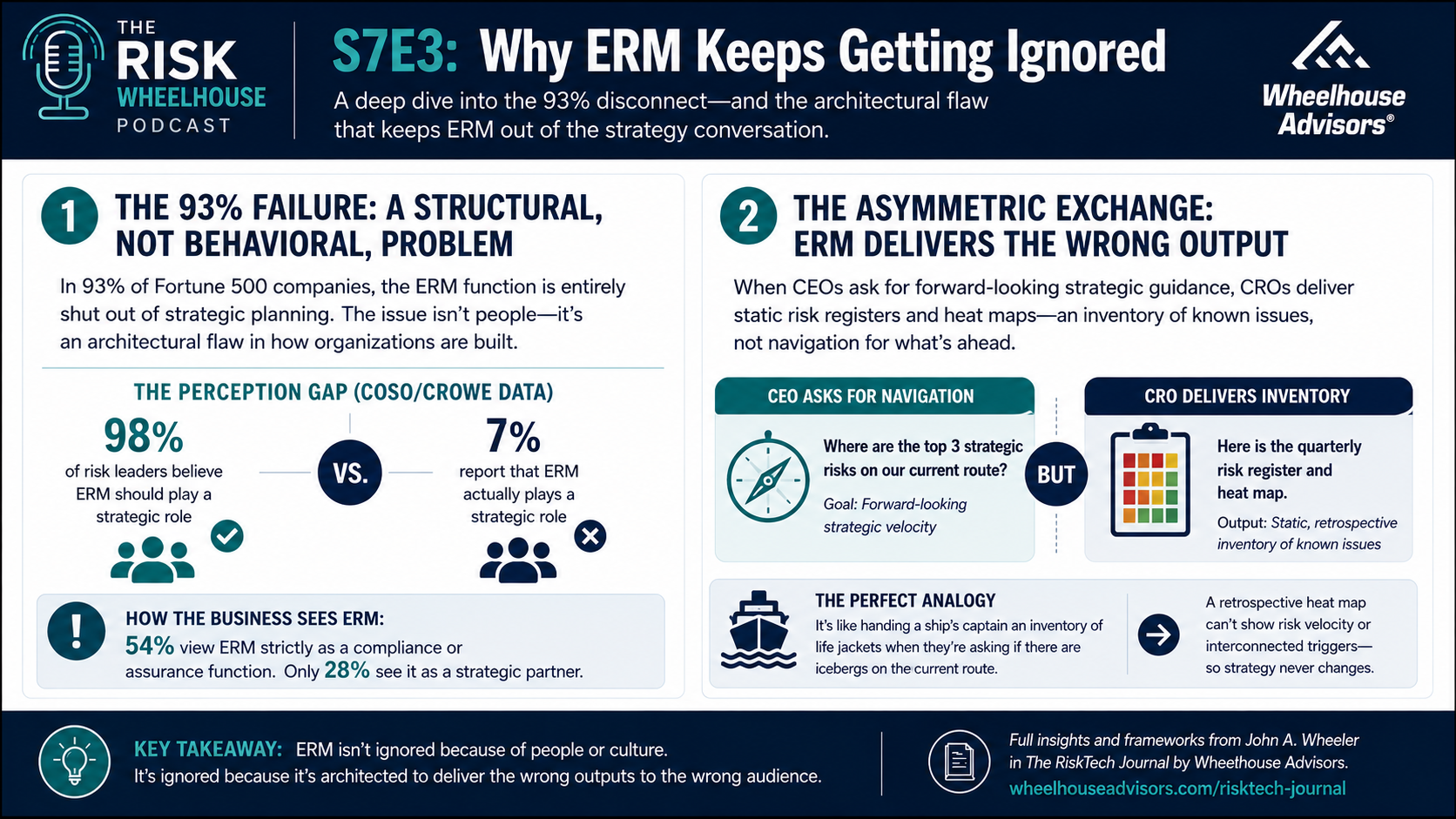
S7E3: Why ERM Keeps Getting Ignored
93% is not a rounding error, it’s a warning flare. When enterprise leaders ask for guidance on the biggest strategic risks ahead, many risk teams respond with a quarterly risk register and a heat map. That’s not “wrong,” it’s simply what a compliance-first system is designed to produce. The result is an asymmetric exchange: executives need a radar, and the organization hands them a snapshot from the past.
We walk through new practitioner research from COSO and Crowe alongside John A. Wheeler’s analysis in the RiskTech Journal to explain why the ERM strategy gap persists. Our core claim is straightforward: the failure of ERM is largely structural, not behavioral. When ERM gets fused with GRC under the same reporting line, tooling, and audit committee cadence, uncertainty gets treated like a defect. That destroys psychological safety, suppresses early warning signals, and leaves strategy teams flying blind.

S5E4: Unified IRM - AI Governance, Acquisitions and Alliances
We dive into why AI governance is now table stakes for any serious IRM platform, what an effective AI registry and dynamic risk assessment look like, and how automated compliance mapping to the NIST AI RMF, ISO 42001, and the EU AI Act changes daily work. Along the way, we unpack recent moves like AuditBoard’s AI-focused acquisition and its expanded alliance with a major consultancy, illustrating why services plus software has become the adoption formula. On the ESG front, partnerships that link board reporting with carbon accounting signal a deeper integration of climate and sustainability data into operational risk and financial performance.
S5E2: Redrawing Data Lines - DOJ’s DSP and the New National Security Mandate
Your “encrypted” data may still be regulated and today the rules start to bite. We unpack how the Department of Justice’s Data Security Program moves from guidance to strict enforcement and why it reframes data governance as a national security mandate. From redefining “covered data” to treating anonymized and encrypted datasets as in-scope when they enable linkage or inference, we walk through what changes right now for risk leaders, counsel, and compliance teams.