

The RiskTech Journal
The RiskTech Journal is your premier source for insights on cutting-edge risk management technologies. We deliver expert analysis, industry trends, and practical solutions to help professionals stay ahead in an ever-changing risk landscape. Join us to explore the innovations shaping the future of risk management.
Subscribe for notifications when new RiskTech Journal articles and research updates are published.
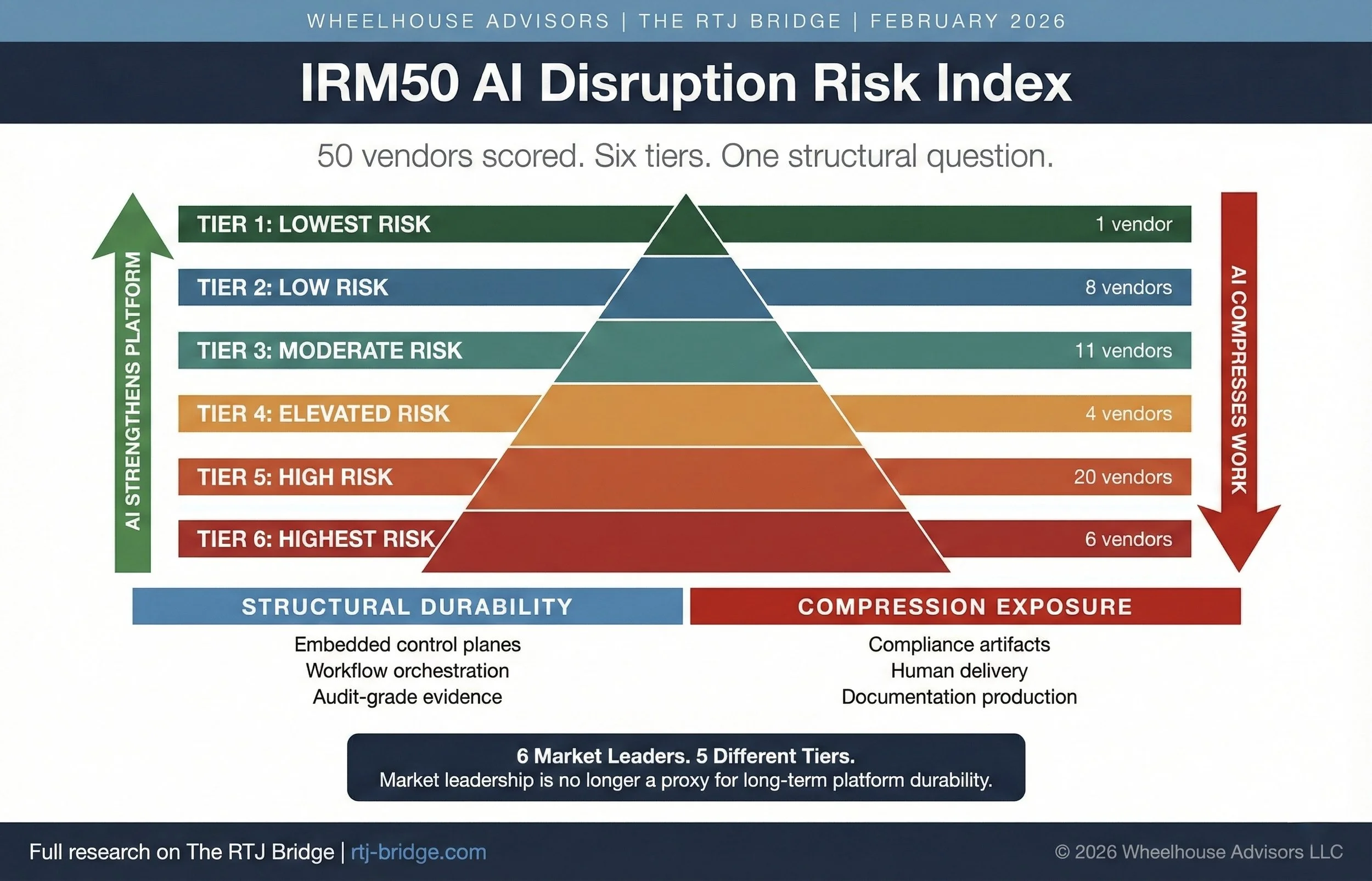
Professional Services Firms Admit AI Is an Existential Risk
PwC just announced PwC One, an AI platform that delivers tax, audit, and consulting services directly to clients without a PwC professional in the loop. CEO Paul Griggs warned this week that partners who resist are "not going to be here that long." Accenture said something similar earlier this month.
Two of the largest professional services firms in the world have now publicly acknowledged that AI threatens their core business model. But the bigger question is not what happens to PwC and Accenture.
It is what happens to the technology vendors who depend on them.
Subscribe free to The RiskTech Journal to learn more.
The 2026 Convergence: Integrated Risk Management In a New Era
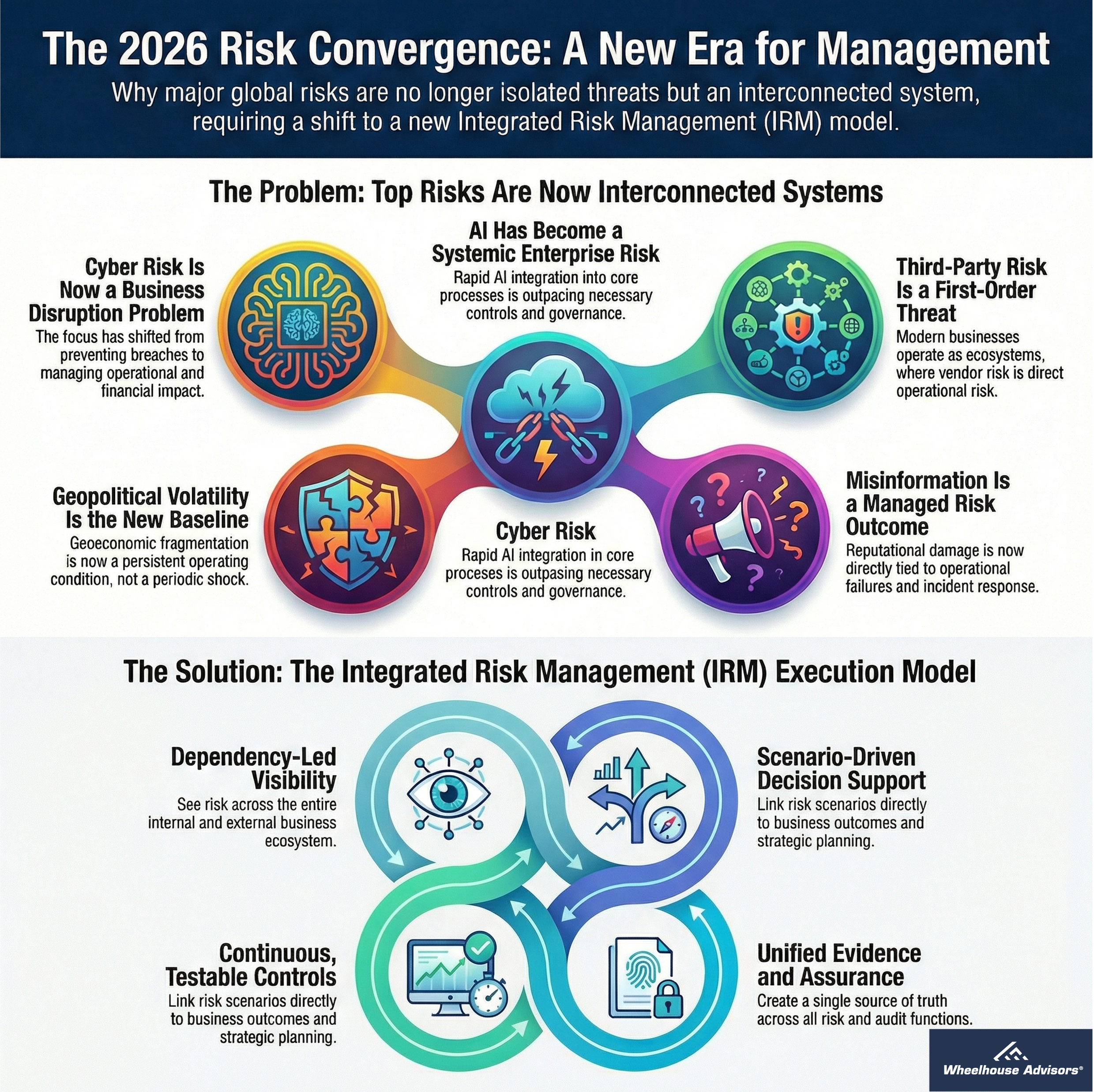
The 2026 global risk survey cycle marks an inflection point in how risk is understood, prioritized, and operationalized by large organizations. For the first time in several years, leading surveys from Aon, Allianz, the World Economic Forum, Protiviti, PwC, Marsh, Zurich, and Eurasia Group are not merely aligned on top risks, they are aligned on why those risks are proving so difficult to manage with legacy approaches.
Cyber remains the top-ranked risk globally. Geopolitical volatility has become a structural operating condition rather than a periodic shock. Artificial intelligence has moved decisively from emerging concern to material enterprise exposure. Third-party dependency is now treated as a first-order risk category. Across these themes, one signal is clear: risk is no longer behaving as a set of discrete domains. It is behaving as an interconnected system of dependencies, amplifiers, and cascading impacts.
This convergence explains why Integrated Risk Management (IRM) is shifting from an architectural aspiration to an execution requirement.