

The RiskTech Journal
The RiskTech Journal is your premier source for insights on cutting-edge risk management technologies. We deliver expert analysis, industry trends, and practical solutions to help professionals stay ahead in an ever-changing risk landscape. Join us to explore the innovations shaping the future of risk management.
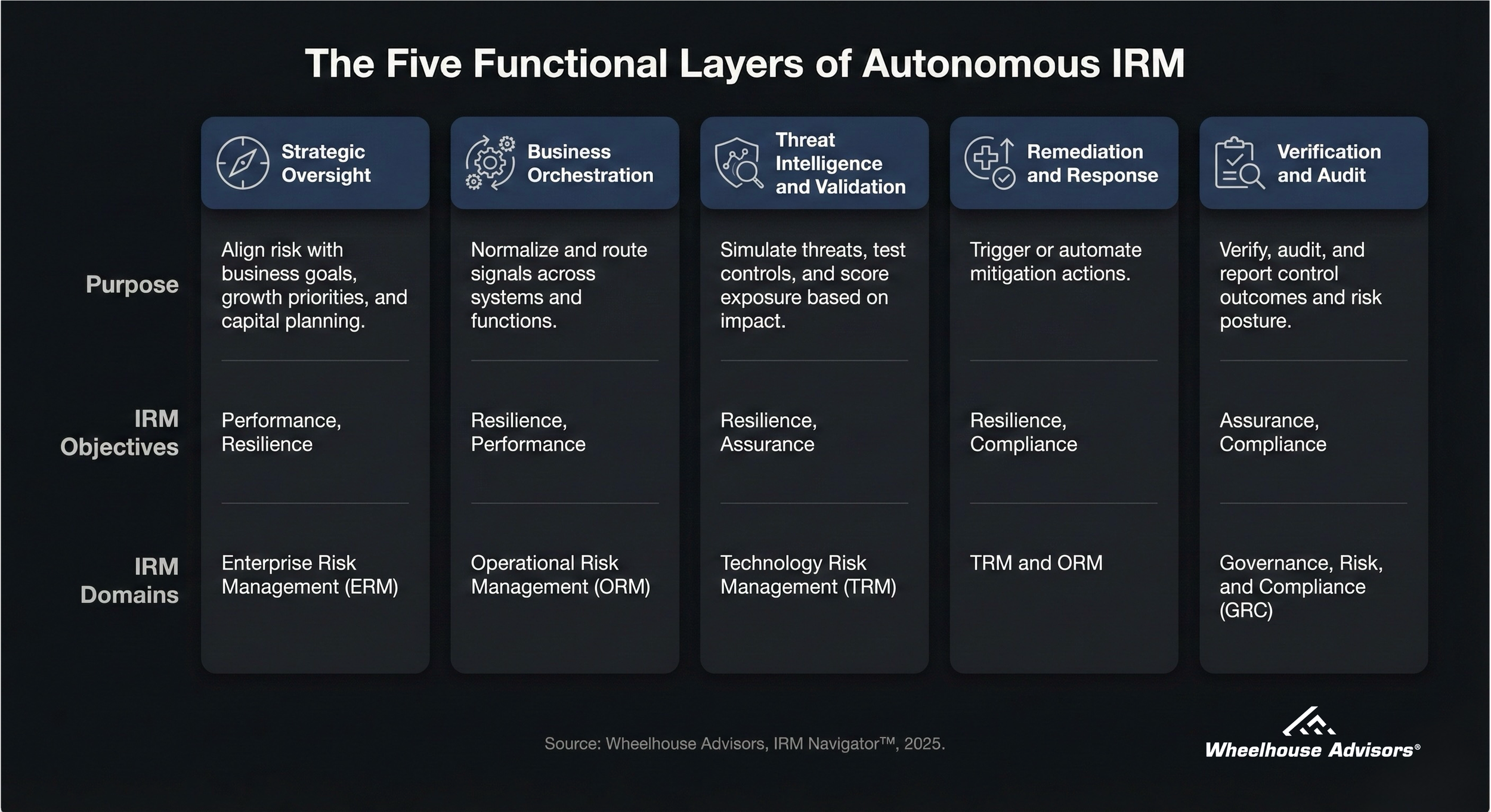
Why Data Streaming Is the Hidden Backbone of Autonomous IRM
Data streaming has become a foundational capability for modern enterprises. As organizations move away from periodic reporting and manual control cycles, the emphasis has shifted to continuous sensing, real time telemetry, and rapid mitigation. These operational patterns depend on data in motion, not data at rest. Streaming architectures now sit at the center of this shift.
The acquisition of Confluent announced today by IBM reinforces this point. Confluent is the leading commercial platform built on Apache Kafka, one of the most widely adopted streaming technologies worldwide. The acquisition signals that streaming has moved from a niche data engineering function to a strategic capability that enables AI operations, continuous controls, and integrated risk programs. Enterprises are recognizing that autonomous risk management depends on steady, reliable streams of operational signals that can be sensed, analyzed, and acted upon in real time.

Generative AI Is Steering Banks Toward Autonomous IRM—But the Bridge Isn’t Finished Yet
When McKinsey & Company published “How generative AI can help banks manage risk and compliance” in March 2024, it put blue-chip credibility behind a growing consensus: large-language models and related GenAI tools will automate swaths of the three-lines-of-defense and up-end conventional governance, risk, and compliance (GRC) workflows. What McKinsey did not say—but unmistakably implied—is that the old compliance-first paradigm is now on borrowed time. The firm’s use-case catalogue—from virtual regulatory advisors to code-generating “risk bots”—maps neatly onto the early layers of Autonomous Integrated Risk Management (IRM): continuously sensing risk, generating controls, and feeding decision-grade insight back into the business.
Yet the report also reveals a tension. McKinsey still frames GenAI as a helper inside discrete risk silos, guarded by human-in-the-loop checkpoints. Autonomous IRM envisions something bolder: an AI-directed control fabric that dissolves those silos, embeds itself in front-line processes, and—over time—lets the machine take the first swing at routine risk decisions while humans govern the exceptions.

Why Generative AI Is Breaking Cyber Insurance—and What Risk Leaders Must Do Next
The promise of generative artificial intelligence (AI) is captivating: it automates content creation, accelerates decision-making, and unlocks new efficiencies across industries. But beneath this glittering facade lurks an existential threat that few executives acknowledge: these systems are introducing catastrophic risks that cyber insurance markets are neither prepared for—nor willing to underwrite fully. As insurers frantically scramble to recalibrate policies in light of AI-driven threats, risk executives face a stark choice: transform how they manage emerging digital risks or face potentially devastating uninsured losses.

Moving Fast and Breaking Things - The Hidden Risks of AI's Silent Upgrades
In recent months, an increasing number of organizations across finance, healthcare, and technology sectors have encountered significant disruptions caused by seemingly minor updates to their AI-driven tools. For instance, compliance teams at major financial institutions faced confusion and heightened regulatory exposure when an incremental update to their AI language models altered interpretations of regulatory guidance overnight. Without clear prior communication from the AI vendor, these subtle but impactful changes created significant operational uncertainty and regulatory scrutiny.