

The RiskTech Journal
The RiskTech Journal is your premier source for insights on cutting-edge risk management technologies. We deliver expert analysis, industry trends, and practical solutions to help professionals stay ahead in an ever-changing risk landscape. Join us to explore the innovations shaping the future of risk management.
Subscribe for notifications when new RiskTech Journal articles and research updates are published.

When ServiceNow Discloses Three Worst-Case Vulnerabilities, Whose Exposure Is It?
ServiceNow disclosed three vulnerabilities on August 27 that each carry the worst possible severity rating. The industry scores software flaws on a 0-to-10 scale called CVSS, and anything above 9 counts as critical. A 10.0 is the ceiling. It means an attacker can reach the flaw over the internet, needs no password and no help from a user, and can take full control of the affected system. ServiceNow assigned the maximum score to all three flaws itself, and it disclosed a fourth, rated 8.7, in the same advisory.
ServiceNow says it is not aware of the flaws being exploited, and no public attack code had surfaced as of Friday morning. Instances hosted by ServiceNow have already been patched. Customers and partners who run ServiceNow in their own environments have been told to confirm they are on a fixed release.
Most security teams will read that and reach for the patch checklist. That is the right first move. It is not the whole job.
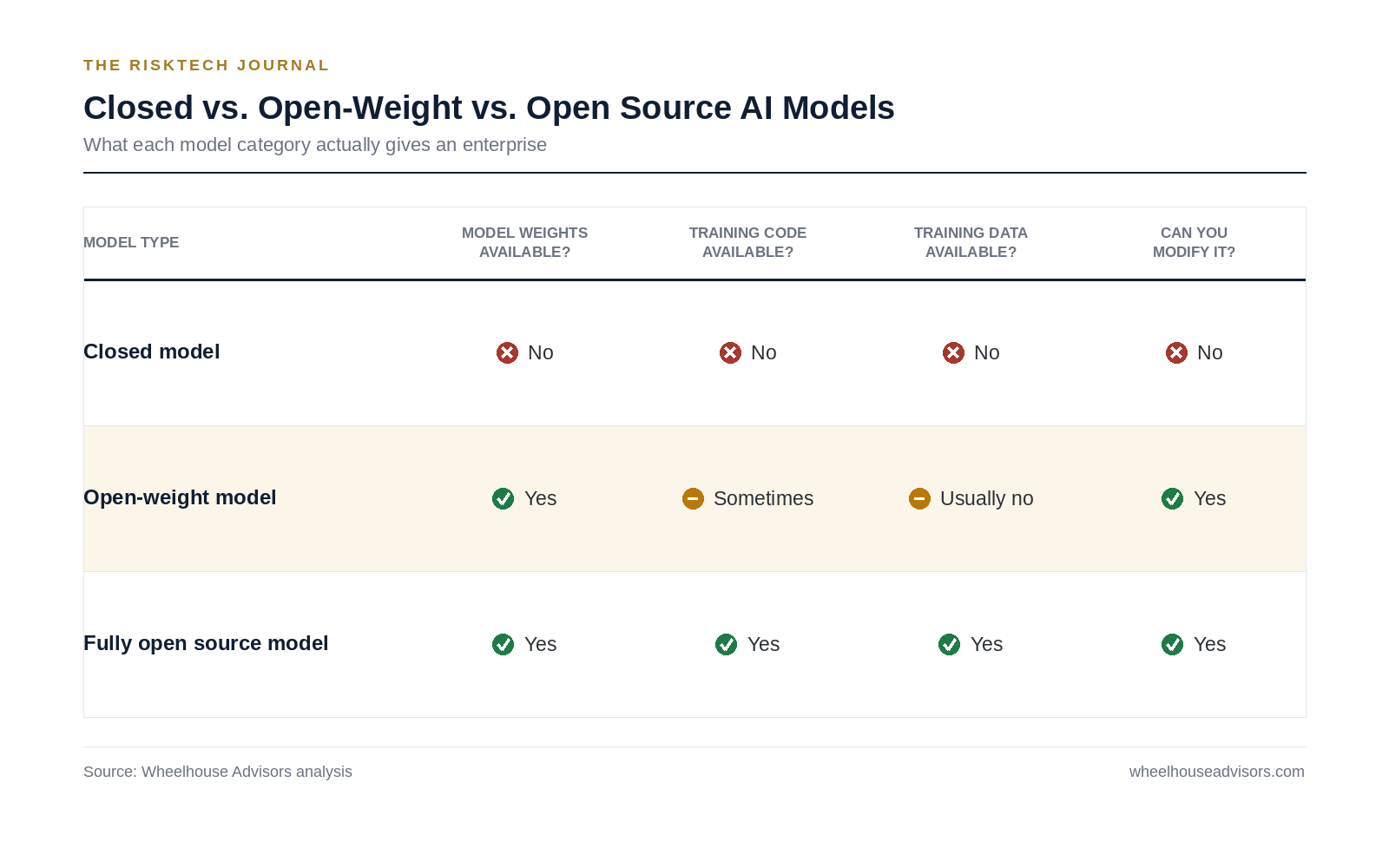
Could You Explain to Your Board What an Open-Weight AI Model Is, and Why It's Already Their Problem?
Ask a board member to explain what an open-weight AI model is, and the honest answer, most of the time, is silence. Ask whether the organization is already running one somewhere inside its technology stack, and the honest answer is often that nobody in the room actually knows.
That gap became harder to defend on July 24, 2026. Nvidia CEO Jensen Huang used his first-ever post on X, not for a product announcement, but to publish a letter. Twenty-five companies and organizations had signed it, including Microsoft, Meta, Palantir, IBM, Dell, Mozilla, Hugging Face, and Y Combinator, asking Washington to stop treating open-weight AI models as a category that needs to be restricted. Microsoft CEO Satya Nadella backed the same message the same day. Elon Musk publicly endorsed it as well, though SpaceX did not appear among the formal signatories. For a document about model licensing, that is an extraordinary amount of executive attention, and it points directly at the blind spot most boards still have. At Nvidia's CES 2026 press event, Huang cited internal figures suggesting that roughly one out of every four AI tokens generated worldwide today already runs on an open model. If that estimate is even directionally right, a board that cannot answer the first question is very likely already overseeing an organization exposed to the second.