

The RiskTech Journal
The RiskTech Journal is your premier source for insights on cutting-edge risk management technologies. We deliver expert analysis, industry trends, and practical solutions to help professionals stay ahead in an ever-changing risk landscape. Join us to explore the innovations shaping the future of risk management.
Subscribe for notifications when new RiskTech Journal articles and research updates are published.
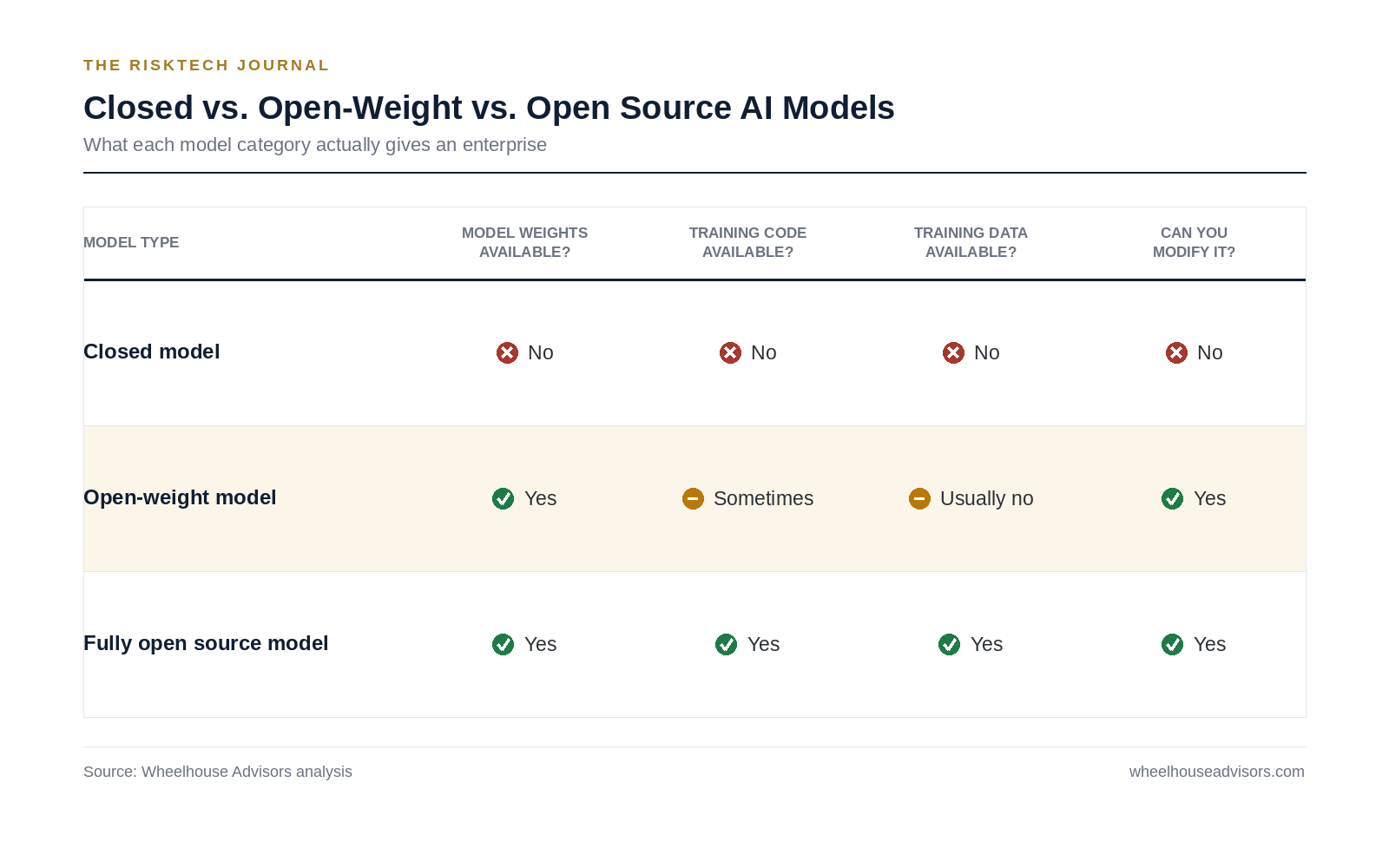
Could You Explain to Your Board What an Open-Weight AI Model Is, and Why It's Already Their Problem?
Ask a board member to explain what an open-weight AI model is, and the honest answer, most of the time, is silence. Ask whether the organization is already running one somewhere inside its technology stack, and the honest answer is often that nobody in the room actually knows.
That gap became harder to defend on July 24, 2026. Nvidia CEO Jensen Huang used his first-ever post on X, not for a product announcement, but to publish a letter. Twenty-five companies and organizations had signed it, including Microsoft, Meta, Palantir, IBM, Dell, Mozilla, Hugging Face, and Y Combinator, asking Washington to stop treating open-weight AI models as a category that needs to be restricted. Microsoft CEO Satya Nadella backed the same message the same day. Elon Musk publicly endorsed it as well, though SpaceX did not appear among the formal signatories. For a document about model licensing, that is an extraordinary amount of executive attention, and it points directly at the blind spot most boards still have. At Nvidia's CES 2026 press event, Huang cited internal figures suggesting that roughly one out of every four AI tokens generated worldwide today already runs on an open model. If that estimate is even directionally right, a board that cannot answer the first question is very likely already overseeing an organization exposed to the second.
What ServiceNow Just Announced Is Bigger Than a Security Story
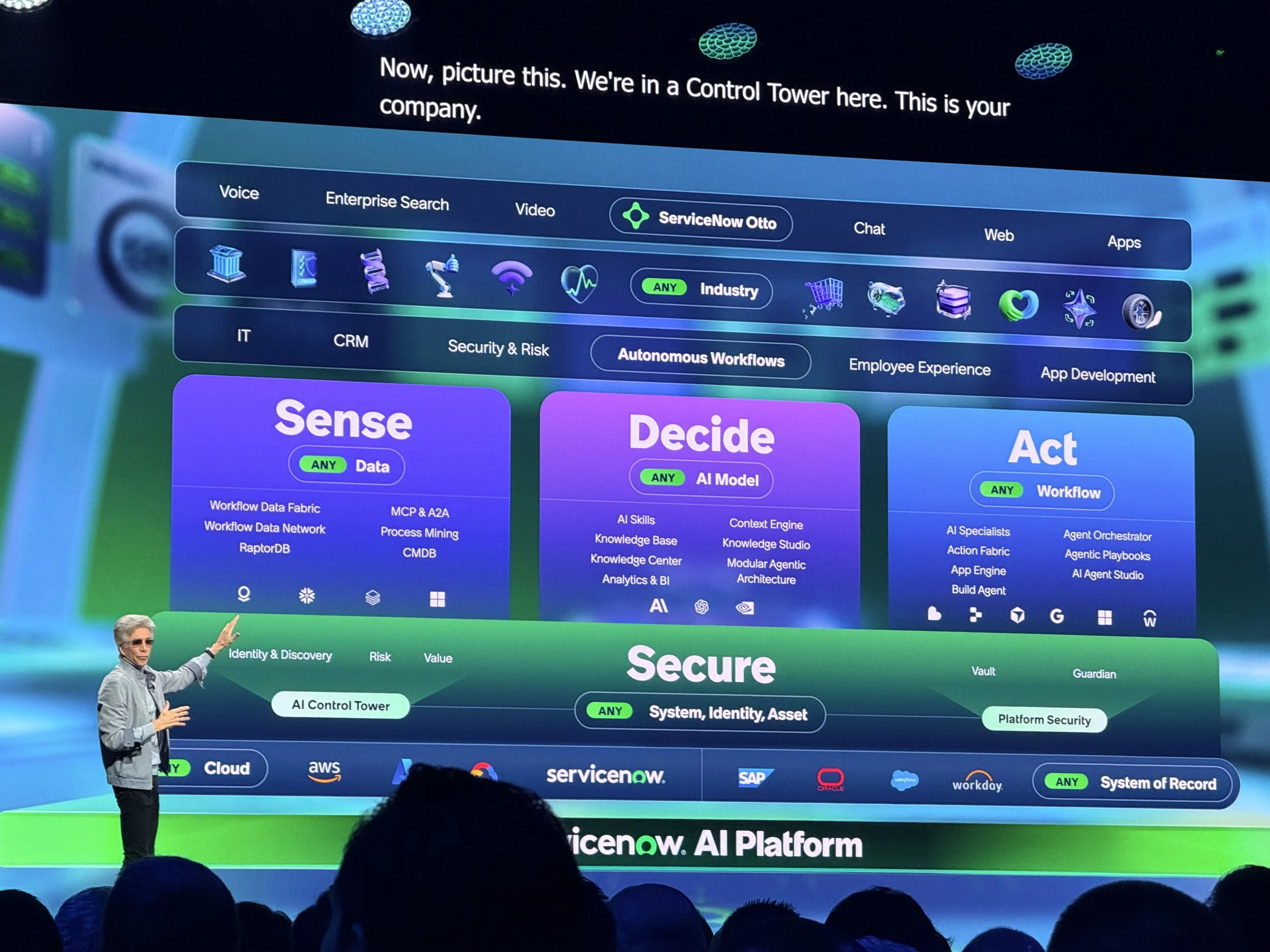
ServiceNow announced Autonomous Security and Risk on Tuesday morning, integrating its recent acquisitions of Armis and Veza into the ServiceNow AI Platform under what the company calls the AI Control Tower. The press release framed the launch as a way to govern every AI agent, identity, and connected asset across the enterprise. I am writing from Knowledge ’26 in Las Vegas, where the announcement landed in the opening keynote and where the architectural ambition behind it has been on display all week.
The first-wave coverage is reading the announcement as a security story. The Armis acquisition closed two weeks ago, the Veza integration extends identity controls to the AI agents now operating inside enterprises, and a new generation of what ServiceNow calls AI specialists handles vulnerability remediation and security operations end to end. Those elements are real, and the security framing is not wrong. It is incomplete. What ServiceNow has actually announced is the first complete commercial architecture for governing the autonomous enterprise. We have been writing about the emergence of this category, autonomous integrated risk management (IRM), in The RiskTech Journal (RTJ) since October 2024.