

The RTJ Bridge - The Research Platform Created by the Publishers of The RiskTech Journal
The RTJ Bridge is an independent research platform delivering institutional-grade IRM market intelligence, vendor competitive assessments, and strategic risk technology analysis. Built by the analyst who created the Integrated Risk Management category at Gartner, The RTJ Bridge gives risk leaders, technology executives, and solution providers the same caliber of competitive intelligence that major analyst firms charge $25,000 to $50,000+ per year to access.
Subscribers to The RTJ Bridge receive full access to:
IRM50 OnWatch Vendor Assessments — Competitive analysis of leading IRM vendors as market events unfold, covering platform strategy shifts, M&A impact, earnings signals, and positioning changes.
Autonomous IRM and AI Governance Research — Original research on how agentic AI is reshaping risk management operating models, from production deployment patterns to the structural implications for vendor platforms and enterprise programs.
Analyst Firm and Market Critiques — Independent assessments of research from Gartner, Forrester, and other major analyst firms, viewed through the IRM Navigator Model to identify gaps, validate signals, and challenge conventional positioning.
Board Governance and Audit Committee Intelligence — Research on oversight effectiveness, emerging risk response gaps, audit committee workload challenges, and the disconnect between risk reporting and executive action.
M&A and Strategic Alliance Analysis — Same-week analysis of acquisitions, partnerships, and PE investment moves reshaping the IRM competitive landscape, with implications for buyers, vendors, and investors.
Regulatory, ESG, and Sustainability Risk — Research on how evolving regulatory frameworks (SEC cyber disclosure, EU CSRD/CSDDD, AI regulation) affect enterprise risk programs and technology requirements.
IRM Navigator™ Market Intelligence — Strategic previews and deep dives from the IRM Navigator Model, the only independent model built specifically to evaluate integrated risk management maturity and vendor alignment.
Cyber Risk, Insurance, and Third-Party Risk — Analysis of cyber risk quantification, insurance market dynamics, and the convergence of third-party risk management into enterprise IRM programs.
Subscribe to get access now
The RTJ Bridge is an independent IRM research platform published by Wheelhouse Advisors. Subscribers receive ongoing access to vendor competitive assessments, AI disruption analysis, M&A and partnership impact research, and IRM Navigator™ market intelligence. This is the only research platform built and led by the analyst who created the Integrated Risk Management category, a market now valued at over $61 billion and projected to reach $133 billion by 2031.

The Compliance Illusion: Agentic Hype and the Integrity Gap
The Agentic GRC category now includes every major compliance platform in the market, and most of them have announced autonomous capabilities within the last twelve months. The announcements are not the problem. The gap between what the announcements describe and what the architectures underneath can actually support is the problem. When a well-funded, Y Combinator-backed, Insight Partners-led compliance platform allegedly generates auditor conclusions before client data is reviewed, and a whistleblower finds the evidence in a publicly accessible spreadsheet, the question stops being about one vendor. It starts being about a structural failure mode the market has not priced.
The Compliance Illusion is the condition produced when AI disruption pressure rewards the announcement of agentic capabilities and ignores the program maturity that makes those capabilities trustworthy. Where does agent automation end in any given platform, and where does independent verification begin? How did SOC 2 certification go from procurement gate to AI-speed signal to legal liability in under twenty-four months? Which IRM50 tiers carry the highest structural integrity exposure, and why is that invisible to standard SaaS diligence? This research note applies the IRM Navigator™ Model, the IRM Navigator™ Curve, and the IRM50 AI Disruption Risk Index to answer those questions and to name the sequencing rule the market has ignored.

ServiceNow announces “AI Experience” as a front end for agentic workflows
ServiceNow announced AI Experience, a conversational interface that sits across Now Platform workflows. The company describes five elements: AI Lens for screen-aware actions, AI Voice Agents, AI Web Agents, AI Data Explorer, and an AI-governance layer via AI Control Tower. ServiceNow says AI Lens is available now. Voice Agents, Web Agents, and Data Explorer are targeted for availability by the end of 2025.
IRM50 OnWatch: Signals Include Governance Pressure, AI Adoption Proof Points, and Human-in-the-loop Design
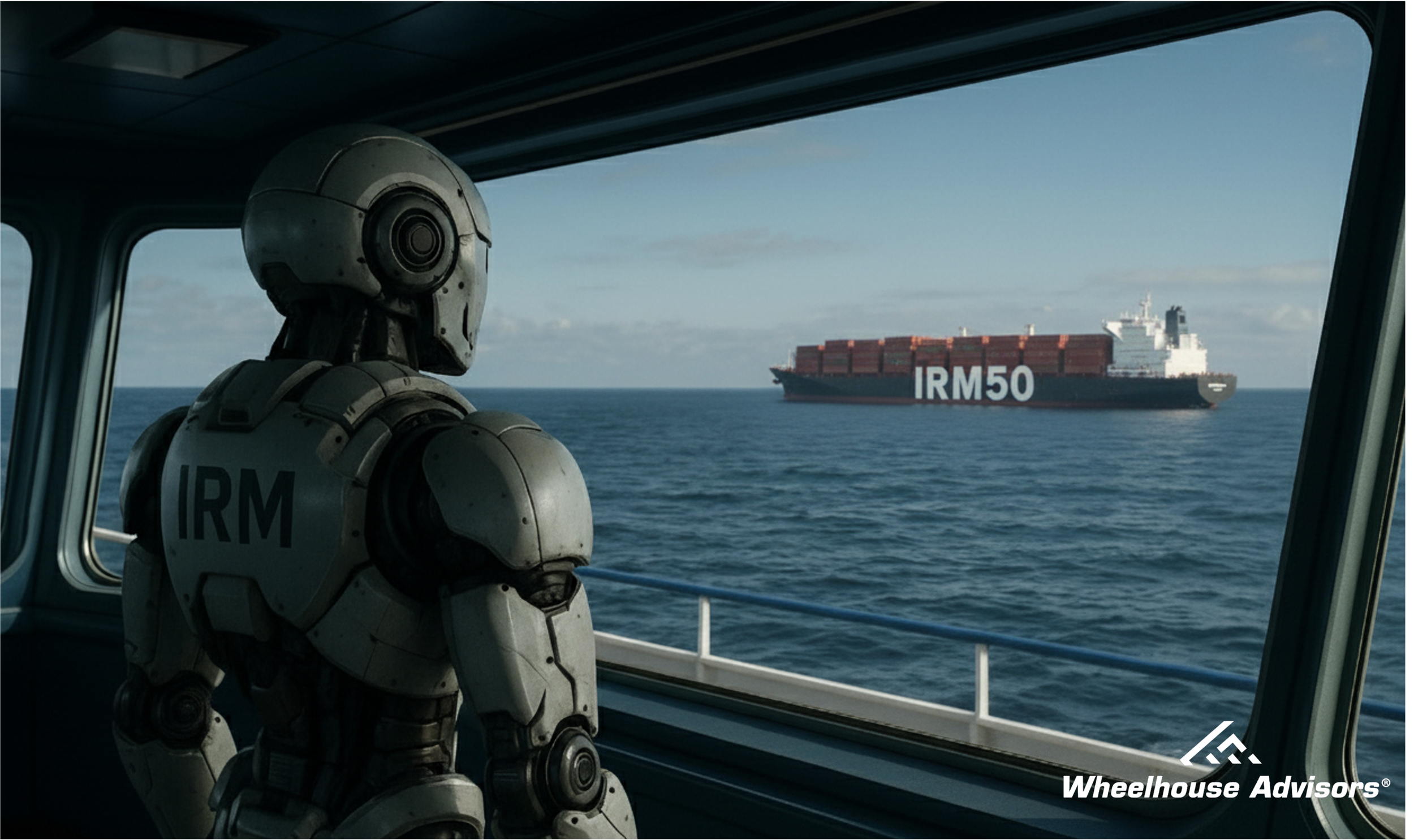
Governance risk moved to the foreground as an activist investor disclosed a roughly 2 percent stake in Workiva and called for board and capital allocation changes. AI adoption signals remained strong, anchored by a visible at-scale activation of watsonx with ESPN and a sell-side upgrade that reframed ServiceNow’s near-term AI execution. Product direction indicators surfaced at Archer with Evolv portfolio additions and an explicit human-in-the-loop design stance, while OneTrust reported dated momentum markers that should be treated as viability signals pending customer corroboration.
IRM50 OnWatch: Signals Include Embedded AI Controls with ServiceNow, IBM and Hyperproof
AI moves from pilots to embedded controls. ServiceNow, IBM, and Hyperproof advanced AI features that directly support evidence collection, model governance, and remediation, signaling a shift from productivity to verifiable compliance outcomes.
Third-party risk converges into unified stacks. SecurityScorecard’s acquisition of HyperComply combines questionnaire automation with ratings, showing buyers should expect integrated TPRM platforms over the next two to three quarters.
Resilience, ESG, and privacy institutionalize further. Everbridge, Workiva, EcoOnline, and OneTrust reinforced ESG disclosure, personal safety integration, and AI governance, aligning risk practices with board-level assurance expectations.
Identity threats remain systemic. Microsoft, Cloudflare, and law enforcement dismantled a phishing-as-a-service network targeting Microsoft 365, underscoring identity proofing and MFA as structural controls in IRM workflows.

From Scripting to Studio: Diligent’s ACL AI Bet
Diligent’s launch of ACL AI Studio—an AI-powered extension to its long-standing audit analytics suite—comes at a time of increasing scrutiny over the practical value of artificial intelligence in risk and compliance software. Unveiled during this week’s IIA International Conference, the product promises to empower audit, compliance, and risk professionals to run advanced analytics through natural language rather than traditional scripting. But beneath the surface-level innovation lies a more complex story about legacy adaptation, GRC market pressures, and the widening gap between analytics potential and real-world IRM needs.

Can AI Be Governed?
The Governance Paradox
The question of whether artificial intelligence can be governed may seem philosophical. But in 2025, it has become operational—and urgent. Just reference our recent article on Builder.ai to learn about the escalating risks driven by AI. As generative AI, autonomous agents, and foundation models accelerate their integration into critical systems, the pace of innovation is rapidly outstripping the scaffolding of rules, oversight, and control.
“Governance” in this context is often mistaken for static oversight: policy frameworks, codes of conduct, or aspirational principles. But as defined in the discipline of integrated risk management (IRM), governance is the rule-setting subset of management—the top of the pyramid. True risk control comes from marrying that governance with relentless operational execution: identification, assessment, mitigation, and continuous monitoring.
So: Can AI be governed? The answer is yes—but only if organizations recognize that compliance checklists and PR-friendly charters are no substitute for enterprise-wide, integrated, and adaptive risk management.

When the AI Black Box Blows Up
Builder.ai’s Collapse and the Unspoken Risk of Third-Party AI Dependencies
In May 2025, Builder.ai—a self-styled “AI software factory” based in London—collapsed into insolvency. Its promise had captivated global investors: a revolutionary platform that used artificial intelligence to build bespoke software with the ease of ordering a pizza. The startup raised over $500 million from Microsoft, the Qatar Investment Authority, SoftBank, and Insight Partners. In 2023, it was valued at over $1.3 billion.
But beneath its glossy demos and bold claims, Builder.ai was held together by human coders, creative accounting, and possibly fabricated revenue. As reported by the Financial Times, Microsoft and other top-tier investors are now grappling with the realization that they may have backed a business that not only overstated its AI capabilities—but systematically inflated its financials.
Builder.ai is not merely a failed startup. It is a warning shot to any organization that depends on third-party AI providers without meaningful oversight or technical verification. The question that now must be asked across boardrooms and IT departments alike:
If Microsoft—with all its engineering prowess—could be misled, what chance does a mid-sized business have?