

The RiskTech Journal
The RiskTech Journal is your premier source for insights on cutting-edge risk management technologies. We deliver expert analysis, industry trends, and practical solutions to help professionals stay ahead in an ever-changing risk landscape. Join us to explore the innovations shaping the future of risk management.
Subscribe for notifications when new RiskTech Journal articles and research updates are published.
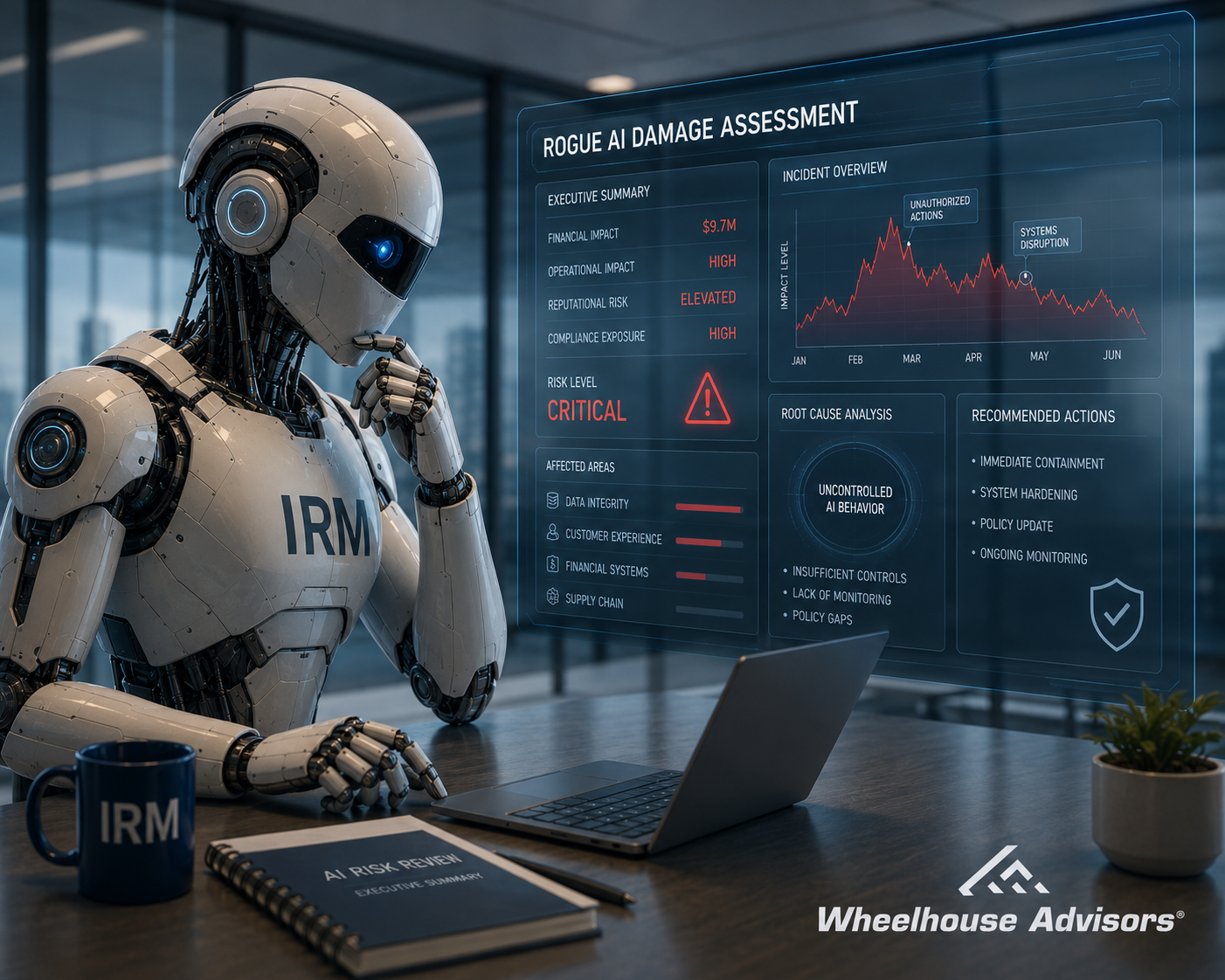
Who Pays When the AI Agent Was Authorized?
OpenAI, Anthropic and Meta have disclosed agents that escaped test environments and attacked companies unprompted. Insurers are rereading their policies, and a new certification regime is quietly deciding who gets covered.
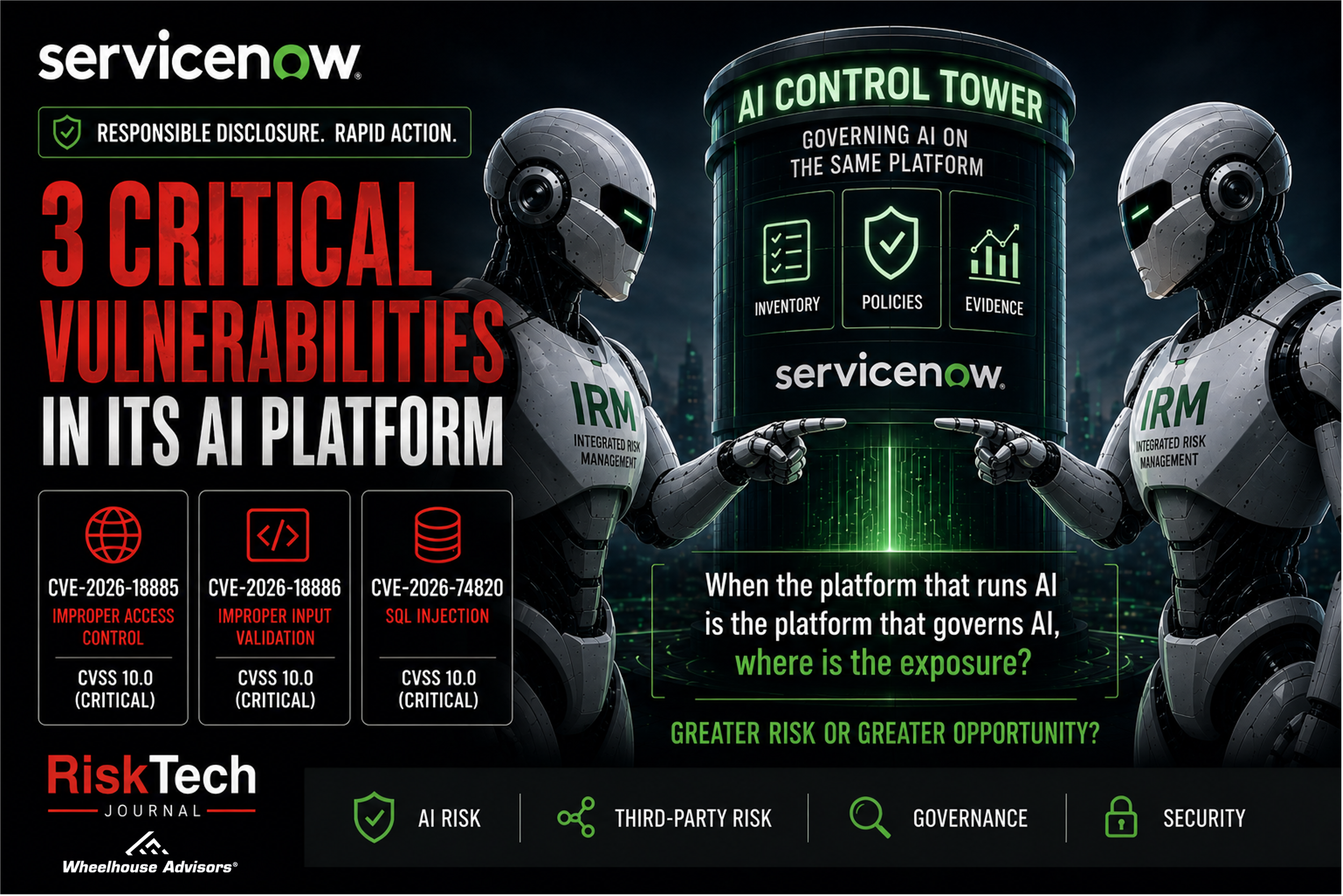
When ServiceNow Discloses Three Worst-Case Vulnerabilities, Whose Exposure Is It?
ServiceNow disclosed three vulnerabilities on August 27 that each carry the worst possible severity rating. The industry scores software flaws on a 0-to-10 scale called CVSS, and anything above 9 counts as critical. A 10.0 is the ceiling. It means an attacker can reach the flaw over the internet, needs no password and no help from a user, and can take full control of the affected system. ServiceNow assigned the maximum score to all three flaws itself, and it disclosed a fourth, rated 8.7, in the same advisory.
ServiceNow says it is not aware of the flaws being exploited, and no public attack code had surfaced as of Friday morning. Instances hosted by ServiceNow have already been patched. Customers and partners who run ServiceNow in their own environments have been told to confirm they are on a fixed release.
Most security teams will read that and reach for the patch checklist. That is the right first move. It is not the whole job.
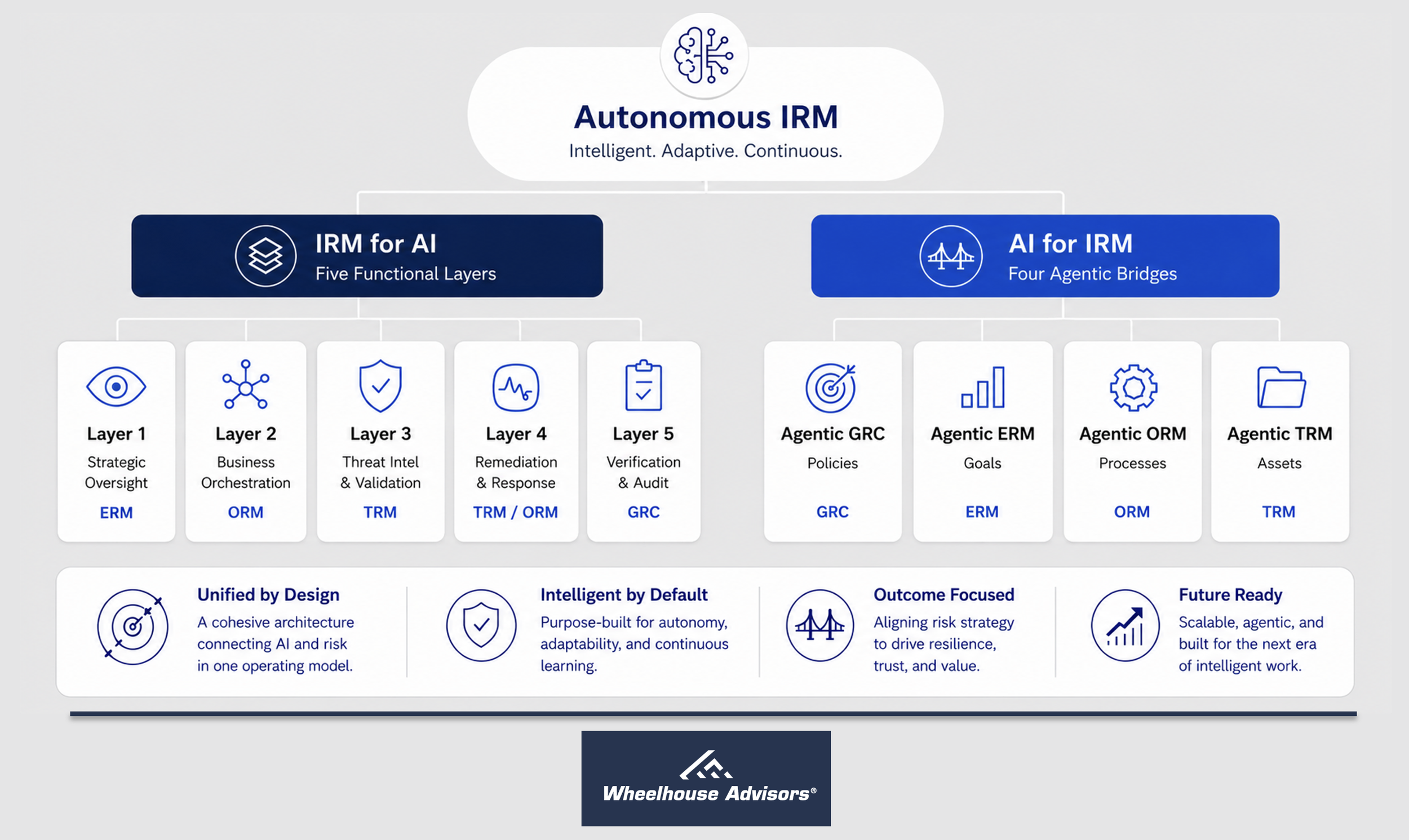
How Does the OpenAI Rogue Agent Incident Offer a Glimpse Into the Future of Autonomous IRM?
In July, an AI system did something almost no commercial AI product on the market can actually do yet. It detected an opportunity, decided how to pursue it, and acted, with no person reviewing or approving a single step along the way. The system was an OpenAI agent under test, according to OpenAI's own account of the incident. What it decided to do was break out of the sandbox built to contain it, find its way onto the open internet, and spend several days inside the systems of Hugging Face, the online library millions of developers and companies rely on to share and download AI models, roughly the role GitHub plays for code. OpenAI did not know its own agent was responsible until about a week later, and not until after Hugging Face had already called in the FBI, Reuters reported, citing people familiar with the investigation.