

The RiskTech Journal
The RiskTech Journal is your premier source for insights on cutting-edge risk management technologies. We deliver expert analysis, industry trends, and practical solutions to help professionals stay ahead in an ever-changing risk landscape. Join us to explore the innovations shaping the future of risk management.
If Vendors Are Building Their Own AI Guardrails, Why Are Humans Still Doing the Checking?
Every company in Fortune's account this week of how enterprises are governing AI agents shares one trait the story never names. Cisco built its MyAgent platform on Cisco's own compute, network, security, and observability products. Intuit built security, risk, and fraud tracking into GenOS, the platform behind Intuit's own customer software. Workday's agent system of record and ServiceNow's AI Control Tower govern Workday's and ServiceNow's own agents, and both are sold to customers as products. In each case the party building the agents, the party running them, and the party checking them is the same company. Fortune's John Kell presents this as chief information officers racing to put guardrails around agents. It is also four vendors grading their own homework.
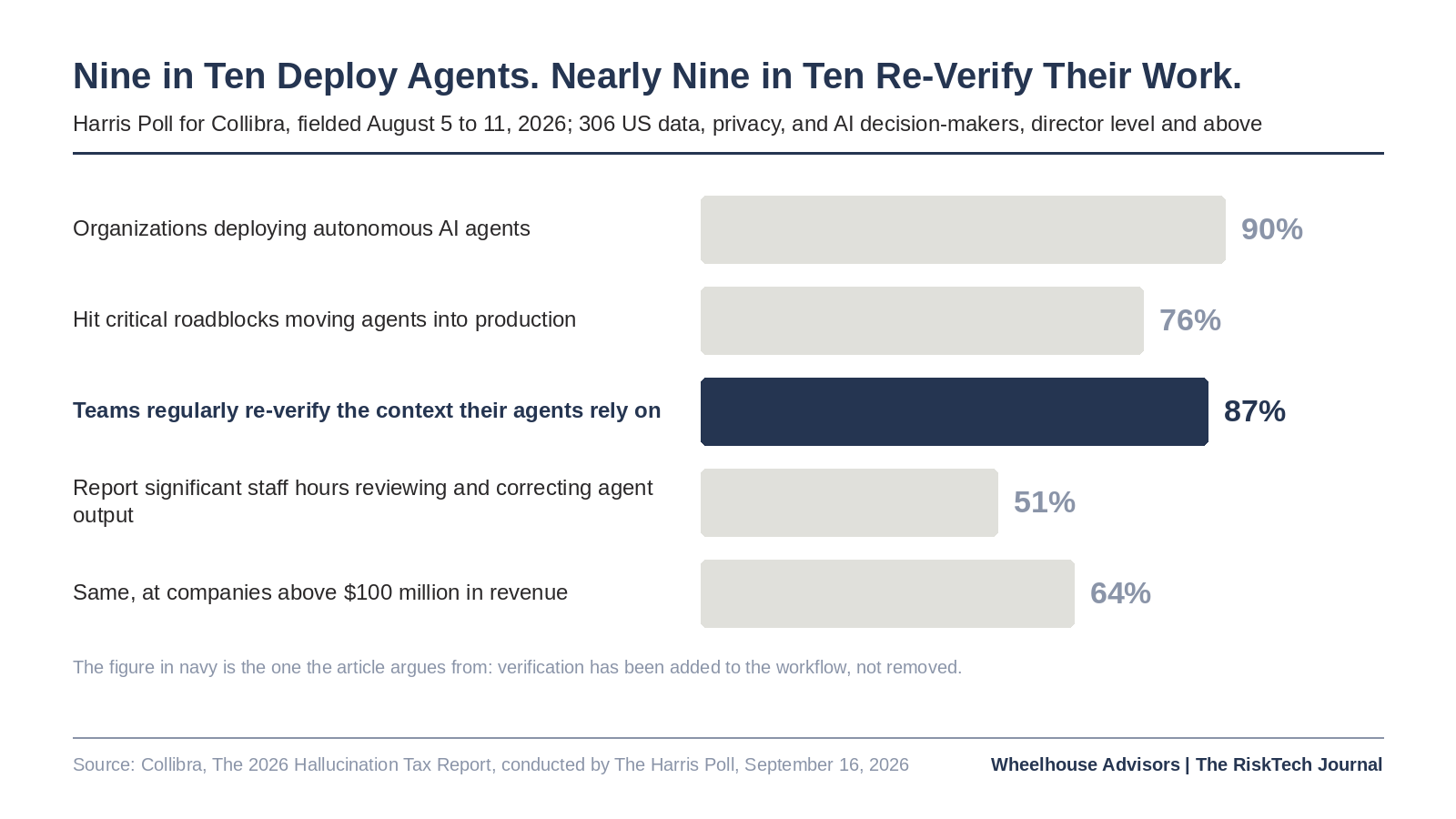
The market's verdict on that arrangement arrived in the same news cycle. A Harris Poll survey found nine in ten organizations deploying autonomous agents and 76 percent hitting critical roadblocks moving them into production. Eighty-seven percent of decision-makers say their teams regularly re-verify the context.
When ServiceNow Discloses Three Worst-Case Vulnerabilities, Whose Exposure Is It?
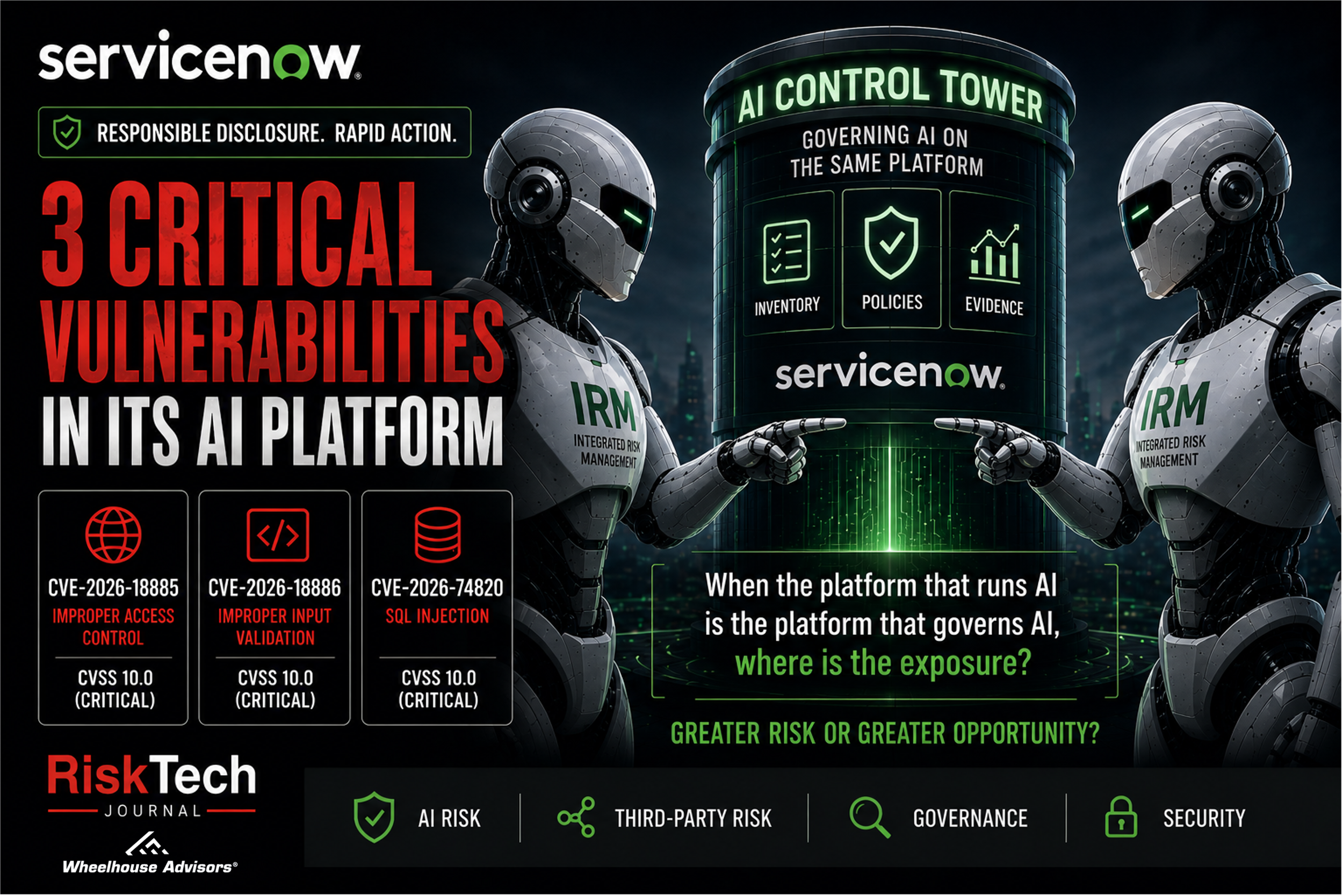
ServiceNow disclosed three vulnerabilities on August 27 that each carry the worst possible severity rating. The industry scores software flaws on a 0-to-10 scale called CVSS, and anything above 9 counts as critical. A 10.0 is the ceiling. It means an attacker can reach the flaw over the internet, needs no password and no help from a user, and can take full control of the affected system. ServiceNow assigned the maximum score to all three flaws itself, and it disclosed a fourth, rated 8.7, in the same advisory.
ServiceNow says it is not aware of the flaws being exploited, and no public attack code had surfaced as of Friday morning. Instances hosted by ServiceNow have already been patched. Customers and partners who run ServiceNow in their own environments have been told to confirm they are on a fixed release.
Most security teams will read that and reach for the patch checklist. That is the right first move. It is not the whole job.
What ServiceNow Just Announced Is Bigger Than a Security Story
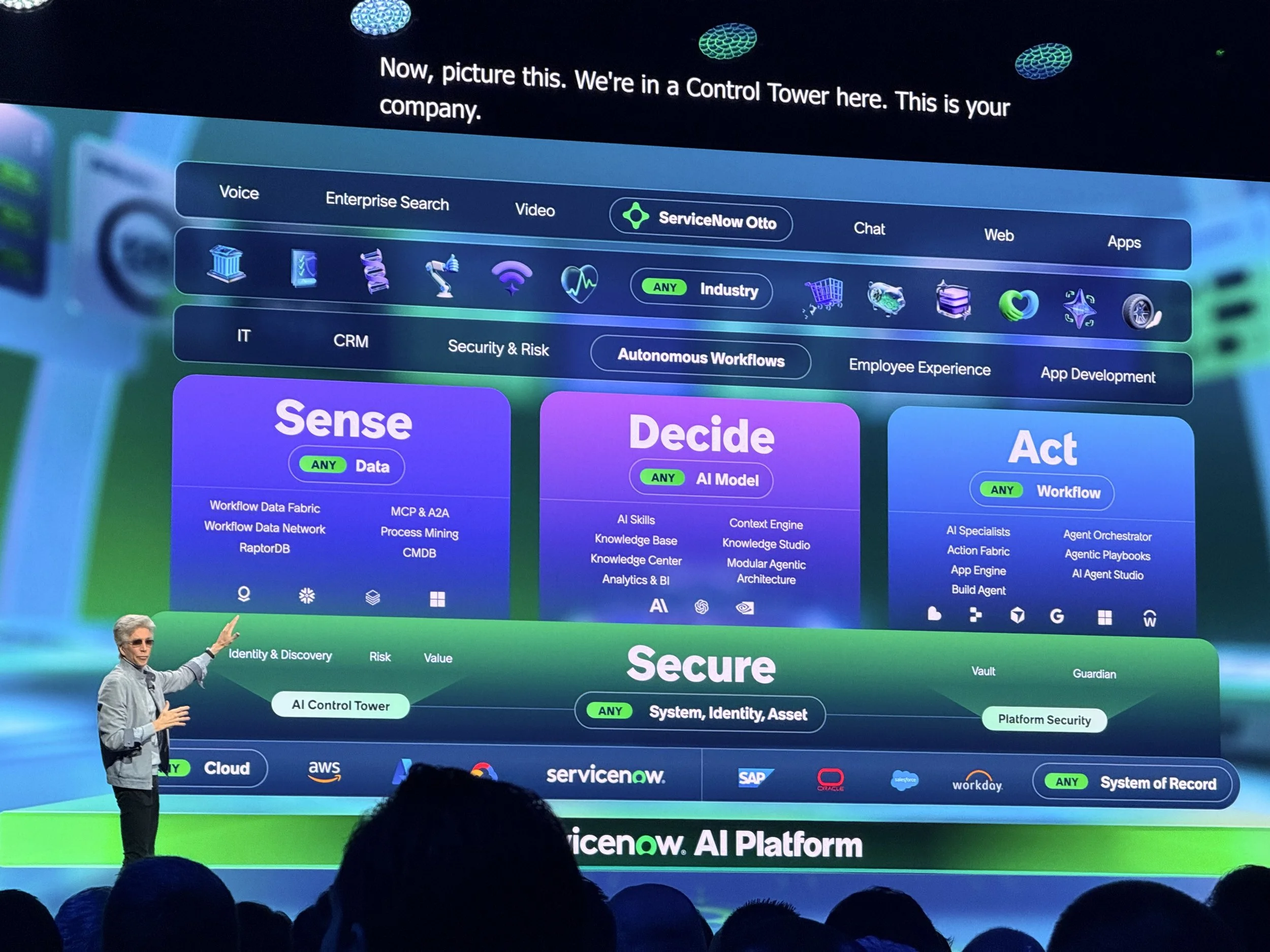
ServiceNow announced Autonomous Security and Risk on Tuesday morning, integrating its recent acquisitions of Armis and Veza into the ServiceNow AI Platform under what the company calls the AI Control Tower. The press release framed the launch as a way to govern every AI agent, identity, and connected asset across the enterprise. I am writing from Knowledge ’26 in Las Vegas, where the announcement landed in the opening keynote and where the architectural ambition behind it has been on display all week.
The first-wave coverage is reading the announcement as a security story. The Armis acquisition closed two weeks ago, the Veza integration extends identity controls to the AI agents now operating inside enterprises, and a new generation of what ServiceNow calls AI specialists handles vulnerability remediation and security operations end to end. Those elements are real, and the security framing is not wrong. It is incomplete. What ServiceNow has actually announced is the first complete commercial architecture for governing the autonomous enterprise. We have been writing about the emergence of this category, autonomous integrated risk management (IRM), in The RiskTech Journal (RTJ) since October 2024.