

The RiskTech Journal
The RiskTech Journal is your premier source for insights on cutting-edge risk management technologies. We deliver expert analysis, industry trends, and practical solutions to help professionals stay ahead in an ever-changing risk landscape. Join us to explore the innovations shaping the future of risk management.

The Case Against Taking a Supplier's Recovery Time on Faith
SIFMA and Protiviti reissued their paper on third-party resilience on October 6, eighteen months after the original. The standards for rebuilding systems, protecting backups, and testing recovery are largely the same. What changed is the clock. The update states that frontier AI models have materially changed the cyber threat environment and are compressing the time a firm has to identify, contain, and recover from a disruptive event.
That matters because of what the paper admits about the starting point. Critical suppliers have historically been reluctant to share details of their recovery capabilities, and when they do share, it is often clear they have not invested enough. Suppliers say they test recovery regularly without stating how often or showing results. They say they can recover within the client's targets without stating their own recovery time. Many of these suppliers serve most of the large financial institutions at once, so one supplier's unproven claim becomes an exposure for the whole sector.

IRM Market Brief: September 8 to 14, 2026
On Friday the clock started. Since September 11, any manufacturer selling a product with digital elements into the EU has 24 hours from learning that a vulnerability is being actively exploited to notify ENISA and the relevant national CSIRT, then 72 hours to file a full notification, then a final report after that. The Cyber Resilience Act's broader product rules do not arrive until December 2027. The reporting duty is here now, and it applies to products already on the market. For a lot of companies, product cyber compliance just stopped being a document and became a stopwatch.

Will AI Agents Make Third-Party Risk Management Smarter, or Just Faster?
ProcessUnity said this week that one early customer, a large global technology and consulting firm, has cut third-party intake cycle time by 54%, improved assessment throughput by 43%, and reduced incomplete inherent-risk questionnaires by 75% since putting AI agents to work. Those are vendor-supplied numbers from a single early adopter and deserve to be read that way. But the size of the numbers is not the story. The story is the kind of work the agents are being allowed to do.
When Cyber Risk Becomes Enterprise Risk, Whose Job Did It Just Become?
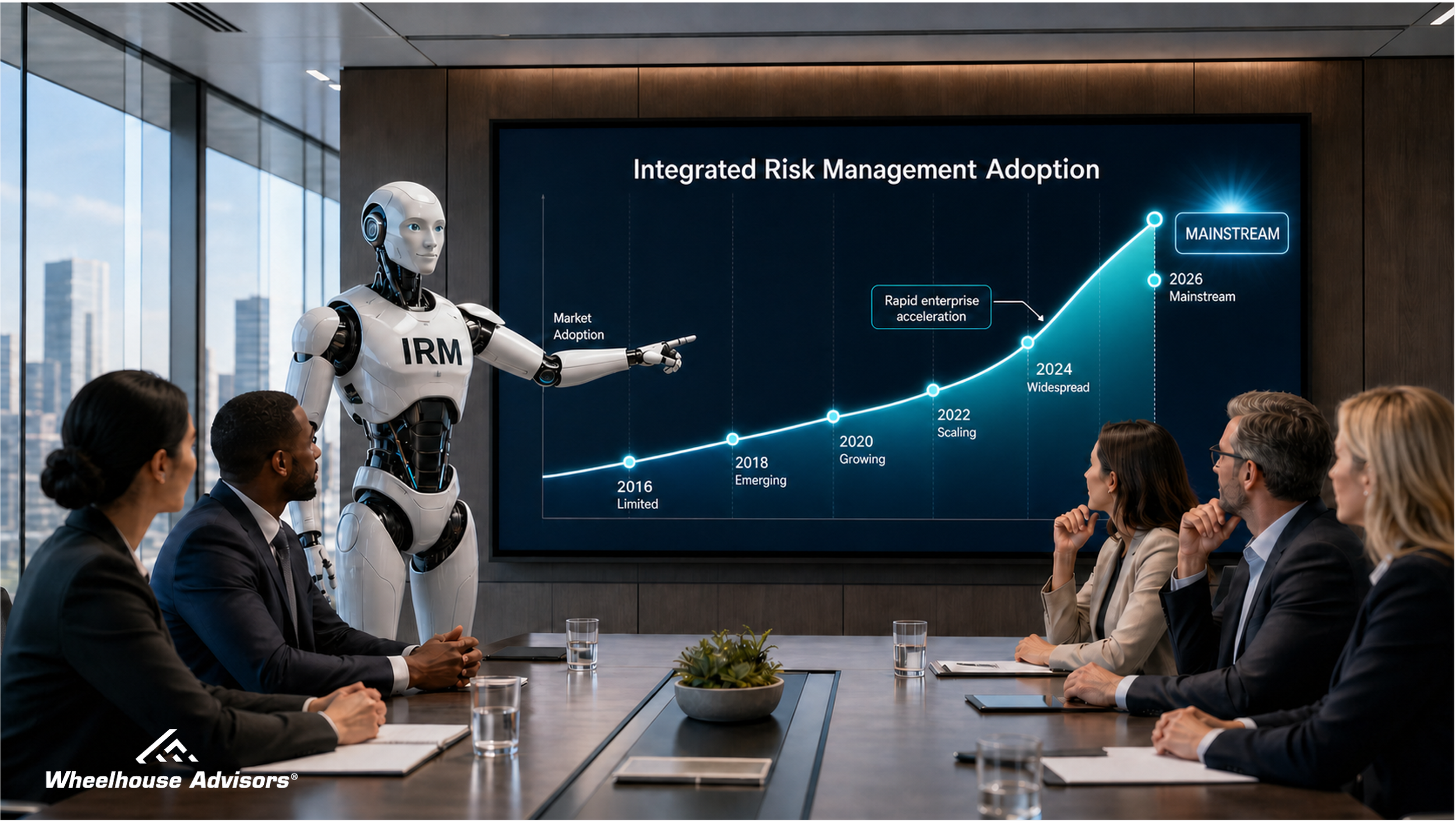
Integrated risk management reached mainstream adoption this month. The discipline itself is not new. When the IRM category was defined in 2016, leading organizations were already managing cyber, technology, and operational risk as a single enterprise concern owned at the top. What was missing for the past decade was broad adoption. That gap is now closing in plain view. Rating agencies are pricing security governance into credit. Regulators are addressing corporate leaders directly rather than their security teams. And enterprise research now documents boards accepting accountability for exposures that used to live three levels down in a technology function.
Two publications captured the shift in the same week, without citing each other. On July 8, Cybersecurity Dive reported on new research from Information Services Group showing that U.S. enterprises are folding cyber risk into their overall enterprise risk strategy, with boards and C-suites taking direct accountability for business continuity, financial exposure, and regulatory compliance. One day later, Harvard Business Review published an argument that lands like a rebuttal to every executive hoping that accountability might live somewhere else: you can outsource the AI, but the risk stays with you.
How Integrated Risk Management Enables Cyber-ERM Convergence
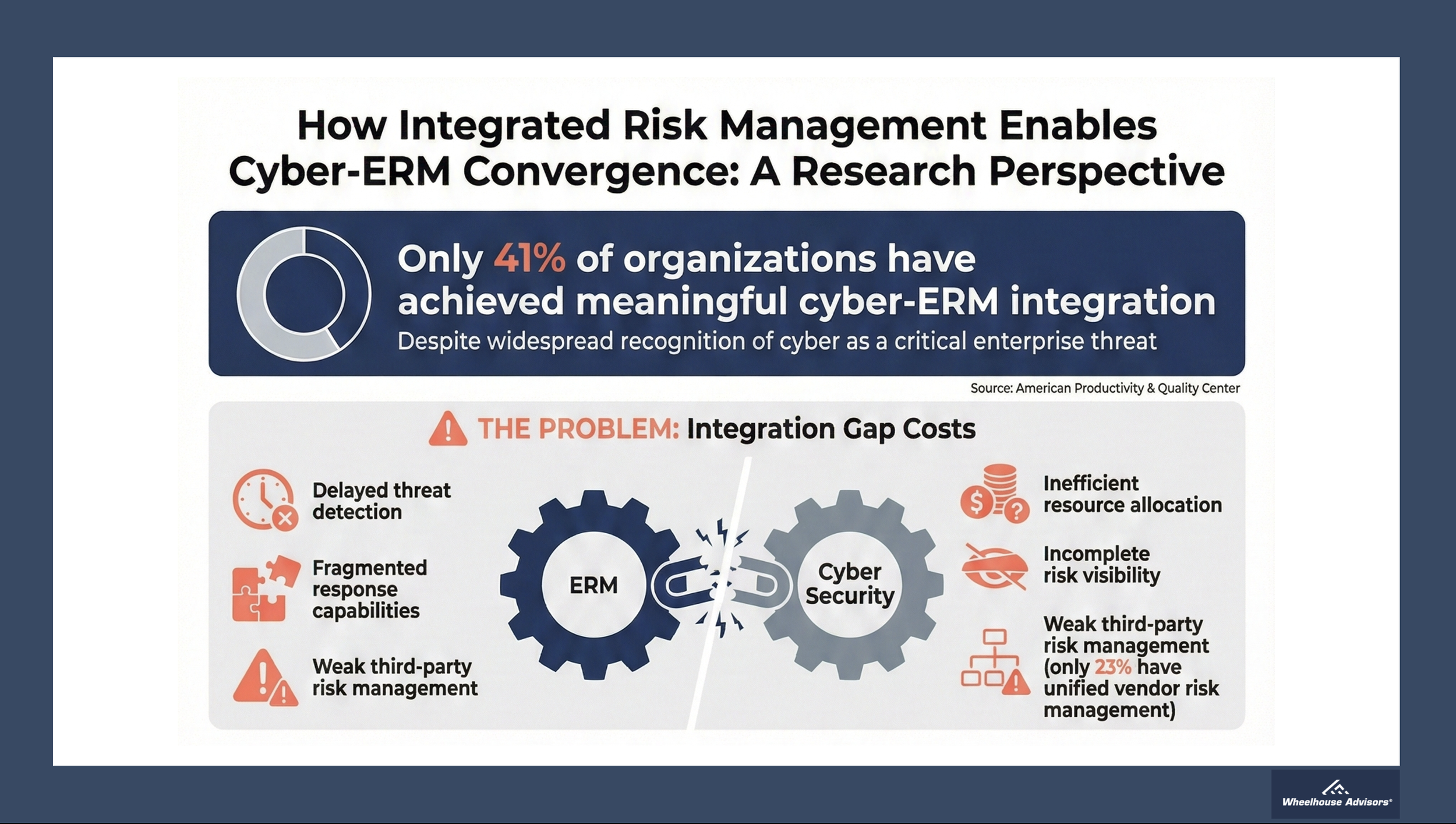
Recent research from the American Productivity & Quality Center reveals a sobering reality: only 41% of organizations have achieved meaningful integration between cybersecurity and enterprise risk management, and just 23% have unified third-party risk management. This gap persists despite widespread GRC platform adoption, revealing that compliance-first architectures cannot deliver the risk-first integration that cyber-ERM convergence requires. Integrated Risk Management provides the essential infrastructure to bridge this divide through its four-pillar framework: Performance, Resilience, Assurance, and Compliance.