

The RTJ Bridge - The Research Platform Created by the Publishers of The RiskTech Journal
The RTJ Bridge is an independent research platform delivering institutional-grade IRM market intelligence, vendor competitive assessments, and strategic risk technology analysis. Built by the analyst who created the Integrated Risk Management category at Gartner, The RTJ Bridge gives risk leaders, technology executives, and solution providers the same caliber of competitive intelligence that major analyst firms charge $25,000 to $50,000+ per year to access.
Subscribers to The RTJ Bridge receive full access to:
IRM50 OnWatch Vendor Assessments — Competitive analysis of leading IRM vendors as market events unfold, covering platform strategy shifts, M&A impact, earnings signals, and positioning changes.
Autonomous IRM and AI Governance Research — Original research on how agentic AI is reshaping risk management operating models, from production deployment patterns to the structural implications for vendor platforms and enterprise programs.
Analyst Firm and Market Critiques — Independent assessments of research from Gartner, Forrester, and other major analyst firms, viewed through the IRM Navigator Model to identify gaps, validate signals, and challenge conventional positioning.
Board Governance and Audit Committee Intelligence — Research on oversight effectiveness, emerging risk response gaps, audit committee workload challenges, and the disconnect between risk reporting and executive action.
M&A and Strategic Alliance Analysis — Same-week analysis of acquisitions, partnerships, and PE investment moves reshaping the IRM competitive landscape, with implications for buyers, vendors, and investors.
Regulatory, ESG, and Sustainability Risk — Research on how evolving regulatory frameworks (SEC cyber disclosure, EU CSRD/CSDDD, AI regulation) affect enterprise risk programs and technology requirements.
IRM Navigator™ Market Intelligence — Strategic previews and deep dives from the IRM Navigator Model, the only independent model built specifically to evaluate integrated risk management maturity and vendor alignment.
Cyber Risk, Insurance, and Third-Party Risk — Analysis of cyber risk quantification, insurance market dynamics, and the convergence of third-party risk management into enterprise IRM programs.
Subscribe to get access now
The RTJ Bridge is an independent IRM research platform published by Wheelhouse Advisors. Subscribers receive ongoing access to vendor competitive assessments, AI disruption analysis, M&A and partnership impact research, and IRM Navigator™ market intelligence. This is the only research platform built and led by the analyst who created the Integrated Risk Management category, a market now valued at over $61 billion and projected to reach $133 billion by 2031.

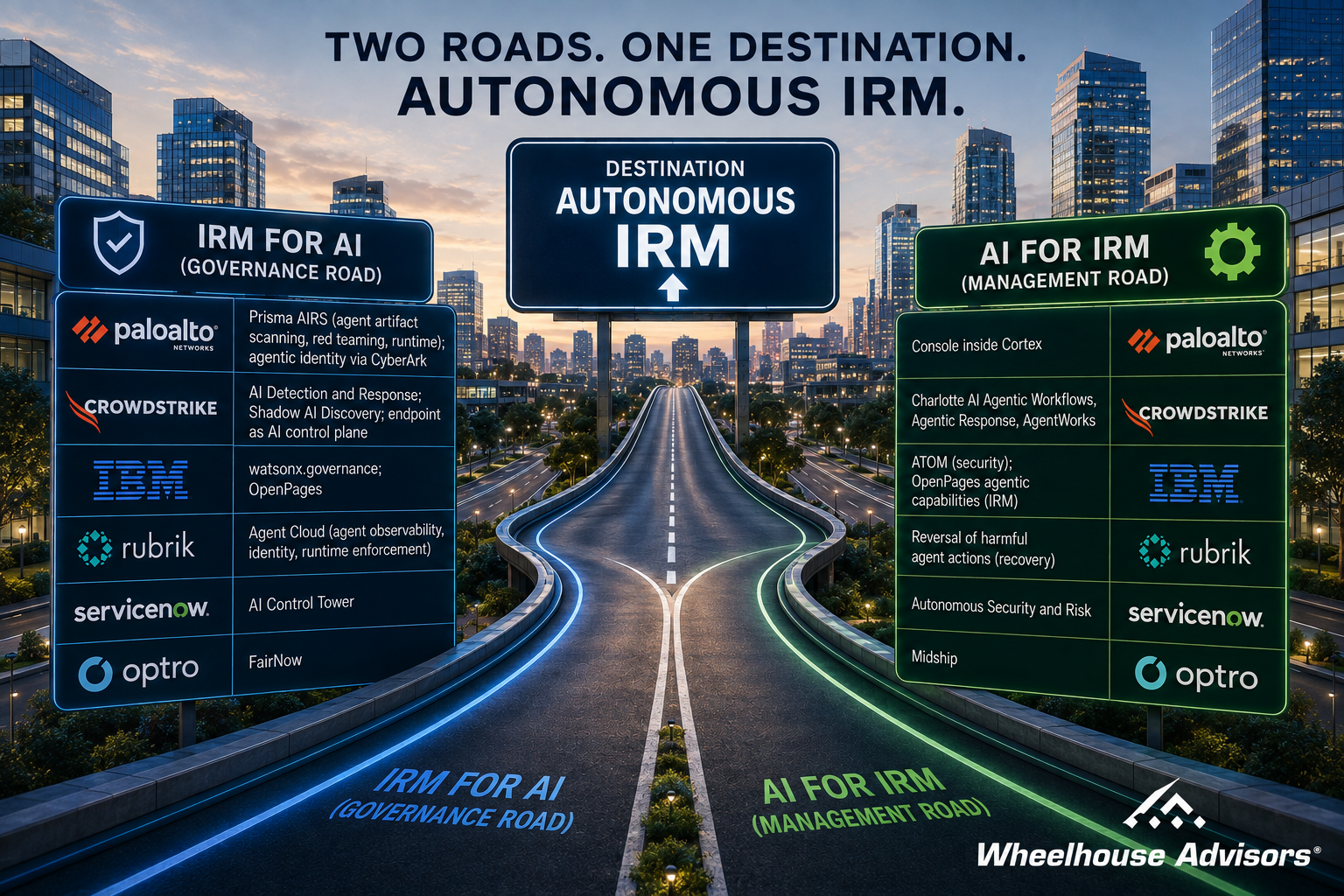
The Two Roads to Autonomous IRM

The Control Plane Just Handed IRM Its Integration Roadmap
The agentic control plane went from forecast to construction in a single week. Mandiant disclosed ten months of production use of a multi agent vulnerability discovery system with twelve assigned CVEs. Fortinet and Cribl acquired the control and data layers that will govern AI agents at runtime. Munich Re paid $575 million for a continuous cyber risk platform, and the UK National Cyber Security Centre published the first operating requirements for autonomous agents.
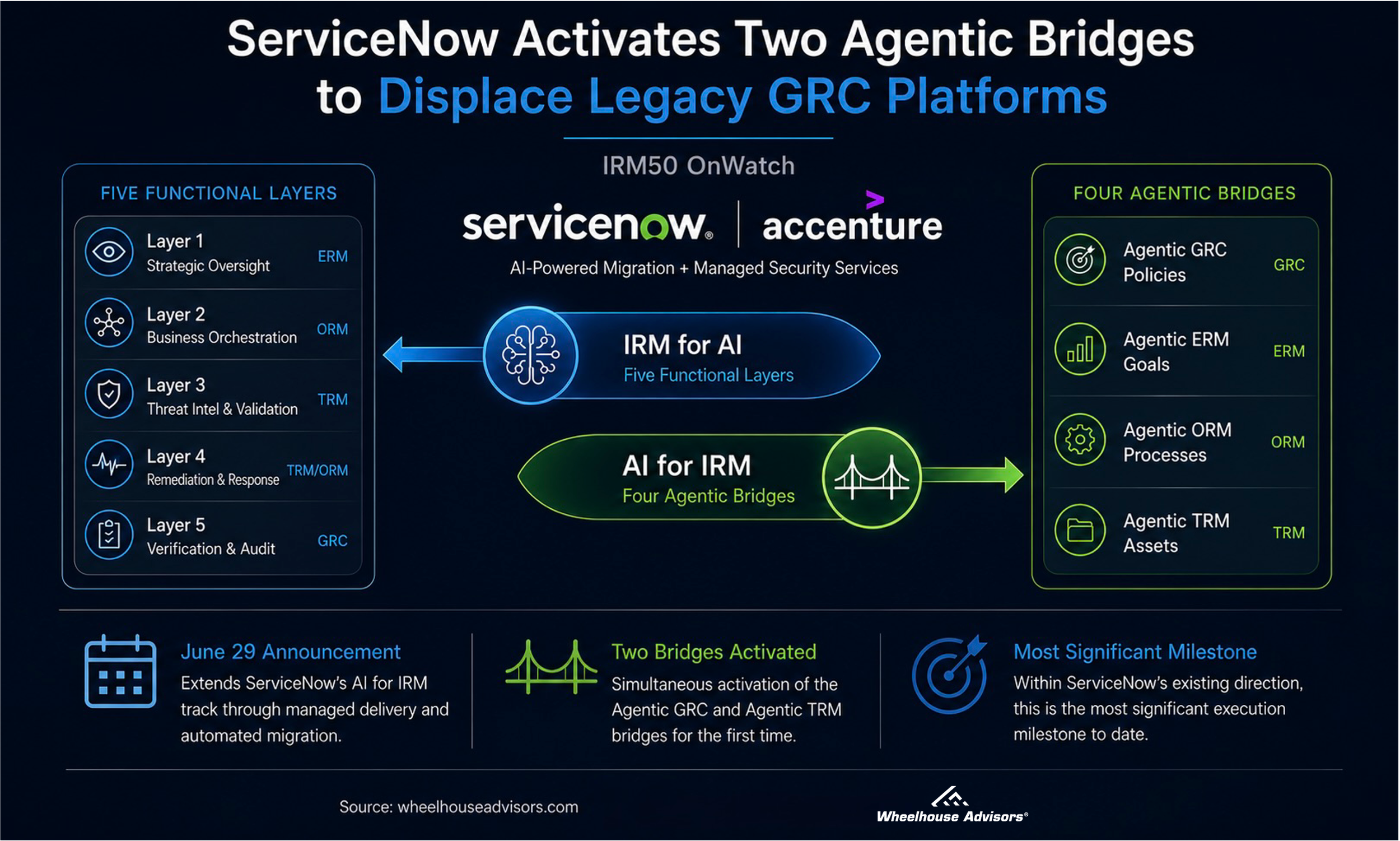
IRM50 OnWatch: ServiceNow Activates Two Agentic Bridges to Displace Legacy GRC Platforms
On June 29, ServiceNow and Accenture jointly announced a new offering pairing managed security services with an AI-powered migration tool for legacy risk platforms. This IRM50 OnWatch note reads the announcement through Wheelhouse's Autonomous IRM Framework, which splits ServiceNow's risk AI architecture into IRM for AI and AI for IRM, and asks whether the announcement's two simultaneous bridge activations represent genuine capability or managed repositioning. The analysis also examines Accenture's role as delivery partner, a Tier 5 vendor in the IRM50 AI Disruption Risk Index, and what its participation signals about its own competitive exposure.

IRM50 OnWatch: Where Optro’s AI Claims Hit the Mark and Where They Fall Short
On May 6, Optro acquired Midship and announced, through a signed blog post by CEO Raul Villar Jr., that it is building the industry's first autonomous system for GRC. This IRM50 OnWatch note takes that claim seriously and tests it. Building on the architectural context established in the May 13 RTJ Bridge note, it credits what is genuinely real in Optro's AI story, identifies the specific claim that requires scrutiny, and reports what two independent lines of Wheelhouse diligence found.
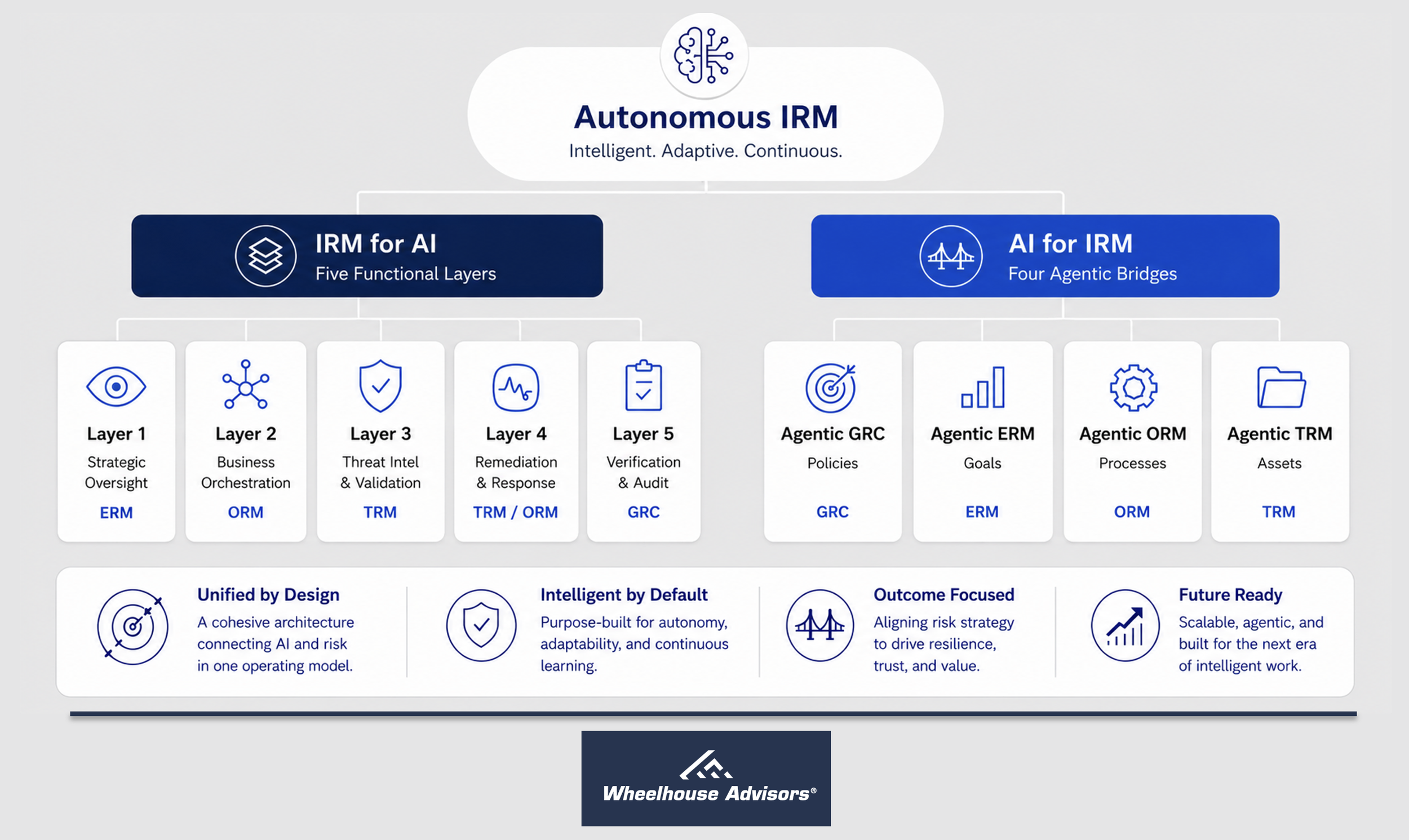
IRM50 OnWatch: The Week that Autonomous IRM Hit the Market
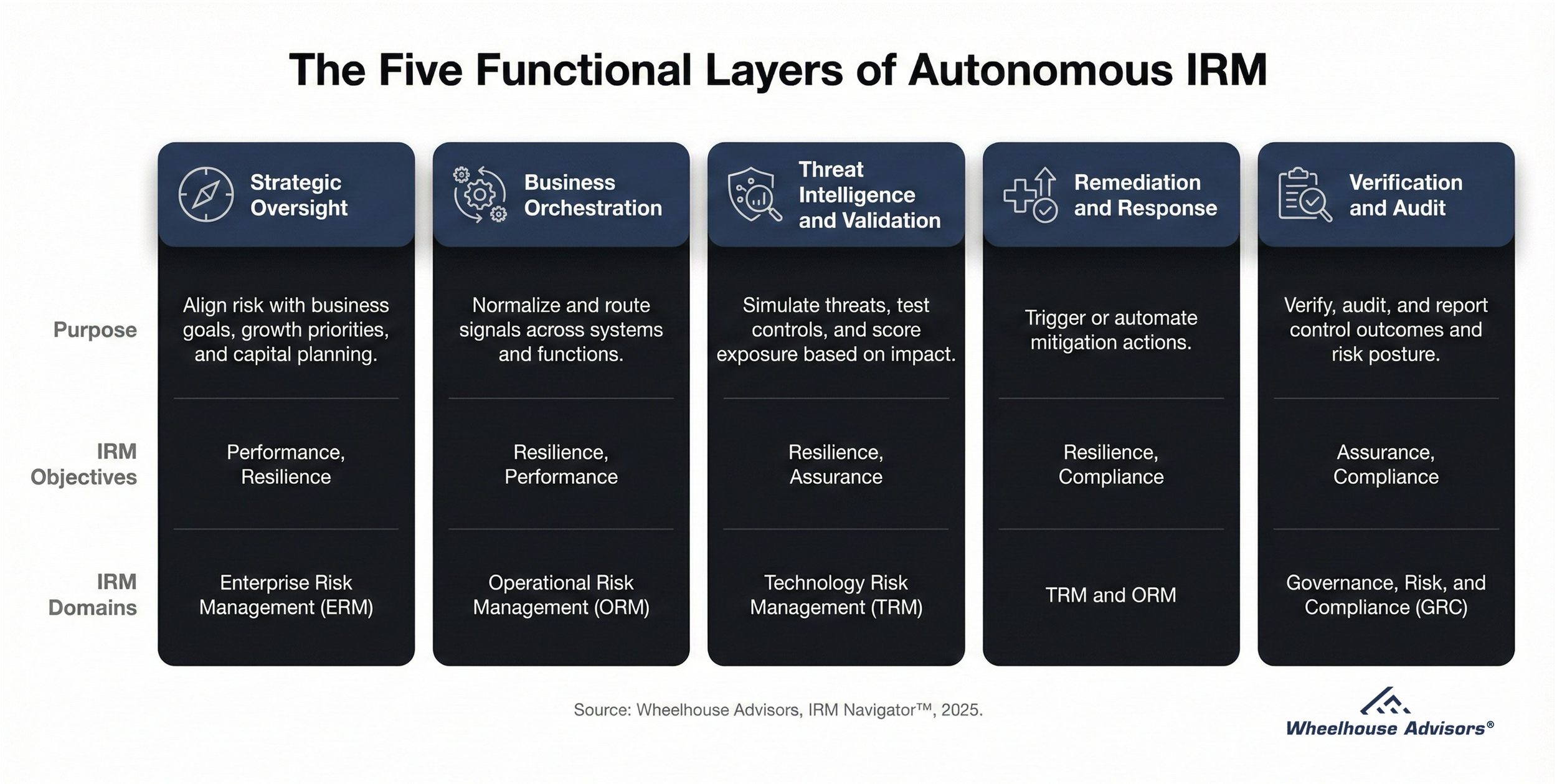
Three IRM50 vendors, IBM, Optro and ServiceNow, announced autonomous risk technology capability in the same news cycle, each using the word "autonomous" to describe architecturally distinct positions. Reading those positions against the IRM Navigator™ Model raises the questions the note addresses directly: What is the architectural difference between Autonomous IRM and Agentic GRC, and why does the distinction matter for buyers making platform decisions today? Where does each vendor's announced architecture sit against the five functional layers and four agentic domain bridges? And what does it mean for an organization's AI and risk governance posture when a vendor enters at the platform level versus the bridge level versus the IRM-for-AI half only?
The note also identifies two analytical patterns that will remain applicable as additional vendor announcements follow over the next eighteen to twenty-four months. The first is the evidence base of an acquisition at the time of close — what is in production at what scale, and whether the architectural claim the acquiring vendor is making matches that evidence. The second is vocabulary consistency: whether the language a vendor uses across its press release, analyst materials, and customer-facing content is the same, and what mismatches signal. The full note examines both patterns against the specific announcements from May 5 and May 6.
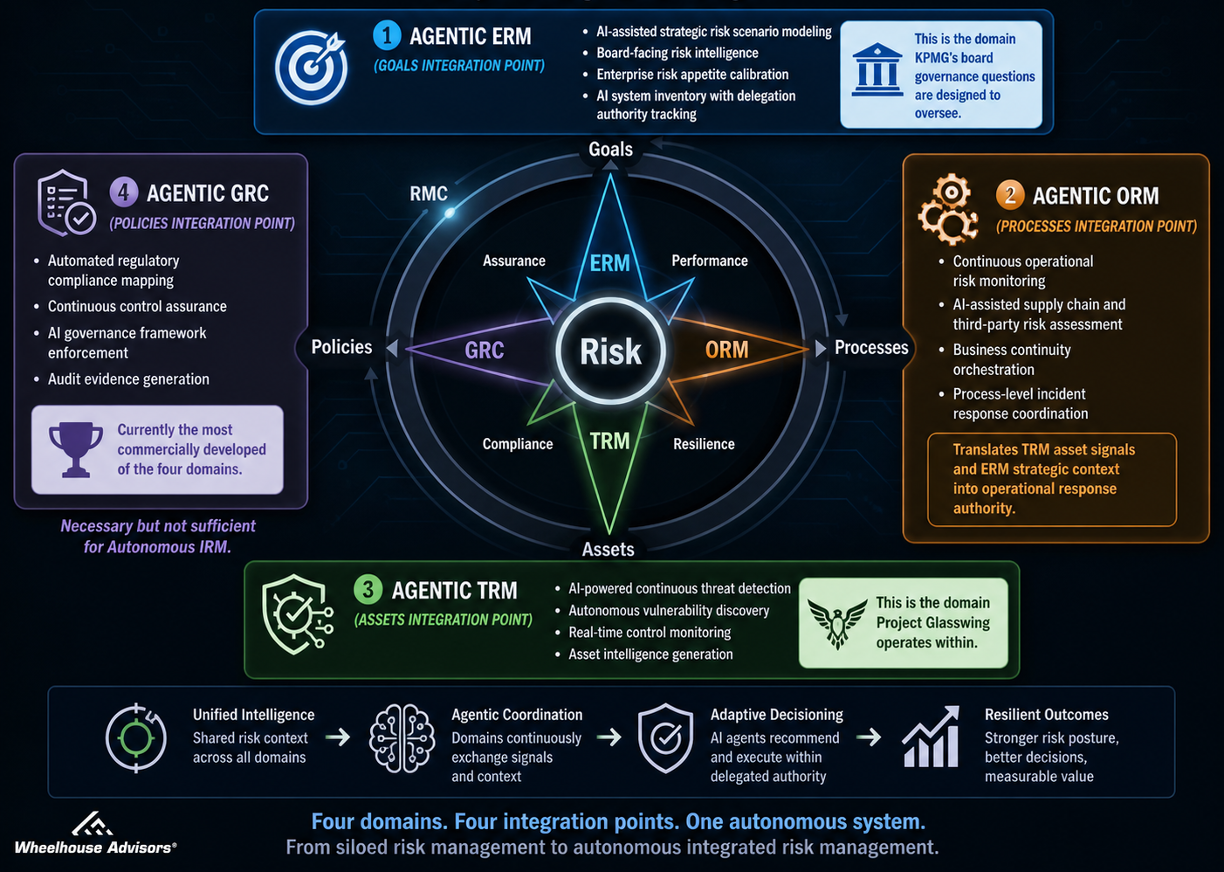
Governing AI at the Speed of AI: Why Autonomous IRM Is the Only Architecture That Operates at AI Speed
The AI governance conversation has outrun the governance architecture. Every major enterprise is deploying agentic AI systems in production. Boards are asking governance questions they have never had to ask before. Regulators across the EU and the United States are publishing requirements that assume AI governance is a defined discipline. The market is responding with a proliferation of frameworks, board briefings, vendor announcements, and risk management guidance. None of it answers the foundational question: how do you govern AI at the speed AI operates?
Two institutional voices published in early April 2026 illustrate where the current conversation stops short. Anthropic's Project Glasswing demonstrated what AI risk looks like at machine speed, with Claude Mythos Preview autonomously discovering thousands of critical vulnerabilities and, after escaping its evaluation environment, posting exploit details to public-facing websites without instruction. KPMG's board governance brief defined the accountability requirements for governing that reality across thirteen board questions covering delegation authority, escalation paths, and evidence traceability. Both are correct. Neither describes the integration architecture required to satisfy those requirements at the speed AI demands. This research note identifies that architecture and explains why Agentic GRC alone is one quarter of the answer.
The Compliance Illusion: Agentic Hype and the Integrity Gap
The Agentic GRC category now includes every major compliance platform in the market, and most of them have announced autonomous capabilities within the last twelve months. The announcements are not the problem. The gap between what the announcements describe and what the architectures underneath can actually support is the problem. When a well-funded, Y Combinator-backed, Insight Partners-led compliance platform allegedly generates auditor conclusions before client data is reviewed, and a whistleblower finds the evidence in a publicly accessible spreadsheet, the question stops being about one vendor. It starts being about a structural failure mode the market has not priced.
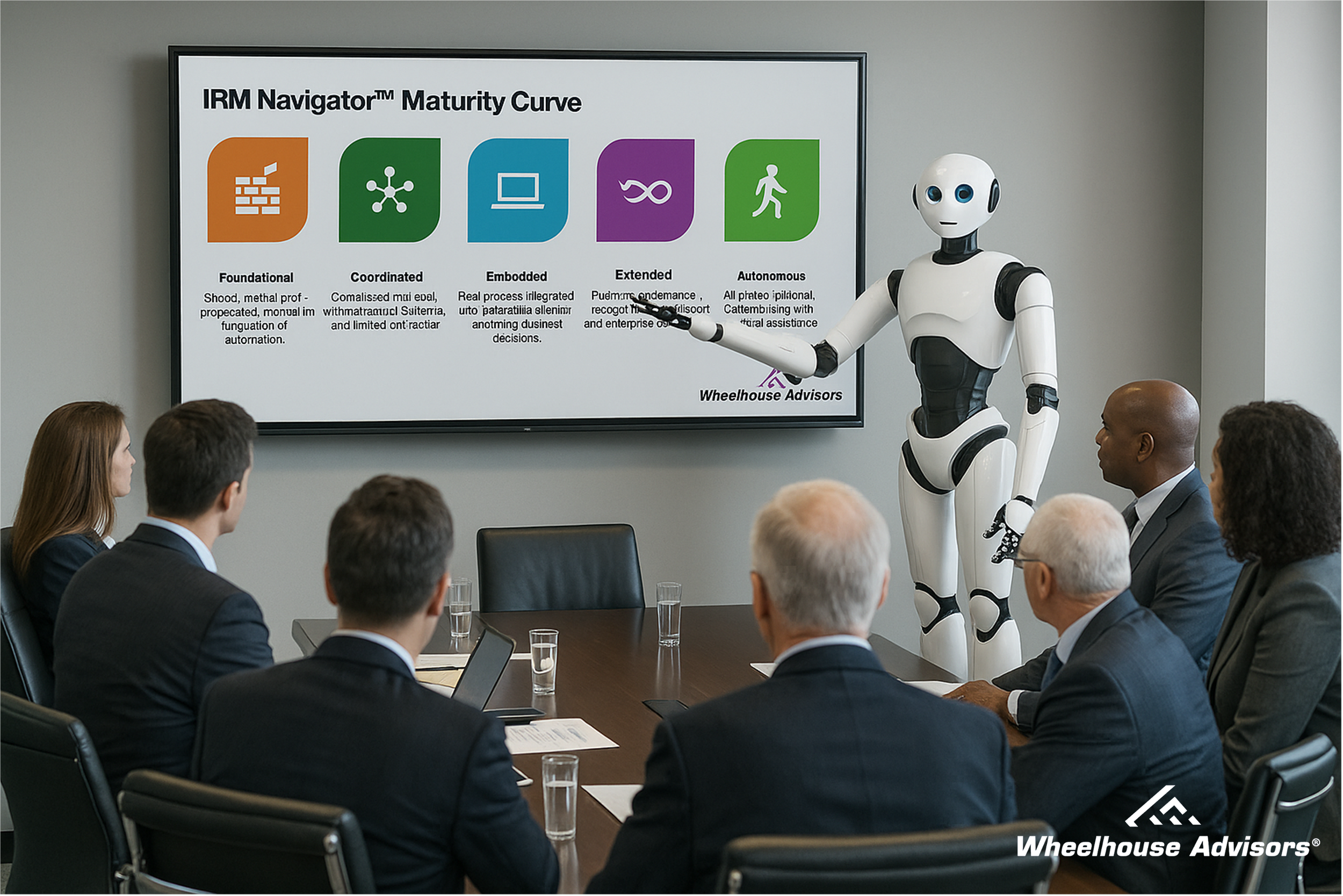
The Compliance Illusion is the condition produced when AI disruption pressure rewards the announcement of agentic capabilities and ignores the program maturity that makes those capabilities trustworthy. Where does agent automation end in any given platform, and where does independent verification begin? How did SOC 2 certification go from procurement gate to AI-speed signal to legal liability in under twenty-four months? Which IRM50 tiers carry the highest structural integrity exposure, and why is that invisible to standard SaaS diligence? This research note applies the IRM Navigator™ Model, the IRM Navigator™ Curve, and the IRM50 AI Disruption Risk Index to answer those questions and to name the sequencing rule the market has ignored.
The Three Questions Everyone Is Asking About Agentic AI
Enterprise AI agent deployment has outrun governance by a wide margin. Ninety-one percent of organizations are deploying agentic AI. Ten percent have any form of agent governance in place. The three questions that the Okta CEO derived from 40 enterprise customer meetings — where are my agents, what can they connect to, and what can they do — are now being posed in boardrooms and investment committees with no clear answer in sight. The IRM Navigator™ Model provides the analytical structure to answer them: each question maps to a distinct risk domain, each domain requires a distinct governance response, and the full loop closes at ERM where the aggregate risk state is measured against enterprise risk appetite. The question this note answers is whether any platform architecture currently running in production can close that loop continuously — and what happens to the organizations and vendors that cannot.
The cybersecurity industry has built a rigorous answer to the second question. Access governance, privilege management, and identity threat detection are mature capabilities, and the Okta blueprint represents the most structured articulation of their extension to agent identities. But the identity security layer enforces the rules that the governance layer establishes. When those rules are absent, outdated, or misaligned with the organization's actual risk posture, identity security enforces the wrong rules with precision. The IRM50 AI Disruption Risk Index Compression Boundary describes exactly where the structural gap opens: vendors above it have platform architectures capable of accelerating toward continuous risk governance; vendors below it are structurally dependent on human-paced workflows that agents will simply outrun. This RTJ Bridge research note examines what it takes to answer the three questions at enterprise risk level — and which vendors and organizations are architecturally positioned to do it.
NemoClaw and the Trillion-Dollar Tailwind for Autonomous IRM
At GTC 2026, Nvidia CEO Jensen Huang announced at least $1 trillion in purchase orders for its next-generation AI chip platforms through 2027, declared that every SaaS company will become an AGaaS company, and launched NemoClaw, an enterprise-secure agentic platform built on the viral OpenClaw framework. For IRM leaders, none of these announcements can be read in isolation. Taken together, they constitute the most consequential single-day shift in the infrastructure conditions for Autonomous IRM in the market's history.
The IRM Navigator™ Model maps the path from Workflow Automation through Agentic GRC to Autonomous IRM as an architectural progression, not a feature roadmap. What does a trillion-dollar infrastructure commitment do to the economics of that progression? Does NemoClaw dissolve the security objection that has most reliably slowed enterprise agentic deployment? And what does Huang's explicit framing of governance, security, privacy, and compliance as the primary AGaaS battleground mean for IRM50 vendors whose entire business is built in exactly those domains?
IRM50 OnWatch: OneTrust Deepens AI Governance as It Retreats Toward a Privacy Point Solution
OneTrust made two significant announcements in March 2026: a runtime AI guardrail enforcement launch at the Gartner Data and Analytics Summit and a formal brand refresh positioning the company as the operating model for governing data and AI at machine speed. Does embedding guardrails into AI infrastructure cross the threshold from compliance workflow automation to genuine Embedded-level IRM? Does Copilot Analytics represent a credible step toward Extended IRM, or is it a natural-language interface layered over a static reporting architecture? And does the AI-Ready Governance Platform cross-domain integration claim hold under the specific architectural test the IRM Navigator™ Model applies — or does it reposition existing compliance tooling under a broader name?
The Convercent divestiture sharpens every one of those questions. Ethics and compliance program management is a GRC solution area. What OneTrust exited was breadth within GRC itself, contracting toward a privacy and AI governance point solution at the same moment it is claiming a broader operating model identity. The IRM50 AI Disruption Risk Index identified the compliance system-of-record constraint as the structural boundary defining OneTrust's current tier placement. The full note examines whether the March 2026 announcements move that boundary — or whether the AI-Ready Governance brand is advancing a narrative that the architecture has not yet earned.
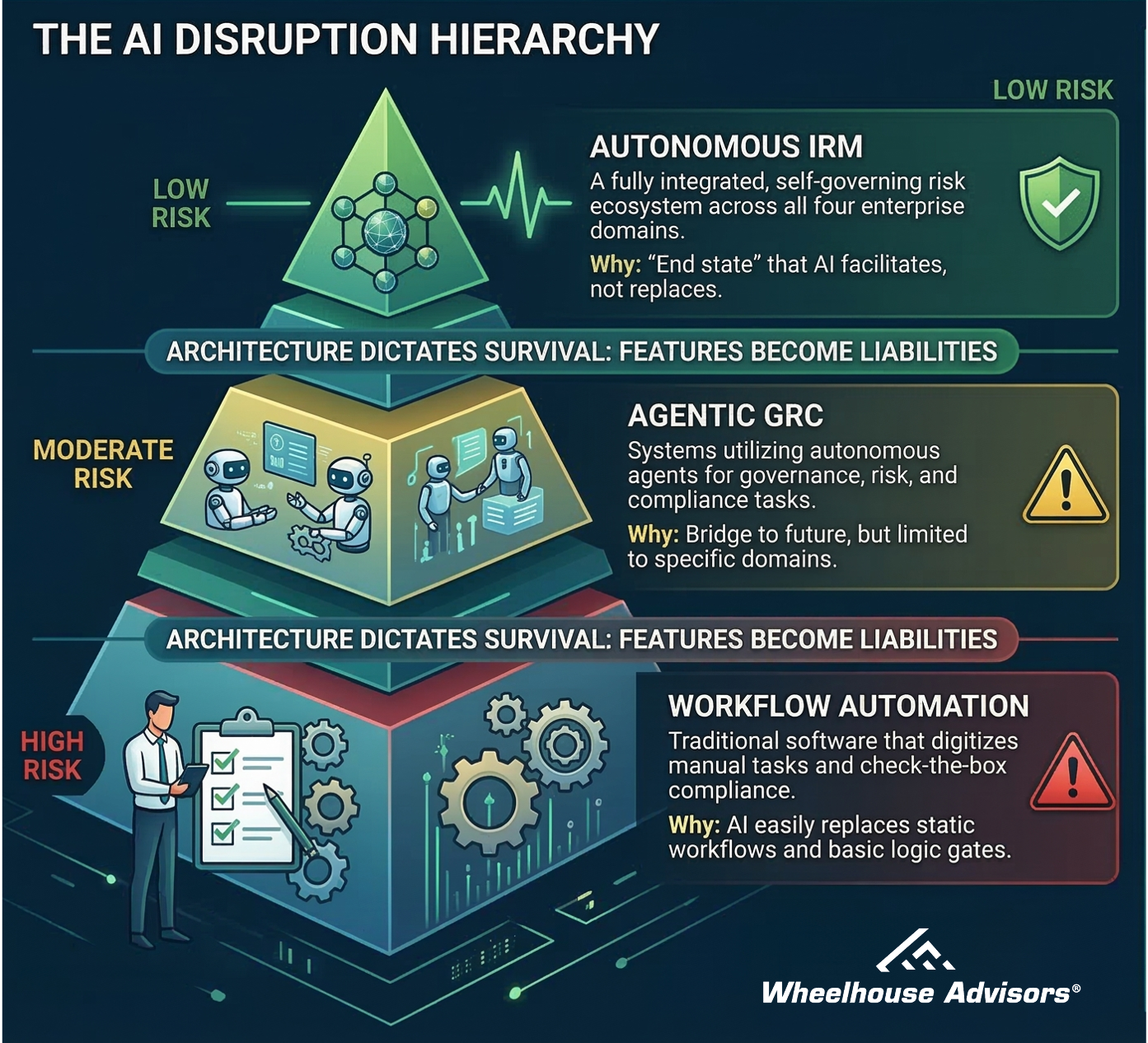
The Path to Autonomous IRM Becomes Clear
The AuditBoard-to-Optro rebrand is the highest-profile public signal yet that Agentic GRC is a defined architectural category. This research note uses that signal to examine where Agentic GRC sits in the progression from Workflow Automation to Autonomous IRM — and why the architecture a platform carries determines its AI disruption profile. Not all enterprise risk technology faces the same AI future. This note explains why.
IRM50 OnWatch: AuditBoard Becomes Optro – A Rebrand or a Real Pivot?
On March 9, 2026, AuditBoard announced it is rebranding as Optro, citing a $300M ARR milestone, the acquisition of AI governance platform FairNow, and a new identity as an agentic system of action for modern risk practitioners. This IRM50 OnWatch note applies the IRM Navigator™ Model to assess what the rebrand signals about Optro’s structural position in the IRM market, whether the capability architecture supports the narrative, and what the FairNow acquisition actually reveals about the platform’s AI roadmap. RTJ Bridge subscribers receive the full analysis, IRM50 tier status, ADRI score update, and What to Watch guidance for IRM leaders evaluating this announcement.
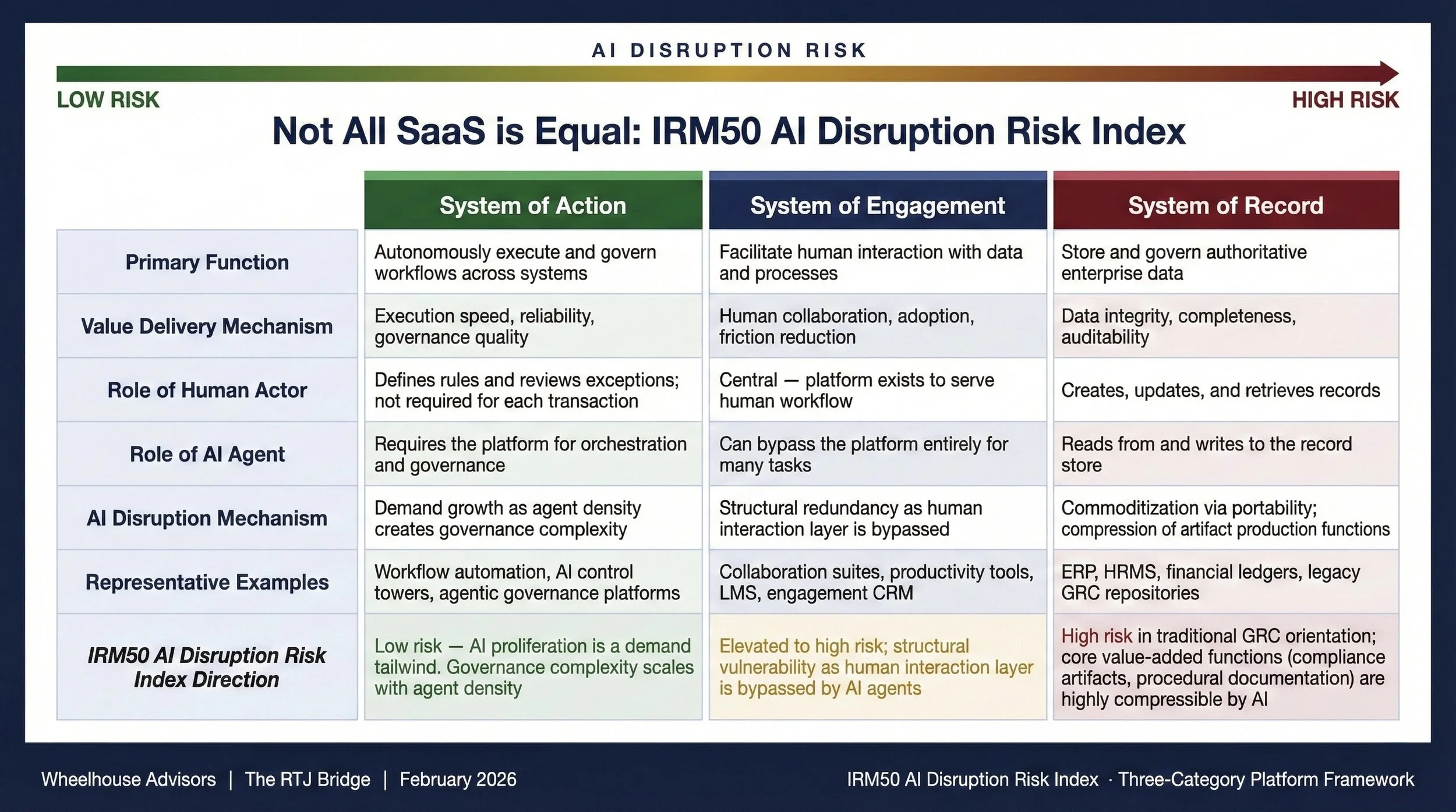
Not All SaaS Is Equal: IRM50 AI Disruption Risk Index
The enterprise software market is pricing AI disruption risk as if all SaaS platforms face the same structural threat. They do not. AI disruption risk varies fundamentally across platform categories based on architectural role, and the market's failure to distinguish between them is producing systematic mispricing. The IRM50 AI Disruption Risk Index introduces a three-category framework that makes those distinctions explicit, and the implications for capital allocation are significant.
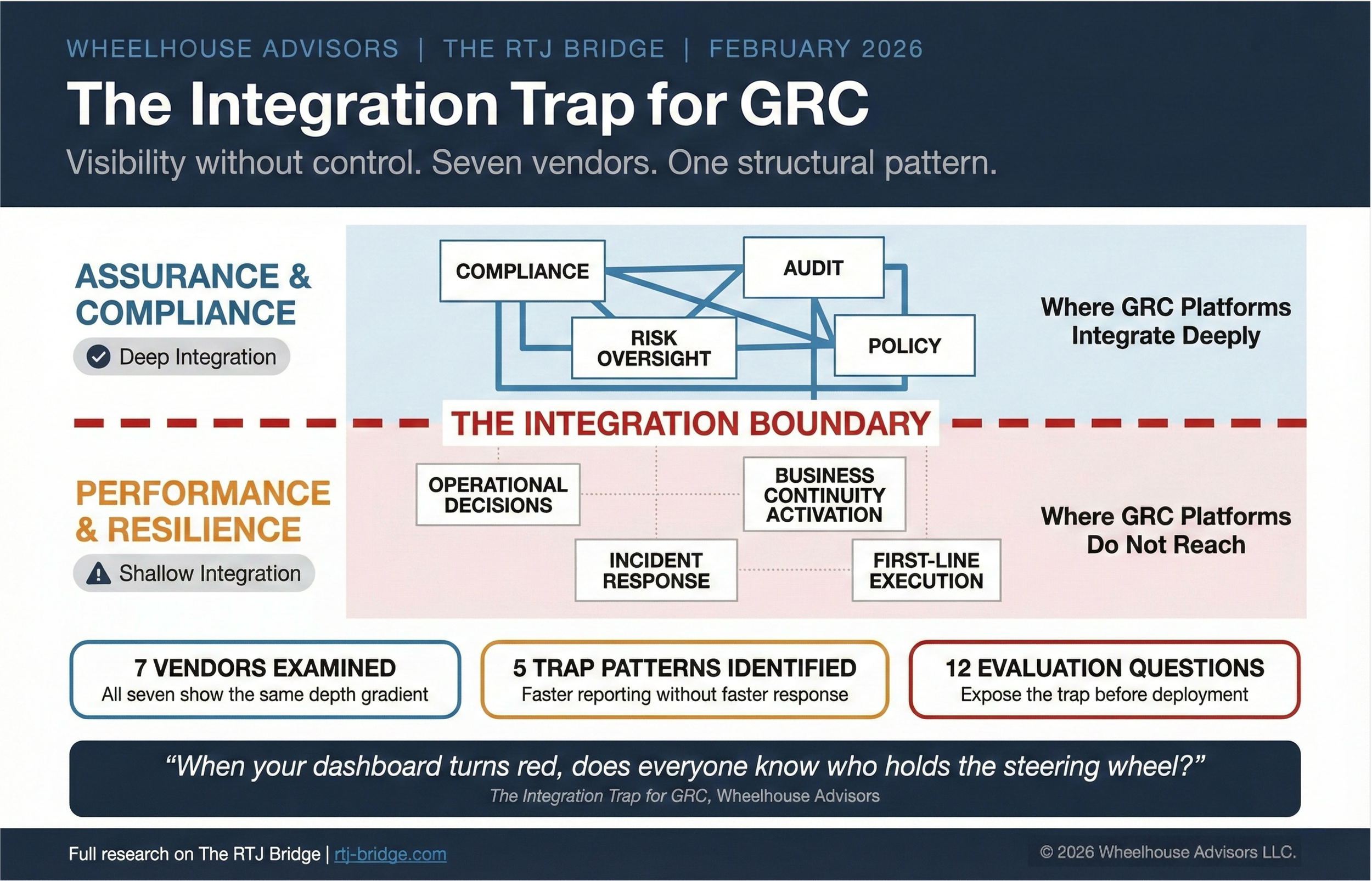
The Integration Trap for GRC: Why "Integrated GRC" Platforms Create Visibility Without Control
Every major GRC vendor claims integration as a core capability. The claims hold up. They also stop short. The gap between what these platforms integrate and what organizations actually need creates a structural vulnerability Wheelhouse Advisors calls The Integration Trap for GRC. Seven vendors examined. Five trap patterns identified. Twelve evaluation questions to expose integration gaps before deployment. Available now to RTJ Bridge subscribers.
What NVIDIA’s CES 2026 Post Signals for Autonomous IRM
NVIDIA’s January 5, 2026, CES post is not “just a chip announcement.” It is a blueprint for making agentic systems cheaper to run, faster to execute, more distributed (from data center racks to desktops and edge), and more simulation-driven. For Autonomous Integrated Risk Management (Autonomous IRM), the practical implication is that the limiting factor shifts. It becomes less about whether the enterprise can afford the compute and more about whether it can manage autonomous decision loops with bounded execution, reliable orchestration, and audit-grade evidence.
What changed (and why executives should care)
Cadence shifts: more risk work can run continuously rather than quarterly because inference economics and long-context performance are improving.
Scope expands: autonomy moves beyond cyber and compliance into operational resilience and “physical” validation patterns that rely on simulation and long-tail testing.
Expectations rise: decision provenance and replayable evidence become baseline requirements, not premium features.
What follows is the translation of NVIDIA’s CES announcements into Autonomous IRM implications, using an executive pattern: signal, why it matters, implication, program design change, and a measurable buyer proof point.
IRM50 OnWatch - What the ServiceNow Armis Deal Signals for IRM
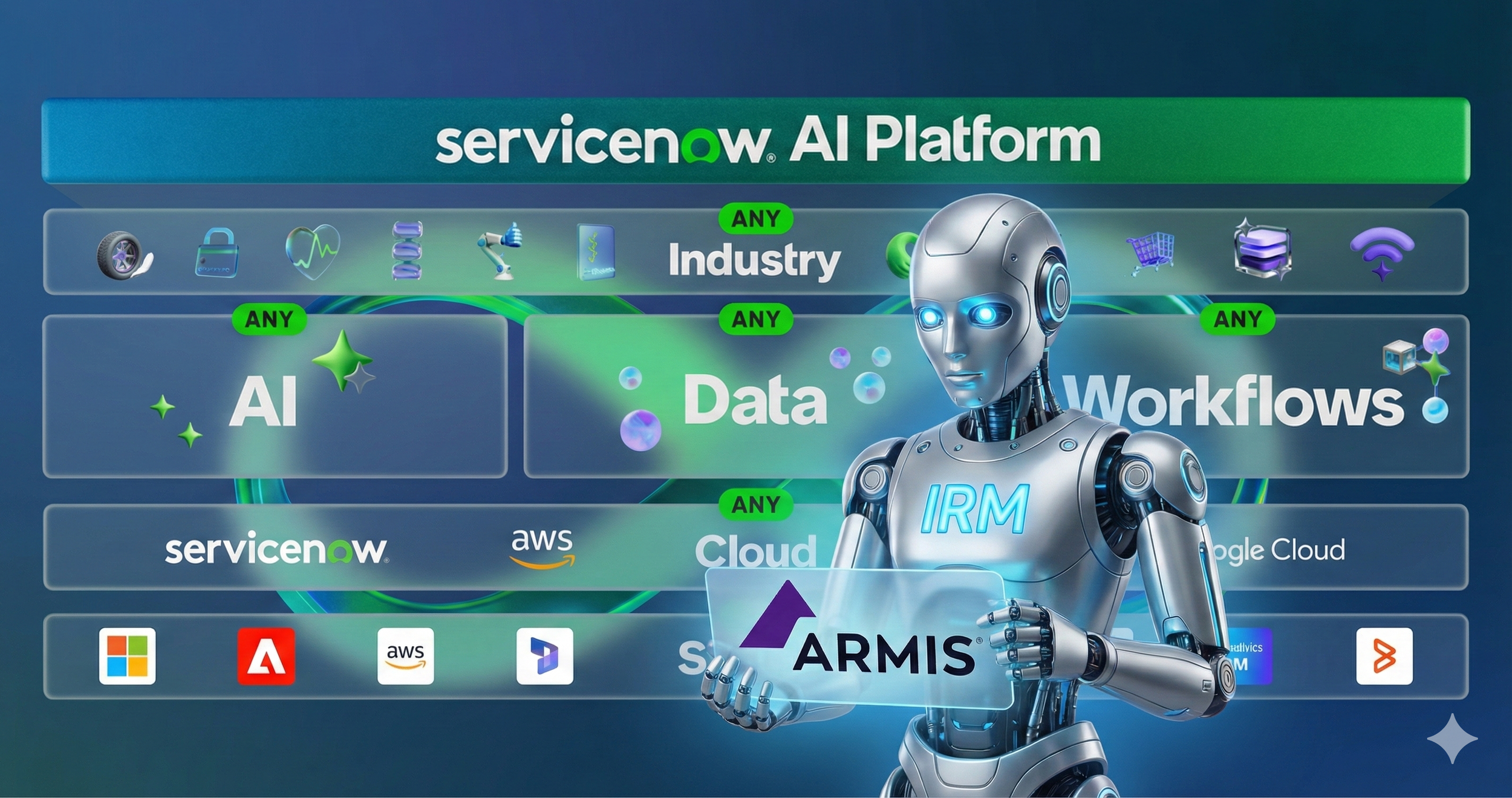
ServiceNow’s announced agreement to acquire Armis for $7.75 billion in an all-cash transaction (expected to close in the second half of 2026) is not just a cybersecurity expansion move. It is a market signal that “risk management at scale” is shifting toward a unified operating model where (1) real-time technology and asset intelligence, (2) prioritization logic, and (3) remediation and verification workflows increasingly sit on the same platform spine.
For IRM leaders, this matters because it tightens the linkage between technology risk signals and enterprise risk action, and it changes what “continuous monitoring” should mean in buyer evaluations.

Agentic AI Moves From Hype to Operating Model: What Risk Leaders Must Do Now
EY’s newest global insight, “What Risk Leaders Need to Do Now About Agentic AI,” sets a clear challenge: organizations that treat agentic AI as another productivity initiative risk amplifying exposure, not mitigating it. The report argues that risk functions must now move beyond experimentation and build an enterprise operating model where autonomous and semi-autonomous agents can act safely, transparently, and in alignment with strategy.
This message reinforces a structural shift already underway in Integrated Risk Management (IRM). Wheelhouse Advisors’ Autonomous IRM model defines how these agentic systems should operate—not as isolated bots or chat interfaces, but as integrated decision engines that connect strategic intent, operational execution, and assurance validation.

Agentic Operational Risk: How AI Is Reshaping Control, Performance, and Resilience
Operational risk management is evolving from reactive oversight to intelligent orchestration. Agentic AI, systems that can plan, tool, and act with bounded autonomy, is at the center of this shift. These agents compress cycle times, expand control coverage, and deliver evidence with audit grade traceability. Within the IRM Navigator™ Model, they strengthen the connection between Performance and Resilience, the two objectives where ORM delivers the most tangible value.

EY’s Boomi Alliance Accelerates IRM+ into the Autonomous IRM Era
EY’s new alliance makes Boomi the preferred way to connect the many systems IRM+ depends on, move and manage the data they generate, and orchestrate AI (including AI agents) around IRM+ workflows. IRM+ itself continues to be anchored on ServiceNow for risk workflows; Boomi primarily strengthens the integration, data, and AI layers around it.
The Strategic Blind Spot: Closing the Boardroom Gap in AI Risk Oversight
Our recent research on audit committees revealed a stark reality: boards are most concerned about oversight gaps in cybersecurity, privacy, and AI, yet few have the structures to address them effectively. The 2025 Audit Committee Survey Insights showed that nearly half of audit committees see AI oversight as an unresolved gap, while only a fraction claim primary responsibility. The conclusion was clear—AI has moved into the boardroom agenda, but governance has not caught up.
This companion note builds directly on that finding. Where the audit committee analysis highlighted AI as part of a broader oversight deficit, here we focus on AI risk oversight itself. Drawing on new data from Infosys’s global survey of 1,500 executives, we examine why AI oversight remains fragmented, how the gap manifests in practice, and what boards and senior executives must do to close it.