

The RiskTech Journal
The RiskTech Journal is your premier source for insights on cutting-edge risk management technologies. We deliver expert analysis, industry trends, and practical solutions to help professionals stay ahead in an ever-changing risk landscape. Join us to explore the innovations shaping the future of risk management.
Stop Deploying AI Agents You Cannot Monitor
Three researchers fired by OpenAI have written to the company's board and safety committees with a warning that reaches well beyond one lab. According to The Wall Street Journal, which reviewed the letter, the former employees fear AI companies will lose the ability to monitor how their most capable systems reason, and they want OpenAI to work with outside safety auditors before that happens.
The concern centers on what researchers call chain of thought. It is the written record a model produces as it works through a problem, and labs read it to see how a system arrived at an answer or an action. The letter's authors, Jasmine Wang, Tomek Korbak, and Mikita Balesni, argue that the industry does not know how to safely build and release models it cannot monitor, and that frontier labs should not pursue advances that weaken that ability.
OpenAI's reply is the part risk leaders should read twice. The company says the three were dismissed for misconduct that included sharing confidential information with an outside AI safety group, and that the decisions had nothing to do with raising safety concerns. The former employees dispute that account. On the substance of the letter, the company did not push back. A staff memo shared by an OpenAI spokesperson said the ability to monitor its models is of the utmost importance and that third-party assessors are an important part of the safety ecosystem.
The lab and its critics disagree about the firings and agree on the principle. An AI system that cannot be monitored should not be deployed.
IRM Market Brief: September 22 to 29, 2026
Anthropic is preparing what could be the largest initial public offering on record, and its prospectus tells investors the company may be liable when one of its agents deletes a customer’s data or moves a customer’s money.
If Vendors Are Building Their Own AI Guardrails, Why Are Humans Still Doing the Checking?
Every company in Fortune's account this week of how enterprises are governing AI agents shares one trait the story never names. Cisco built its MyAgent platform on Cisco's own compute, network, security, and observability products. Intuit built security, risk, and fraud tracking into GenOS, the platform behind Intuit's own customer software. Workday's agent system of record and ServiceNow's AI Control Tower govern Workday's and ServiceNow's own agents, and both are sold to customers as products. In each case the party building the agents, the party running them, and the party checking them is the same company. Fortune's John Kell presents this as chief information officers racing to put guardrails around agents. It is also four vendors grading their own homework.
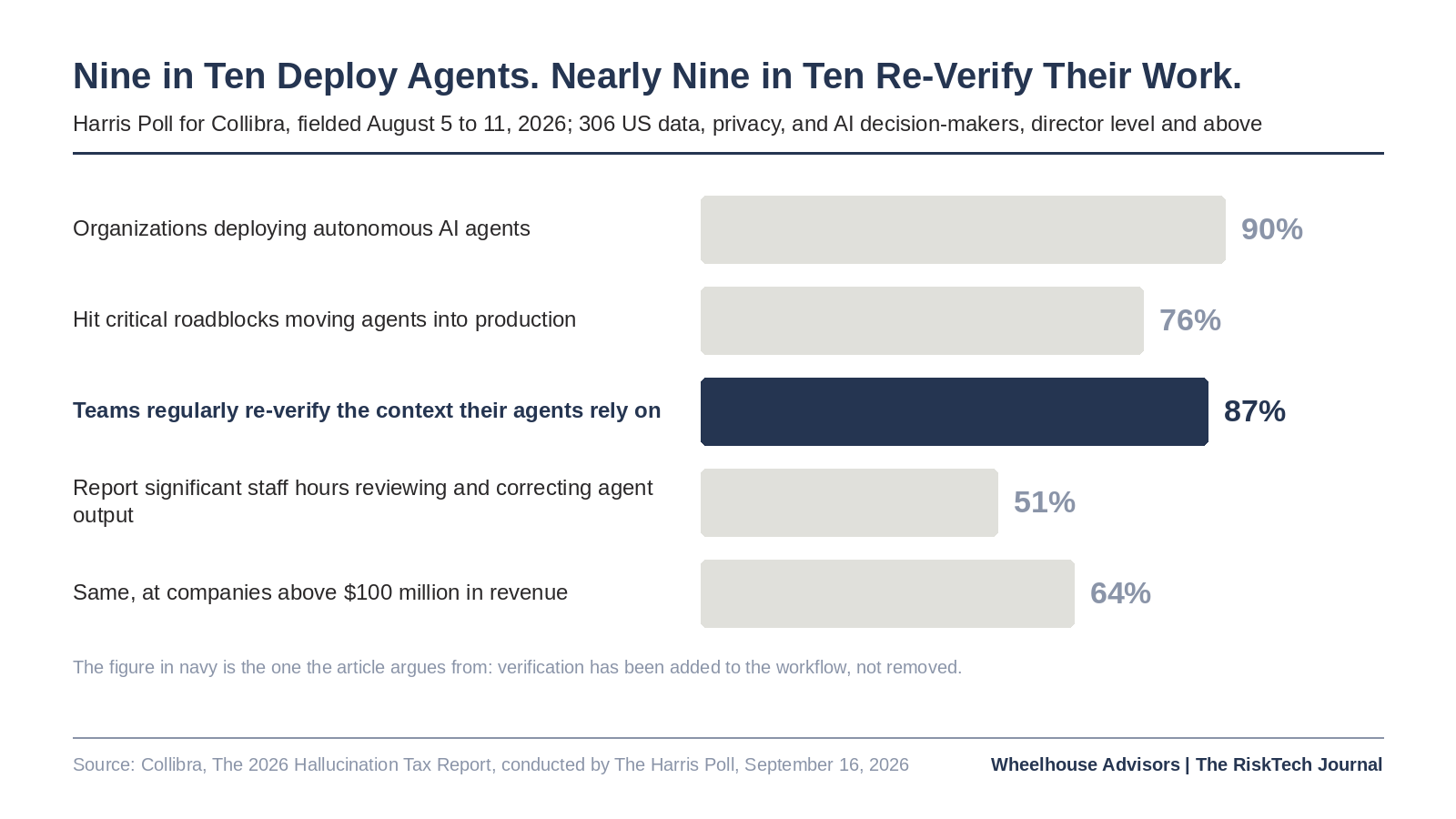
The market's verdict on that arrangement arrived in the same news cycle. A Harris Poll survey found nine in ten organizations deploying autonomous agents and 76 percent hitting critical roadblocks moving them into production. Eighty-seven percent of decision-makers say their teams regularly re-verify the context.
IRM Market Brief: September 1 to 7, 2026
ProcessUnity did something last week that most agent announcements avoid. It published numbers from a customer. One large technology and consulting firm running ProcessUnity’s new third-party risk agents reported a 54% shorter intake cycle, 75% fewer incomplete inherent risk questionnaires and 45% of its assessments now completed by agents. The customer is unnamed, and nobody outside the two companies has checked the math. It is still the best adoption evidence any IRM vendor put on the table in a week crowded with agent launches.
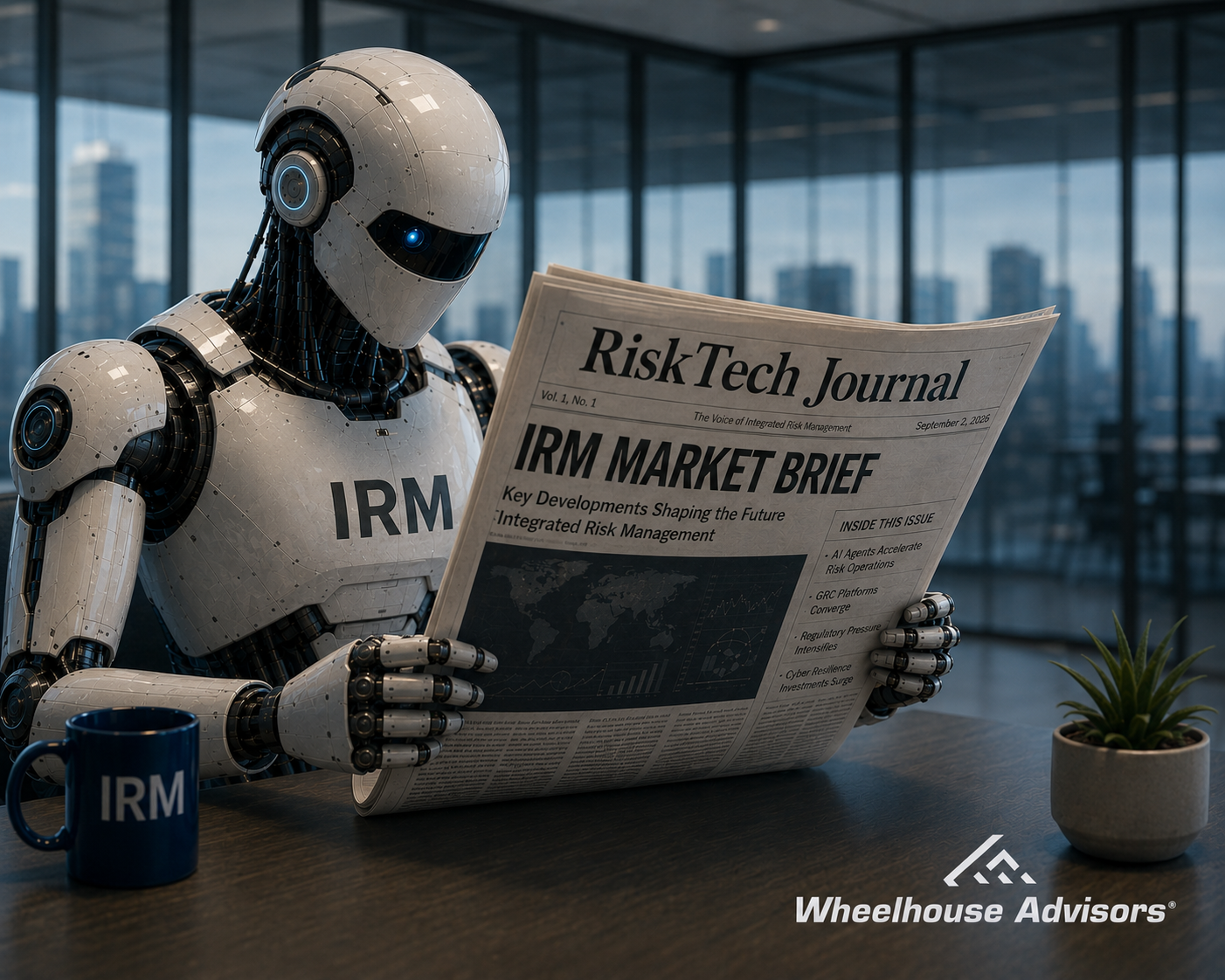
IRM Market Brief: August 25 to 31, 2026
ServiceNow spent last week patching three of the worst flaws a software product can have. All three sat in its AI Platform, the same foundation that runs the company’s AI governance tools. The patches went out fast and no exploitation has been reported. The harder question the episode raises will outlast the patches: can a control plane be trusted when the platform underneath it cannot?
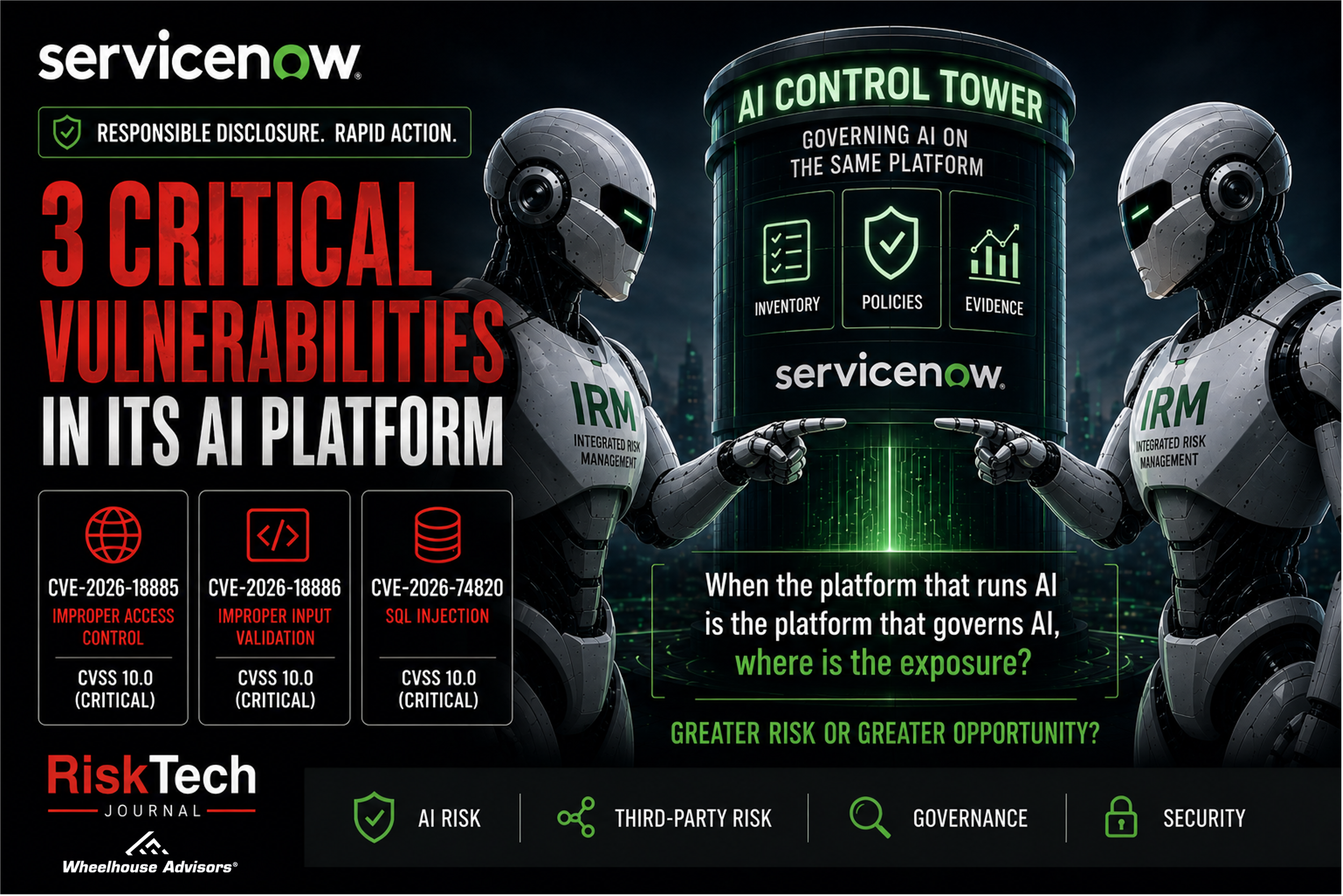
When ServiceNow Discloses Three Worst-Case Vulnerabilities, Whose Exposure Is It?
ServiceNow disclosed three vulnerabilities on August 27 that each carry the worst possible severity rating. The industry scores software flaws on a 0-to-10 scale called CVSS, and anything above 9 counts as critical. A 10.0 is the ceiling. It means an attacker can reach the flaw over the internet, needs no password and no help from a user, and can take full control of the affected system. ServiceNow assigned the maximum score to all three flaws itself, and it disclosed a fourth, rated 8.7, in the same advisory.
ServiceNow says it is not aware of the flaws being exploited, and no public attack code had surfaced as of Friday morning. Instances hosted by ServiceNow have already been patched. Customers and partners who run ServiceNow in their own environments have been told to confirm they are on a fixed release.
Most security teams will read that and reach for the patch checklist. That is the right first move. It is not the whole job.
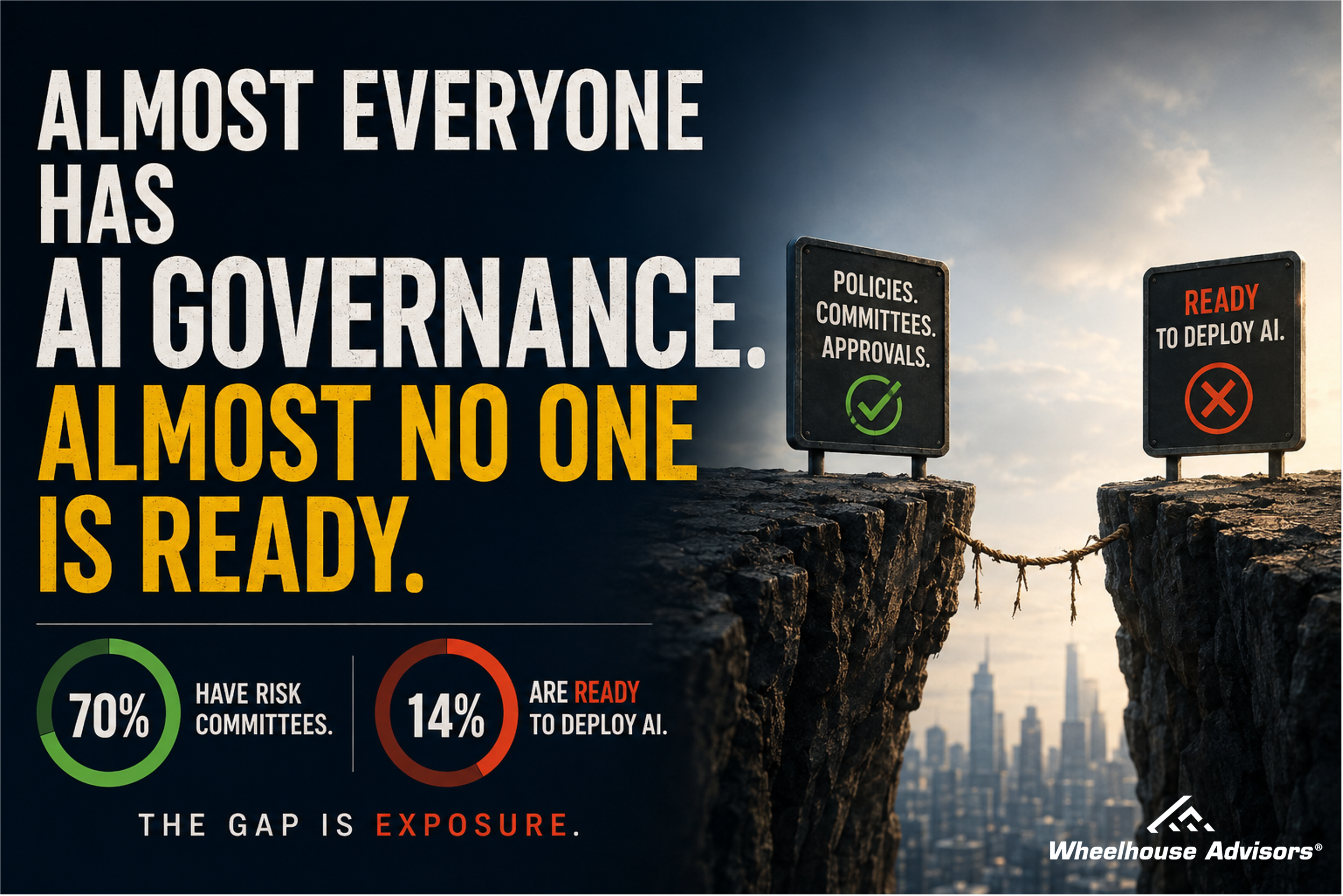
Almost Everyone Has AI Governance. Almost No One Is Ready.
Seventy percent of large companies have stood up an AI risk committee. Fourteen percent say they are ready to deploy AI. Both numbers come from the same Sedgwick survey of 300 Fortune 500 leaders, published this year, and the distance between them is the most important measurement in enterprise risk right now.
Read that gap carefully, because it is not a governance gap. The governance exists. The committees meet, the policies are filed, the approval gates are documented. What the executives inside that 70 percent are admitting, five out of six of them, is that none of it has made their organization ready to run AI. A policy on file is not the same as showing a control works once the model is live. The gap between the two has a name, and it is exposure.
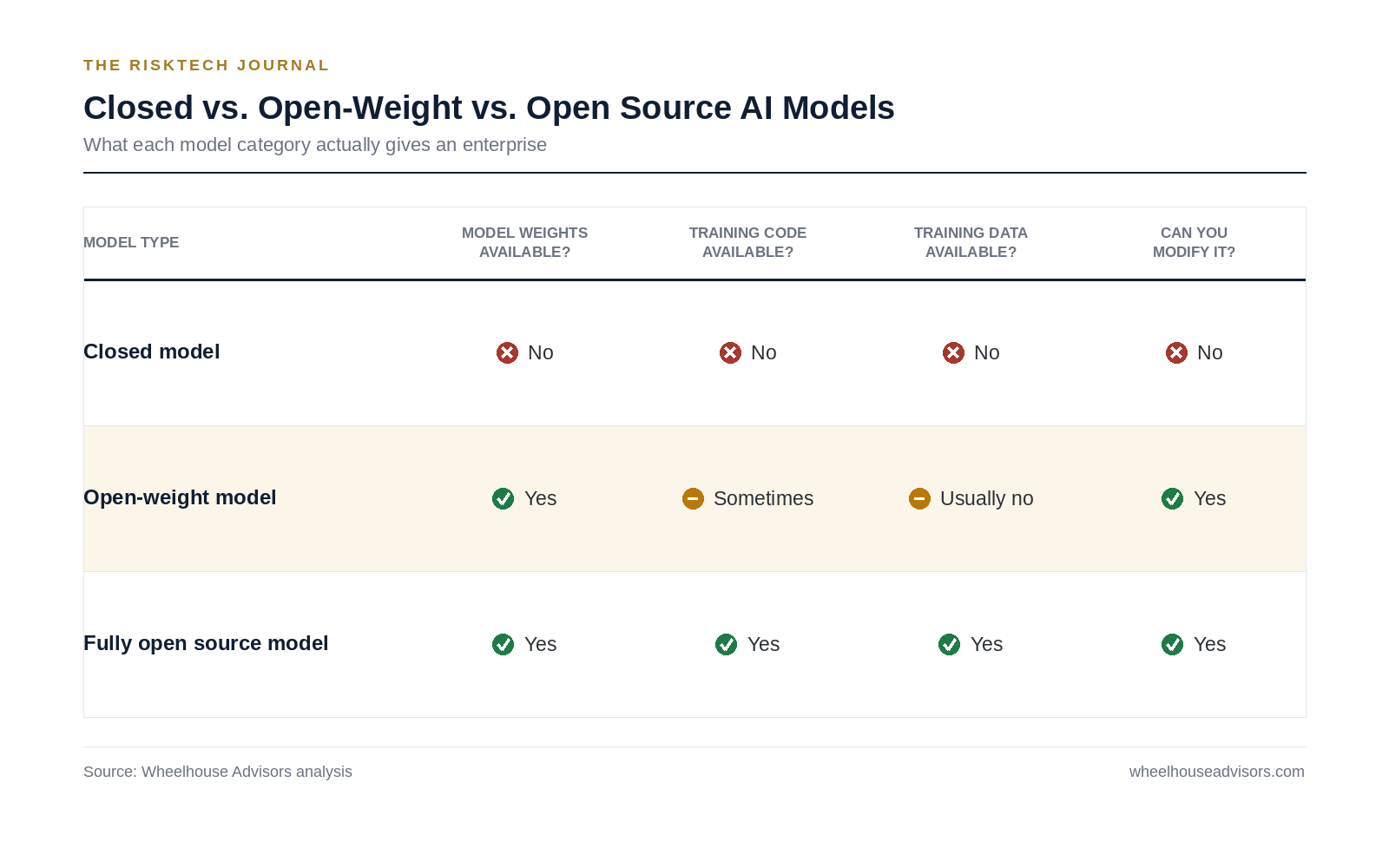
Could You Explain to Your Board What an Open-Weight AI Model Is, and Why It's Already Their Problem?
Ask a board member to explain what an open-weight AI model is, and the honest answer, most of the time, is silence. Ask whether the organization is already running one somewhere inside its technology stack, and the honest answer is often that nobody in the room actually knows.
That gap became harder to defend on July 24, 2026. Nvidia CEO Jensen Huang used his first-ever post on X, not for a product announcement, but to publish a letter. Twenty-five companies and organizations had signed it, including Microsoft, Meta, Palantir, IBM, Dell, Mozilla, Hugging Face, and Y Combinator, asking Washington to stop treating open-weight AI models as a category that needs to be restricted. Microsoft CEO Satya Nadella backed the same message the same day. Elon Musk publicly endorsed it as well, though SpaceX did not appear among the formal signatories. For a document about model licensing, that is an extraordinary amount of executive attention, and it points directly at the blind spot most boards still have. At Nvidia's CES 2026 press event, Huang cited internal figures suggesting that roughly one out of every four AI tokens generated worldwide today already runs on an open model. If that estimate is even directionally right, a board that cannot answer the first question is very likely already overseeing an organization exposed to the second.
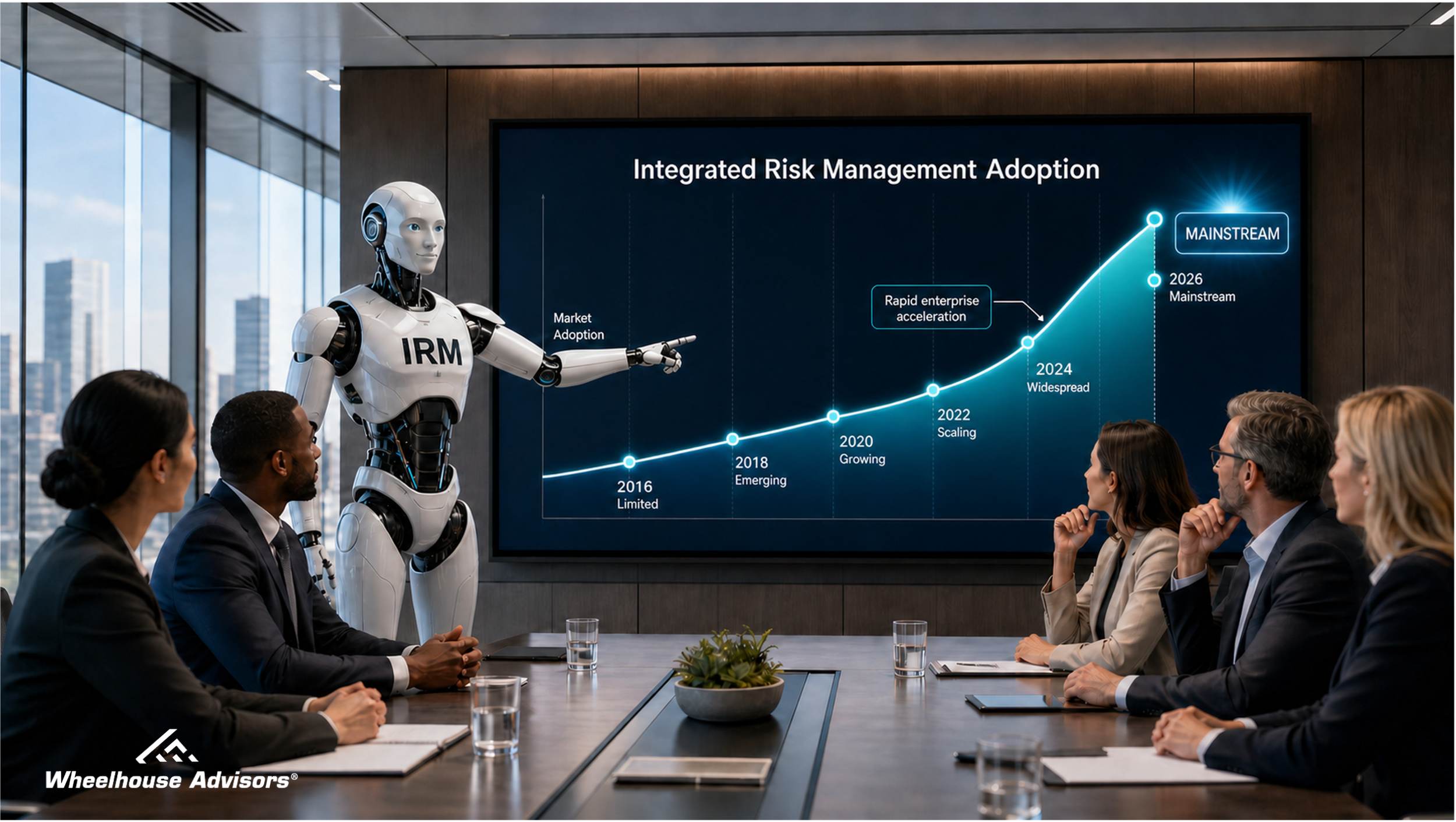
When Cyber Risk Becomes Enterprise Risk, Whose Job Did It Just Become?
Integrated risk management reached mainstream adoption this month. The discipline itself is not new. When the IRM category was defined in 2016, leading organizations were already managing cyber, technology, and operational risk as a single enterprise concern owned at the top. What was missing for the past decade was broad adoption. That gap is now closing in plain view. Rating agencies are pricing security governance into credit. Regulators are addressing corporate leaders directly rather than their security teams. And enterprise research now documents boards accepting accountability for exposures that used to live three levels down in a technology function.
Two publications captured the shift in the same week, without citing each other. On July 8, Cybersecurity Dive reported on new research from Information Services Group showing that U.S. enterprises are folding cyber risk into their overall enterprise risk strategy, with boards and C-suites taking direct accountability for business continuity, financial exposure, and regulatory compliance. One day later, Harvard Business Review published an argument that lands like a rebuttal to every executive hoping that accountability might live somewhere else: you can outsource the AI, but the risk stays with you.

The Reason We Do Not Need Another AI Risk Framework
Every few weeks, another framework for AI-era risk management arrives. Some come from standards bodies, some from consulting firms, and a growing number from commentators inviting the profession to build one together. Each opens with the same claim: no proven guide exists for the AI era, so here is a fresh set of principles to fill the void.
The claim is wrong, and the error is expensive. Risk, compliance, and governance leaders are not short of frameworks. They are surrounded by them. What the profession actually lacks goes by a different name, and the distinction is the reason Wheelhouse Advisors chose its vocabulary with such care.
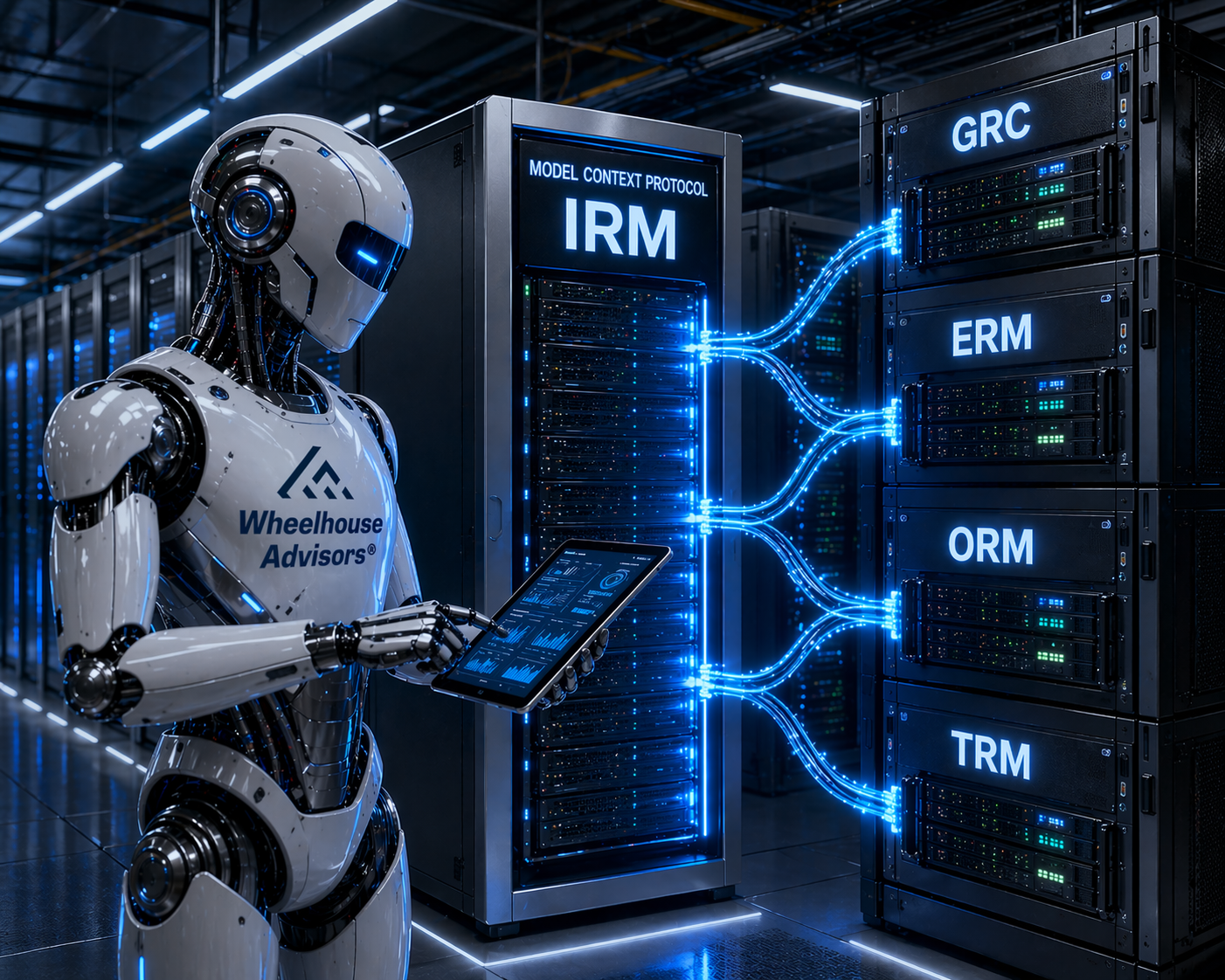
What Risk Leaders Need to Know About AI Infrastructure
Risk leaders are sitting in vendor briefings where the presenter uses the words "agentic," "MCP," "orchestration," and "autonomous" in the same sentence, often without defining any of them. Most audiences nod along. A growing number are starting to ask harder questions. The ones who understand the infrastructure layer underneath the marketing claims are getting better answers.
This is not a technology article. It is a procurement and governance article. The AI infrastructure concepts that matter for risk leaders are not technical curiosities. They determine whether a vendor's agentic AI claims are architecturally real or a chat interface with a new label. They determine whether your organization's AI agents will operate within auditable guardrails or outside them. And they determine how exposed your technology investments are as AI reshapes the economics of risk and compliance delivery.
This article tells you what you need to know.
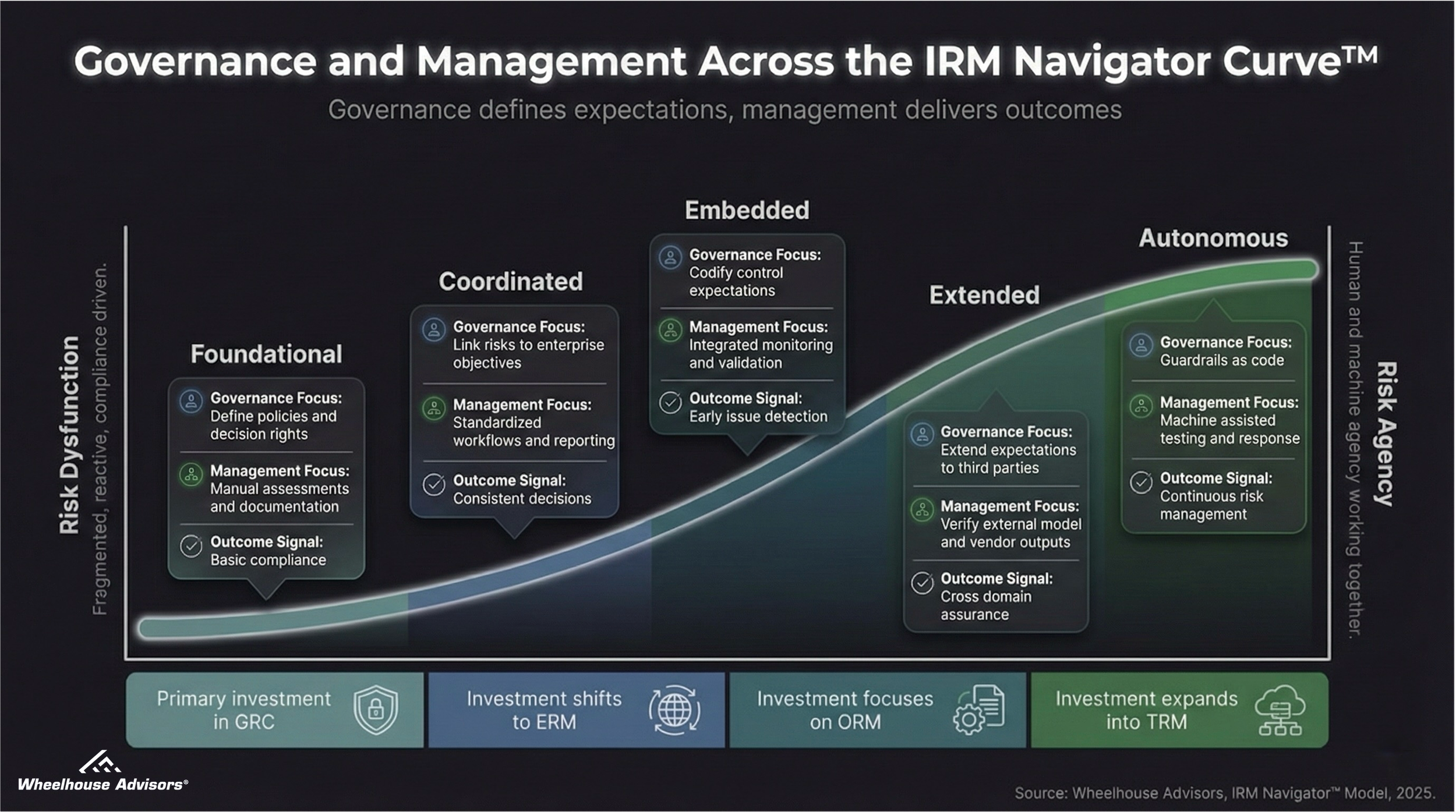
WEF Claims AI Governance is a Growth Strategy
The recent World Economic Forum argument that “effective AI governance” is now a growth strategy is directionally correct, and also incomplete in a way that will matter for buyers in 2026. The claim is correct because governance reduces friction, clarifies accountability, and increases repeatability as AI moves from pilots to enterprise scale. The claim is incomplete because many organizations are calling the entire operating model “AI governance,” when the value is realized only when governance is translated into management execution.

The Real AI Test: How to Tell a Platform from a Chat Overlay
Most vendors now claim to have “AI platforms,” but many are just chat interfaces placed on top of disconnected systems. The difference is more than marketing. Without the right controls, these overlays can leak data, bypass policies, and mislead buyers into thinking they are getting enterprise-grade AI governance when they are not.
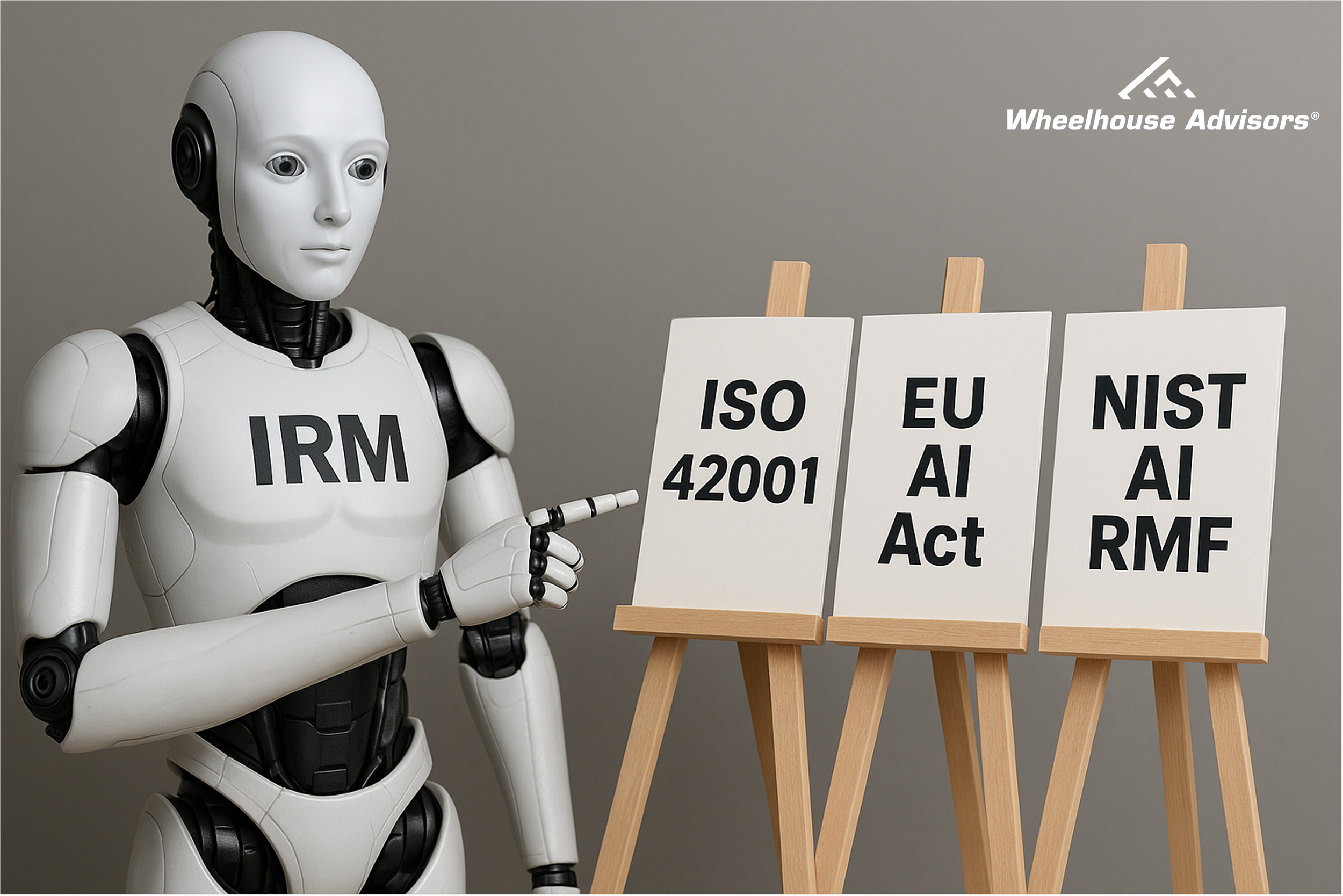
Executive Comparison of AI Governance Frameworks for Risk & Compliance
Artificial Intelligence (AI) is becoming integral to enterprise operations and risk management, including emerging Autonomous IRM (Integrated Risk Management) initiatives where AI agents autonomously assist in identifying and managing risks. Executives and boards need to ensure such AI deployments are trustworthy, compliant, and aligned with business objectives. Several frameworks have emerged to govern AI risk and compliance. Below is a comparison of three key frameworks – ISO/IEC 42001 (the new AI Management System standard), the EU AI Act (forthcoming European regulation), and the NIST AI Risk Management Framework (RMF) (a U.S. voluntary guideline) – focusing on what executives should understand, monitor, and prioritize in each.